Europe warns of Russia’s hybrid attacks but struggles to counter them
  Former chief election commissioner calls SIR scheme illegal.
  A Corruption Scandal Is Reshaping Brazil’s Presidential Election
  US citizen injured in Illinois after ICE agents mistook him for fugitive, tried to arrest him
  At 10 years old, Smithsonian’s Black museum is undaunted amid pressure from Trump administration
 Oil prices jump after Trump dismisses Iran proposal to end war
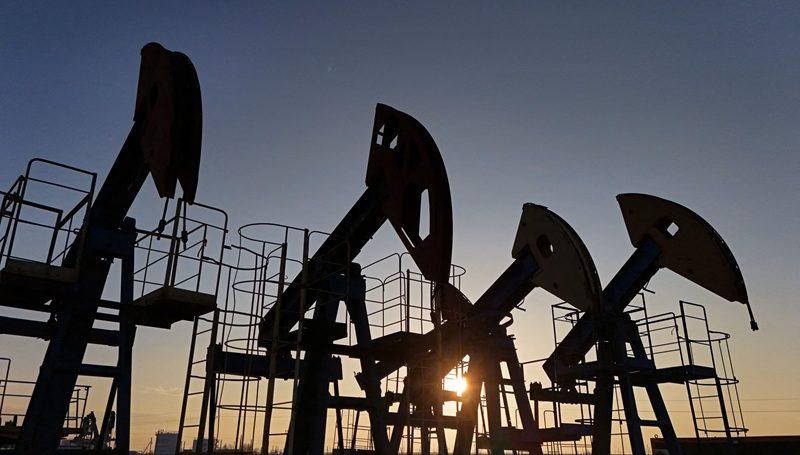
US and Iran halt strikes, oil prices fall - AI News Breaking
prices jump trump dismisses:
Global oil prices surged after U.S. President Donald Trump dismissed Iran’s latest proposal aimed at ending the ongoing conflict in the Middle East. Investors fear the rejection could prolong instability around the Strait of Hormuz, a critical global oil shipping route.
Global oil markets surged after U.S. President Donald Trump rejected Iran’s latest proposal aimed at ending the ongoing war, intensifying fears that the conflict could drag on and further disrupt global energy supplies.
Trump reportedly described Iran’s response to a U.S.-backed peace framework as “totally unacceptable,” signaling that Washington remains dissatisfied with Tehran’s conditions for ending hostilities.
The comments immediately rattled energy markets, with crude oil prices climbing sharply amid concerns that tensions in the Middle East could escalate further. Brent crude reportedly rose above the $100-per-barrel mark, while West Texas Intermediate crude also posted major gains.
The market reaction underscores the enormous global significance of the conflict, particularly because of continuing disruptions around the Strait of Hormuz — one of the world’s most important oil transit chokepoints.
Crude Oil Prices — 11 May 2026
Brent Crude
- Around $104–105 per barrel in early trading on May 11, 2026 after rising more than 3% amid U.S.-Iran tensions.
WTI (West Texas Intermediate)
- Around $99 per barrel during U.S. futures trading.
Recent Brent Trend
| Date | Brent Price |
|---|---|
| May 1, 2026 | ~$118.26 |
| May 5, 2026 | ~$114.51 |
| May 7, 2026 | ~$101.82 |
| May 11, 2026 | ~$104–105 |
Key Reason for Today’s Rise
Oil prices jumped after Donald Trump rejected Iran’s latest peace proposal, increasing fears of prolonged disruption around the Strait of Hormuz — one of the world’s most important oil shipping routes.
Market Snapshot
- Brent crude: +3% to +3.5%
- WTI crude: Nearly +4%
- Markets fear:
- supply disruption,
- shipping delays,
- higher inflation,
- prolonged Middle East conflict.
Why Oil Prices Reacted So Strongly
Oil markets are highly sensitive to geopolitical instability in the Middle East because the region remains central to global crude supply chains.
The Strait of Hormuz, located between Iran and Oman, handles a substantial portion of the world’s oil shipments. Any threat to shipping routes through the strait immediately affects investor confidence and energy pricing worldwide.
Reports indicate that shipping activity through the strait remains heavily disrupted, with thousands of vessels impacted by ongoing military tensions and naval restrictions.
When Trump rejected Iran’s proposal, traders interpreted the move as a sign that:
- A ceasefire is not imminent
- Shipping disruptions may continue
- Sanctions pressure could intensify
- Regional escalation risks remain high
As a result, investors rushed to price in the possibility of prolonged supply instability.
What Iran Proposed
According to reports, Iran’s proposal reportedly called for:
- An end to hostilities
- Removal or easing of sanctions
- Changes to naval restrictions
- Negotiations over broader regional issues
Iran also reportedly sought guarantees related to oil exports and control over maritime access linked to the Strait of Hormuz.
However, major disagreements reportedly remain over:
- Iran’s nuclear program
- Missile development
- Sequencing of sanctions relief
- Security guarantees
- Future military activity in the region
Trump and U.S. officials reportedly viewed Tehran’s response as insufficient and lacking meaningful concessions on key strategic issues.
Trump’s Position
Trump has repeatedly insisted that any agreement with Iran must address the country’s nuclear capabilities and broader regional behavior.
Recent statements suggest the administration remains unwilling to lift major pressure measures — including naval restrictions and sanctions — without stronger commitments from Tehran.
Trump has also argued that maintaining pressure is necessary to prevent Iran from strengthening its strategic position in the region.
At the same time, his rhetoric has alternated between:
- warnings of escalation,
- promises of quick resolution,
- and suggestions that negotiations remain possible.
That unpredictability itself has contributed to market volatility.
Strait of Hormuz at the Center of Global Concern
Much of the current energy panic revolves around the Strait of Hormuz.
The narrow waterway is one of the world’s most critical maritime trade routes for oil and liquefied natural gas exports. Any prolonged disruption threatens:
- global fuel prices,
- shipping costs,
- inflation,
- and broader economic stability.
Analysts warn that even temporary restrictions can have outsized economic effects because global energy markets operate on tight supply expectations.
Several reports indicate that shipping traffic in the region remains partially paralyzed due to military tensions and uncertainty surrounding naval operations.
Impact on Global Markets
The conflict is no longer affecting only oil prices.
Financial markets more broadly have started reacting to fears of prolonged instability.
According to reports:
- U.S. stock futures weakened,
- investors moved toward safer assets,
- and market volatility increased after Trump’s comments.
Energy-intensive industries are especially vulnerable because rising oil prices can increase:
- transportation costs,
- manufacturing expenses,
- and inflationary pressure across economies.
For many governments already struggling with inflation and slowing growth, another sustained energy shock could create major political and economic challenges.
Why Investors Fear a Long Conflict
Markets generally dislike uncertainty more than bad news itself.
If traders believe a conflict has clear limits or a defined diplomatic path, markets often stabilize. But when negotiations appear stalled and rhetoric hardens, fears of escalation increase dramatically.
Several factors are currently fueling those fears:
- No comprehensive ceasefire agreement
- Ongoing military tensions
- Continued sanctions disputes
- Uncertainty around nuclear negotiations
- Disruptions to maritime trade routes
Trump’s rejection of Iran’s proposal reinforced concerns that diplomacy remains fragile and incomplete.
How the Conflict Is Reshaping Energy Politics
The crisis is also reshaping broader geopolitical and energy calculations.
Oil-Producing Nations
Major oil exporters are closely monitoring supply disruptions because higher prices can generate enormous short-term revenues.
However, prolonged instability also threatens long-term market confidence and economic stability.
Import-Dependent Economies
Countries heavily dependent on imported oil — especially in Asia and Europe — face rising concerns over fuel costs and inflation.
Governments may increasingly seek:
- strategic petroleum reserve releases,
- alternative suppliers,
- and emergency energy measures.
Global Shipping
Shipping companies and insurers are also reassessing risks associated with Gulf transit routes, potentially increasing transportation costs even further.
Political Implications for Trump
The conflict carries significant domestic political implications for Trump as well.
High oil prices often translate into:
- higher gasoline prices,
- inflation concerns,
- and public dissatisfaction.
Historically, energy costs have had major political consequences for U.S. presidents because consumers directly feel the impact at fuel stations and through rising living expenses.
Trump now faces a difficult balancing act:
- maintaining pressure on Iran,
- projecting strength internationally,
- while preventing economic backlash at home.
Iran’s Strategic Leverage
Despite heavy pressure, Iran retains important strategic leverage because of its geographic position near critical energy routes.
Analysts note that Tehran’s ability to influence conditions around the Strait of Hormuz gives it substantial geopolitical importance even under sanctions pressure.
That leverage becomes especially powerful during periods of heightened military confrontation.
Iran’s broader strategy appears focused on:
- increasing negotiating leverage,
- securing sanctions relief,
- and preventing diplomatic isolation.
International Reactions
Several global powers are reportedly pushing for de-escalation and broader negotiations.
However, divisions remain over:
- how much pressure should be applied to Iran,
- the future of sanctions,
- and the structure of any peace arrangement.
Some U.S. allies reportedly remain hesitant to fully support prolonged escalation without a clearer diplomatic roadmap.
China’s potential role is also receiving increased attention because of its economic relationship with Iran and influence in global energy markets.
AI Insight
The most important driver of current oil prices is not actual supply destruction, but uncertainty about future stability. Markets are essentially pricing in geopolitical risk premiums because traders cannot confidently predict whether negotiations will succeed or whether the conflict could escalate further.
This means future price swings may increasingly depend on political statements, diplomatic signals, and military posturing rather than traditional supply-and-demand fundamentals alone. In volatile geopolitical environments, perception often moves markets faster than physical shortages.