Use of Chief Minister C. Joseph Vijay’s deep fake videos to collect money: Rajasthan youth moves Madras High Court seeking bail
 Florida officer took possession of man’s home after finding him dead 4 years ago, police say
 Jury weighs fate of US woman who says father forced her into Syria’s war zone when she was a teen
 France bans certain protests to restore public
On this day in space! Oct. 19, 2016: Europe’s ExoMars orbiter and Schiaparelli lander arrive at Mars
**
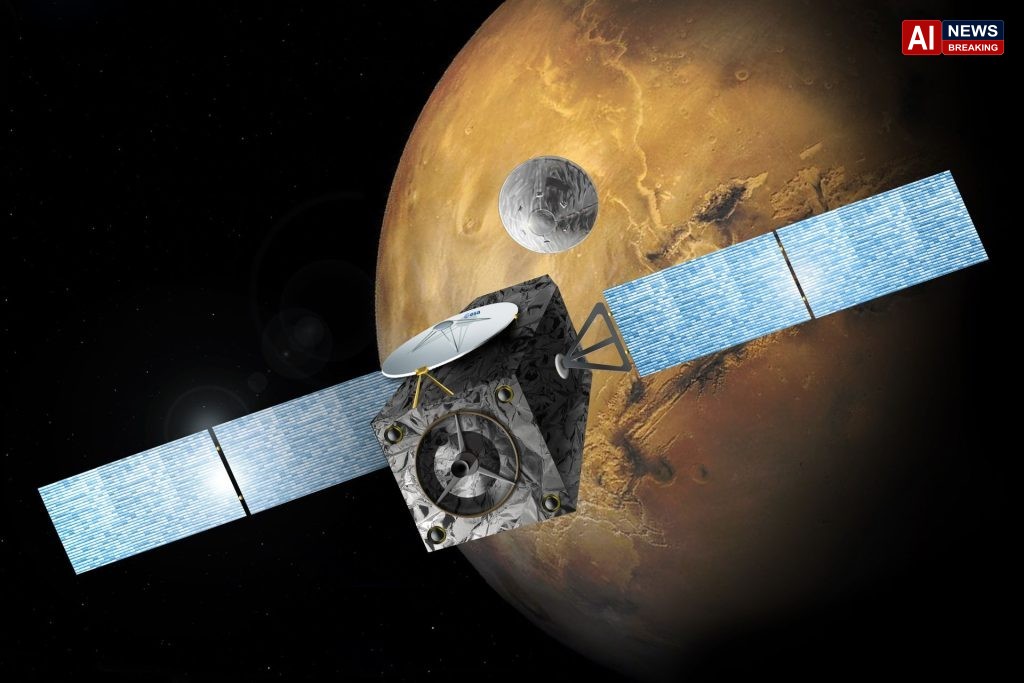
On this day in space! Oct. 19, 2016: Europe's ExoMars orbiter and Schiaparelli lander arrive at Mars - AI News Breaking
this space 2016 europes:
The European Space Agency’s ExoMars mission reached the Red Planet on 19 October 2016, marking a significant milestone for Europe’s long‑term exploration strategy. The spacecraft, launched on 14 march 2016, comprised two distinct elements: the Trace Gas Orbiter (TGO), designed to study the Martian atmosphere, and the Schiaparelli Entry, Descent and Landing Demonstrator Module (EDM), intended to test technologies for future soft‑landings. After a 199‑day cruise through interplanetary space, the pair separated on 16 October, three days before the orbiter entered Martian orbit and the lander began its descent toward the surface..
The arrival was celebrated across ESA’s member states as the culmination of a decade of development and international collaboration.The separation maneuver unfolded as planned. The TGO performed a series of engine burns that positioned it on a trajectory for capture by Mars’ gravity, while Schiaparelli, equipped with a heat shield, parachute, and a set of retro‑propulsion rockets, commenced its high‑speed entry into the thin Martian atmosphere. Sensors recorded the expected deceleration and heat flux, and the parachute deployed at approximately 10.6 kilometres altitude, slowing the vehicle further..
At roughly 1.8 kilometres, the lander’s onboard computer commanded the release of its backshell and the ignition of the eight solid‑fuel thrusters that were meant to cushion the final touchdown.Data transmitted during the descent suggested that the lander’s altitude and velocity estimations were within the expected margins, yet a critical error occurred in the inertial measurement unit’s processing of the radar altimeter signal. The system misinterpreted a brief signal loss as an indication that the vehicle had already reached the surface. Consequently, the thrusters were shut down prematurely, leaving the lander in free fall for the remaining 1.5 seconds before impact..
The crash was confirmed by the loss of telemetry and later by high‑resolution images captured by the orbiter, which showed a disturbed patch of regolith consistent with a hard landing.Schiaparelli’s destruction was a disappointment but not an unexpected outcome for a technology demonstrator. ESA’s mission planners had explicitly framed the lander as a risk‑reduction exercise, intended to validate entry, descent and landing (EDL) hardware and software ahead of the more ambitious 2022 ExoMars rover, Rosalind Franklin. In post‑flight analyses, ESA engineers identified the sensor anomaly and have since incorporated redundant checks into the flight software of subsequent missions..
The lessons learned are expected to improve the reliability of future European landings, especially those that will carry scientific payloads and potentially return samples to Earth.The Trace Gas Orbiter, by contrast, successfully entered a circular, sun‑synchronous orbit at an altitude of roughly 400 kilometres and has been operational ever since. Its primary scientific objective is to map the distribution of trace gases—particularly methane, water vapour, and carbon monoxide—across the planet’s atmosphere. Methane is of particular interest because it can be produced by both geological processes and microbial activity, and its detection in localized plumes has sparked ongoing debate within the planetary science community..
The TGO’s infrared spectrometer, Atmospheric Chemistry Suite, and its complementary instruments have provided the most sensitive measurements to date, placing stringent upper limits on methane concentrations in many regions while confirming episodic releases in others.Beyond atmospheric chemistry, the orbiter serves as a communications relay for surface missions, a role that will become increasingly vital as more nations and private entities target Mars. Its high‑gain antenna and X‑band transponders have already facilitated data downlinks from NASA’s InSight lander and the United Arab Emirates’ Hope probe. By offering a reliable relay, the TGO enhances the scientific return of multiple missions and underscores the collaborative nature of contemporary Mars exploration.The arrival of ExoMars also highlighted Europe’s strategic partnerships..
The trace‑gas payload was developed with contributions from the United Kingdom, Germany, Italy, and Sweden, while the lander’s parachute system benefited from expertise supplied by the United States’ Aerojet Rocketdyne. Funding for the programme, amounting to roughly €1.3 billion, was shared among ESA’s member states, illustrating a collective commitment to maintaining a presence in the Martian arena alongside NASA, Roscosmos, CNSA and private actors.Public reaction to the mission was mixed. While the successful orbit insertion was widely reported as a triumph, the crash of Schiaparelli prompted criticism from some quarters regarding the allocation of resources to high‑risk ventures..
Nonetheless, the broader scientific community emphasized the value of test‑bed missions that deliberately accept a degree of failure in order to safeguard later, more costly endeavours. In the months following the incident, ESA’s director‑general, Johann Dorn, reiterated that the primary goal of Schiaparelli was to reduce uncertainties for the 2022 rover, a statement that helped to re‑frame the narrative around the mission’s overall contribution.In the years since 2016, the Trace Gas Orbiter has continued to refine our understanding of Mars’ climate dynamics. Its long‑term dataset has revealed seasonal variations in water vapour, mapped dust storm activity, and monitored the planet’s ionosphere with unprecedented precision..
These observations are feeding into atmospheric models that will inform entry strategies for future landers, as well as climate assessments relevant to human exploration concepts. The TGO’s longevity also serves as a reminder that orbital assets can outlive their initial mission lifespans, providing enduring scientific value.Looking ahead, the ExoMars programme remains on schedule to deliver the Rosalind Franklin rover, equipped with a drill capable of reaching two metres beneath the surface—a depth sufficient to protect samples from harsh radiation and preserve potential biosignatures. The rover will rely on the TGO for communications and will benefit directly from the EDL refinements derived from Schiaparelli’s experience..
As the 2022 launch window approaches, the legacy of the 19 October 2016 arrival continues to shape European aspirations on the Red Planet, reinforcing a narrative of incremental progress built on both success and setback..
Updated: October 19, 2026
Insight: Europe’s Martian gamble paid off: the crash‑laden Schiaparelli taught ESA hard‑won lessons that will make the 2022 rover safer, while the TGO’s steady orbit turns into a lifeline for all future Mars missions. It’s a clear sign that even failures