Trump administration offers mixed messages on limits to Ukraine’s Starshield access
 US Treasury proposes a rule to crack down on high-tech investments in China, other adversaries
 Calley Means, a key MAHA advocate, resigns as a top RFK Jr. adviser
 Spotify Tightens Family Plan Controls with QR Code Verification
 Use of Chief Minister C. Joseph Vijay’s deep fake videos to collect money: Rajasthan youth moves Madras High Court seeking bail
Paris schools launch audit
Over the past year, more than two dozen sexual‑abuse cases have rocked Paris’s public schools, prompting Mayor Anne Hidalgo to acknowledge a “collective failure” and commission an independent audit. The review will examine background‑check rigor, reporting mechanisms, and staff training, while unions, victim‑advocacy groups, and the public debate the balance between safeguarding children and protecting educators’ rights.
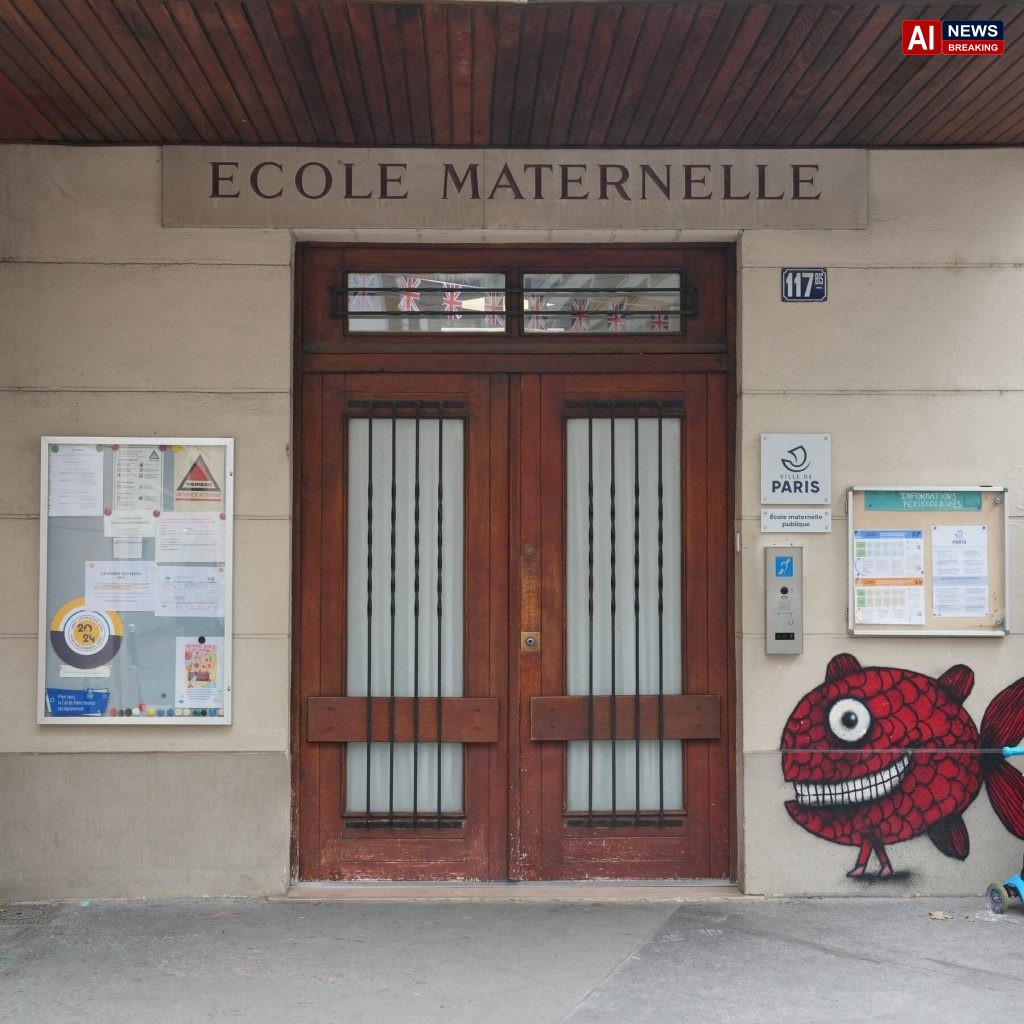
The Sexual Abuse Crisis in Paris’s Public Schools - AI News Breaking
Paris’s public education system has been rocked by a wave of sexual‑abuse allegations that have forced municipal authorities to admit a “collective failure” in safeguarding students. Over the past twelve months, more than two dozen cases have emerged, involving teachers, teaching assistants and other staff members who allegedly exploited their positions of trust. The revelations have sparked a nationwide debate about the adequacy of background‑check procedures, the culture of silence that can surround misconduct in schools, and the mechanisms in place to protect minors from predatory behaviour.The first allegations surfaced in early February when a parent reported that her daughter had been subjected to inappropriate touching by a primary‑school teacher in the 14th arrondissement..
The complaint quickly led to an internal investigation and the teacher’s suspension pending formal charges. Within weeks, similar claims were lodged against educators in several other districts, including a secondary‑school maths instructor accused of coercing a student into sending explicit photographs. By the end of March, the Parisian education authority, the Académie de Paris, had opened a task force to catalogue the incidents and to assess the systemic weaknesses that allowed them to occur.In response, the mayor’s office released a statement acknowledging “a collective failure” to prevent individuals with predatory tendencies from entering the classroom..
The phrasing, deliberately echoing language used in previous high‑profile institutional scandals, signalled a willingness to confront the issue head‑on. Mayor Anne Hidalgo pledged to overhaul recruitment and monitoring practices, emphasizing that the safety of pupils must be the “non‑negotiable foundation” of public education. She also called for an independent audit by a specialist firm to evaluate existing safeguards.The audit, commissioned by the Ministry of National Education, is set to examine three core areas: the rigor of criminal‑record checks, the efficacy of internal reporting channels, and the training provided to staff on recognising and preventing abuse..
Preliminary findings, released in early May, indicated that background checks had not been uniformly applied across all school types, with some vocational institutions relying on outdated databases. Moreover, the audit highlighted that many schools lacked a clear, confidential pathway for students and parents to report misconduct, leading to under‑reporting and delayed interventions.In parallel with the institutional response, several unions representing teachers have voiced concern that sweeping reforms could undermine the profession’s morale. The Syndicat National des Enseignants (SNE) warned that punitive measures aimed at “rooting out bad actors” must be balanced with support for educators who are themselves victims of false accusations..
The union called for due‑process safeguards, suggesting that an independent tribunal be established to adjudicate cases swiftly while preserving the presumption of innocence. This stance has been met with criticism from victim‑advocacy groups, who argue that the priority should be rapid protection for children rather than protecting the reputation of staff.Victim‑support organisations have welcomed the heightened attention but caution that concrete action remains essential. The French association Enfance et Partage, which assists survivors of childhood sexual abuse, stressed that “acknowledgement without implementation is an empty gesture.” Its director, Marie‑Claire Lefebvre, urged the city to allocate additional resources for psychological counselling in schools, noting that the trauma inflicted by abuse often goes untreated, compounding the harm..
She also called for mandatory training on consent and boundary‑setting for all school personnel, arguing that education on these topics is as vital as any security measure.Legal proceedings have already begun for several of the accused. In April, a teacher from a lycée in the 12th arrondissement was formally charged with sexual assault after a former pupil testified that the educator had repeatedly demanded private meetings under the pretext of tutoring, during which inappropriate behaviour occurred. The case is now before the Paris Tribunal de Grande Instance, where prosecutors have emphasized the need for a deterrent sentence to signal zero tolerance..
Defense lawyers, however, contend that the evidence relies heavily on testimony obtained years after the alleged incidents, raising questions about the statute of limitations and the reliability of memory.The broader public reaction has been one of outrage tempered by a call for measured reform. Opinion polls conducted by IFOP in June indicated that 68 % of Parisians believe the city’s schools are “not safe enough” for children, while 57 % support the introduction of regular, unannounced inspections by external bodies. At the same time, a minority expressed concern that heightened scrutiny could lead to the “over‑policing” of educators, potentially deterring qualified professionals from entering the profession..
These divergent views reflect the delicate balance policymakers must strike between ensuring safety and maintaining a functional, attractive teaching workforce.As the audit report is slated for public release in September, the Académie de Paris has already begun implementing interim measures. These include the creation of a centralized digital platform for reporting incidents, the appointment of independent safeguarding officers in each school, and the suspension of any staff member whose background check is deemed incomplete. Additionally, a pilot program is being rolled out in ten schools to introduce age‑appropriate curricula on sexual education and consent, designed in partnership with child‑psychology experts..
Early feedback from participating institutions suggests that students feel more empowered to speak up, though educators caution that cultural change will require sustained effort.The unfolding crisis underscores a systemic vulnerability that extends beyond Paris, prompting other French regions to review their own protocols. The Ministry of National Education has announced that the findings from the Paris audit will inform a nationwide reform package, slated for debate in the National Assembly later this year. While the path forward remains fraught with challenges, the consensus among stakeholders is clear: preventing sexual abuse in schools demands a comprehensive strategy that combines rigorous vetting, transparent reporting, robust support for victims, and an educational culture that prioritises the dignity and safety of every pupil..
Paris’s schools are under fire after more than two dozen sexual‑abuse claims against staff exposed lax vetting and reporting, prompting the mayor to label it a “collective failure” and launch an audit and reforms. Unions warn against over‑punitive measures, while victim groups push for swift safeguards, counselling and consent education as the city rolls out new reporting platforms and pilot curricula.
Paris’s scandal reveals that weak vetting and silent cultures are not just bureaucratic oversights—they become fertile ground for abuse, forcing the city to confront a trust deficit that could erode confidence in public schooling.
If reforms focus solely on punitive checks without rebuilding transparent, supportive reporting channels, the “