 Pentagon directive bans troops from using nonpublic info to bet in prediction markets
  Plaintiffs in Trump arch project seek injunction to stop administration from beginning work Nov. 5
  Trump says he ‘heard something about’ Justice Department probe into longtime ally Corey Lewandowski
  Trump administration stopped sharing evidence in Good and Pretti killings, Minnesota officials say
 Parliament Monsoon Session Day 18: Lok Sabha Adjourned Amid Opposition Protests as Amit Shah Offers Debate on Students’ Agitation
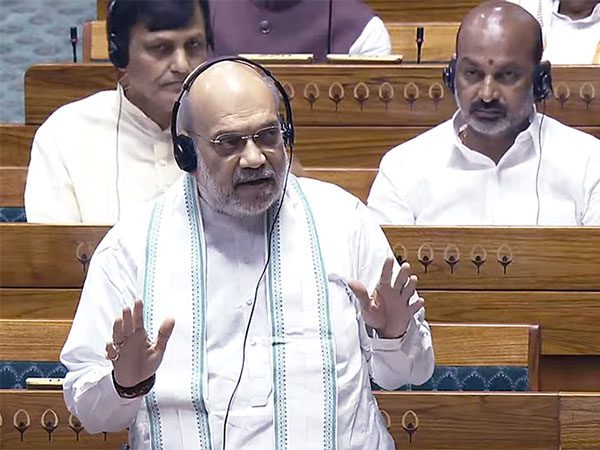
Parliament Monsoon Session Day 18: Lok Sabha Adjourned Amid Opposition Protests as Amit Shah Offers Debate on Students' Agitation - AI News Breaking
parliament monsoon session sabha:
Parliament’s Monsoon Session witnessed another disruption on Wednesday, August 12, as Opposition protests led to adjournments in both the Lok Sabha and Rajya Sabha. The confrontation centred on alleged police excesses during a July 20 student protest at Delhi’s Jantar Mantar.
Union Home Minister Amit Shah said the government was ready for a detailed parliamentary discussion and offered to respond to Opposition questions, while Leader of Opposition Rahul Gandhi rejected what he described as a “lecture” and demanded direct answers and accountability.
Parliament Monsoon Session Day 18: Political Standoff Deepens
New Delhi: The 18th day of Parliament’s Monsoon Session turned into another day of political confrontation on Wednesday, August 12, with proceedings in both Houses disrupted amid Opposition protests and sharp exchanges between the government and the Opposition.
The central issue was the Opposition’s demand for answers from Union Home Minister Amit Shah over alleged police excesses during a student demonstration held at Jantar Mantar on July 20. The Opposition has been pressing the government to explain the circumstances surrounding the police action and to establish who authorised the use of force against the protesting students.
The government, meanwhile, maintained that it was prepared to discuss the matter in Parliament. Amit Shah said he was ready to answer questions and proposed that the Opposition submit a written request to Lok Sabha Speaker Om Birla by 2 p.m., allowing a discussion to begin at 3 p.m. on Wednesday and continue until 3 p.m. on Thursday.
Despite the offer, the political deadlock continued.
The Lok Sabha was eventually adjourned amid protests, while the Rajya Sabha also faced disruptions over a separate dispute involving remarks allegedly made about the attire of CPI(M) MP John Brittas.
Amit Shah Offers 24-Hour Window for Discussion
The government’s strongest attempt to break the parliamentary deadlock came from Home Minister Amit Shah, who said he was prepared to participate in a detailed discussion concerning the student protests.
Shah accused the Opposition of repeatedly preventing Parliament from functioning and argued that the government was willing to respond to questions if the Opposition allowed the proceedings to take place.
According to the proposal, the Opposition was required to submit a written request to the Lok Sabha Speaker by 2 p.m. If that happened, the government was prepared to begin the discussion at 3 p.m. Wednesday and continue it until 3 p.m. Thursday.
Shah said he would provide his response at 3 p.m. on Thursday.
The proposal was significant because the government was effectively offering a lengthy window for the Opposition to raise its concerns over the student protests and alleged police action.
However, the Opposition did not accept Shah’s position as sufficient.
The disagreement quickly shifted from the question of whether a debate should take place to the manner in which the government should respond.
Rahul Gandhi Rejects Amit Shah’s Offer
Leader of Opposition Rahul Gandhi strongly criticised Amit Shah’s statement.
Gandhi said the Opposition was not interested in receiving a “lecture” from the Home Minister. He argued that the Opposition wanted answers to specific questions surrounding the police action against the students.
The Congress leader questioned who had ordered the use of force during the July 20 protest and whether the Home Minister had authorised the action.
Gandhi also accused Shah of being absent from Parliament for several days and argued that the Home Minister should personally face the questions being raised by Opposition MPs inside the House.
The exchange highlighted the fundamental disagreement between the two sides.
For the government, the issue was whether the Opposition would allow Parliament to function so that a formal discussion could take place.
For the Opposition, the key issue was accountability and obtaining direct answers regarding the treatment of student protesters.
UNI reported that Gandhi also accused Shah of lacking the courage to face the Opposition in Parliament and said the Opposition wanted answers rather than a lecture.
Day 18: Key Takeaways
- Both Houses faced disruptions: Lok Sabha and Rajya Sabha proceedings were affected by protests and uproar.
- Amit Shah offered a discussion: The Home Minister said the government was ready for detailed discussion on the student protests and alleged police excesses.
- Opposition asked to approach Speaker: Shah said the Opposition should submit a written request by 2 p.m. for a discussion beginning at 3 p.m.
- Rahul Gandhi rejected the proposal’s framing: The Leader of Opposition said the Opposition wanted answers rather than a lecture.
- Student protest remains central: The dispute relates to alleged police excesses during the July 20 demonstration at Jantar Mantar.
- Rajya Sabha faced another controversy: Proceedings were disrupted over allegations concerning remarks about CPI(M) MP John Brittas’s attire.
- Justice Yashwant Varma report tabled: A two-volume inquiry report was placed before the Rajya Sabha.
- Legislative pressure is high: The Monsoon Session is scheduled to conclude on August 13, leaving limited time for pending business.
What Happened During the Student Protest?
The dispute relates to a student demonstration at Delhi’s Jantar Mantar on July 20.
Opposition parties have raised allegations of police excesses during the protest and have sought a parliamentary explanation from the government.
The issue has increasingly become a political flashpoint during the Monsoon Session.
Rahul Gandhi has previously met students associated with the protest and raised concerns about alleged police action. Opposition leaders have argued that the treatment of the protesters requires political and administrative accountability.
The government, however, has maintained that it is prepared to discuss the matter through parliamentary mechanisms.
The confrontation on Wednesday demonstrated how the issue has moved beyond the original protest and become part of a larger battle between the treasury benches and the Opposition over parliamentary accountability.
Lok Sabha Proceedings Disrupted
The Lok Sabha could not conduct normal business for long amid Opposition protests.
The repeated disruptions have become a major feature of the current Monsoon Session, with Opposition MPs demanding that issues they consider urgent be taken up before the government proceeds with legislative business.
The government’s position has been that important legislation and parliamentary business cannot be indefinitely held up by protests.
The Opposition, on the other hand, has argued that issues involving students, alleged police excesses and political accountability deserve priority.
This difference has repeatedly resulted in adjournments.
The situation on Wednesday again exposed the growing difficulty of maintaining normal legislative business when the government and Opposition disagree over the order in which major political issues should be discussed.
Rajya Sabha Faces Separate Disruption
The Rajya Sabha also witnessed an uproar, although the immediate issue there was different.
The controversy involved alleged disparaging remarks concerning CPI(M) MP John Brittas and his attire.
Brittas claimed that a Member of Parliament had made a “distasteful” remark about the clothes he was wearing.
Opposition MPs supported Brittas, while members of the treasury benches demanded that BJP MP Sushmita Dev be allowed to respond to the allegations.
Chairman C. P. Radhakrishnan intervened and said the concerned MPs would be called to his chamber to discuss the matter.
The Rajya Sabha was then adjourned until 2 p.m.
The dispute added another layer of disruption to an already tense parliamentary day.
Yashwant Varma Inquiry Report Tabled
Amid the political confrontation, the Rajya Sabha also witnessed the tabling of an inquiry committee report concerning former Allahabad High Court judge Justice Yashwant Varma.
The two-volume report includes oral and documentary evidence relating to allegations concerning the discovery of unaccounted cash at the judge’s official residence.
The inquiry committee had submitted its findings to Lok Sabha Speaker Om Birla in May.
The tabling of the report was among the substantive proceedings to take place despite the broader political disruptions affecting Parliament.
Government Faces Legislative Deadline
The timing of the confrontation is particularly important because the Monsoon Session is scheduled to conclude on Thursday.
With only limited parliamentary time remaining, the government is expected to push several pending legislative items.
According to UNI, Amit Shah is scheduled to move the Kerala (Alteration of Name) Bill, 2026, and the National Co-operative Development Corporation (Amendment) Bill, 2026, for consideration and passage in the Rajya Sabha.
In the Lok Sabha, Union Minister G. Kishan Reddy is scheduled to introduce the Mines and Minerals (Development and Regulation) Amendment Bill, 2026.
The government is also expected to move a resolution concerning the proposed FCRA Amendment Bill and its possible referral to a Joint Parliamentary Committee for detailed examination.
The compressed legislative calendar means that every remaining sitting has become politically significant.
Previous Day Also Witnessed Disruptions
The developments on Wednesday followed another disrupted day in Parliament.
On Tuesday, both Houses experienced protests and sloganeering, while legislative business continued amid the Opposition’s objections.
The Lok Sabha passed the Kerala (Alteration of Name) Bill, 2026, changing the official name of the state from Kerala to Keralam.
The National Co-operative Development Corporation (Amendment) Bill, 2026, was also passed by the Lok Sabha.
Several legislative measures moved forward despite the protests.
The Opposition has criticised the passage of legislation amid disruptions, while the government has continued to argue that parliamentary business must proceed.
Why the Amit Shah-Rahul Gandhi Clash Matters
The confrontation between Amit Shah and Rahul Gandhi represents more than a personal political exchange.
It reflects a broader dispute over how Parliament should address allegations involving police action against protesters.
Amit Shah’s proposal effectively placed the procedural responsibility on the Opposition: submit a written request to the Speaker and allow the House to function, after which the government would participate in a detailed debate.
Rahul Gandhi’s response focused instead on accountability.
The Opposition wants answers to specific questions, particularly concerning the chain of command behind the alleged use of force.
This distinction is important.
A parliamentary debate can become meaningful only when both sides agree on the terms of engagement. If one side considers a ministerial response adequate while the other believes that a direct explanation or accountability mechanism is required, even a formally scheduled debate may not resolve the political dispute.
That is precisely the tension visible in Parliament on Wednesday.
Opposition’s Core Demands
The Opposition’s demands have centred on several questions related to the student protest.
Among them is the question of who ordered the police action.
Opposition leaders have also questioned whether the Home Ministry was aware of or authorised the action.
The treatment of students has become another major issue, particularly because the protesters were demonstrating over concerns connected with the examination system and alleged irregularities.
The Opposition argues that students raising concerns about the integrity of examinations should not be subjected to excessive force.
The government, meanwhile, has signalled that it is willing to discuss the matter and answer questions in Parliament.
The continuing disagreement is therefore not simply about whether Parliament should debate the issue but also about what kind of accountability the Opposition expects from the government.
Parliament’s Functioning Under Pressure
The repeated disruptions during the Monsoon Session raise a larger question about parliamentary functioning.
Parliament serves two interconnected purposes.
The first is legislation: lawmakers debate, amend and pass laws.
The second is accountability: Opposition MPs question ministers and scrutinise government decisions.
When protests prevent proceedings from taking place, both functions can suffer.
At the same time, the Opposition’s ability to disrupt proceedings has historically been one of the tools available to draw attention to issues it believes are being ignored.
The challenge is to maintain a balance between political protest and legislative functioning.
The current session illustrates how difficult that balance can become when an issue has strong political and public resonance.
Government’s Position
The government’s argument is straightforward: it is willing to discuss the student protests, but Parliament must be allowed to function.
Amit Shah’s offer of a discussion beginning at 3 p.m. Wednesday and extending until 3 p.m. Thursday was presented as evidence that the government was not avoiding the issue.
The Home Minister specifically said he was prepared to answer questions.
From the government’s perspective, continued disruption prevents the very discussion that the Opposition says it wants.
This creates a circular political confrontation.
The Opposition protests to demand a response.
The government says the protests are preventing the response.
The Opposition then argues that the government’s proposed response does not meet its demand for accountability.
The result is repeated adjournment.
Opposition’s Position
The Opposition’s argument is that a formal debate alone is not enough.
Rahul Gandhi’s response indicates that the Opposition wants the government to answer specific questions concerning the police response to the student protest.
His criticism of Amit Shah’s proposed discussion reflects a broader Opposition strategy of portraying the government as avoiding direct accountability.
The Congress and other Opposition parties have therefore continued to demand that the Home Minister address the issue directly in Parliament.
This has made the presence and participation of Amit Shah a central political question during the session.
What Happens Next?
With the Monsoon Session scheduled to conclude on Thursday, August 13, the government and Opposition have very little time to resolve the standoff.
Several pending bills remain on the legislative agenda.
The government wants to complete as much legislative business as possible before the session ends.
The Opposition, meanwhile, wants the remaining parliamentary time to be used to raise issues it considers urgent.
The proposed discussion on the student protests could still become a major point of debate if the two sides agree on the procedural mechanism.
However, Wednesday’s developments show that political agreement remains difficult.
The crucial question is whether the Opposition will formally request the discussion and whether the government will provide the detailed answers being demanded.
The Larger Political Picture
The Monsoon Session has become a reflection of the increasingly confrontational relationship between the government and the Opposition.
Student protests, examination-related concerns, alleged police excesses and ministerial accountability have converged into one of the session’s most contentious political battles.
The dispute also comes at a time when Parliament is dealing with several major pieces of legislation.
As the session approaches its scheduled conclusion, both sides have strong incentives to maintain their respective positions.
For the government, allowing repeated disruptions could prevent important legislation from being completed.
For the Opposition, allowing Parliament to function without obtaining answers on issues it considers critical could weaken its political position.
That creates a difficult political equation.
The Day 18 confrontation illustrates a recurring institutional tension in parliamentary democracies: the right to protest versus the need for legislative continuity. Amit Shah’s offer for an extended discussion indicates that the government is seeking to shift the dispute from disruption to formal parliamentary debate, while Rahul Gandhi’s response shows that the Opposition is prioritising accountability over simply securing debate time. The political significance of the episode will ultimately depend less on the rhetoric exchanged outside the chamber and more on whether the House produces specific answers about the July 20 student protest, establishes responsibility for the alleged police action, and allows lawmakers to scrutinise the government’s position. With the Monsoon Session nearing its end, the ability of both sides to convert confrontation into substantive parliamentary scrutiny will be an important measure of the session’s effectiveness.