 Australia probes AI‑driven breach of My Health Record portal
  Engineering student’s ‘suicide’ turns out to be murder; two arrested
  Canada’s Capital Bids Good Riddance to Trump Avenue as Tensions With U.S. Rise
  Pentagon investigates after China obtains parts from F-35 stealth fighter jet
 PM Modi inaugurates NGT’s climate conference, highlights climate inequality
**
PM Modi inaugurates NGT’s climate conference, highlights climate inequality - AI News Breaking
modi inaugurates ngts climate:
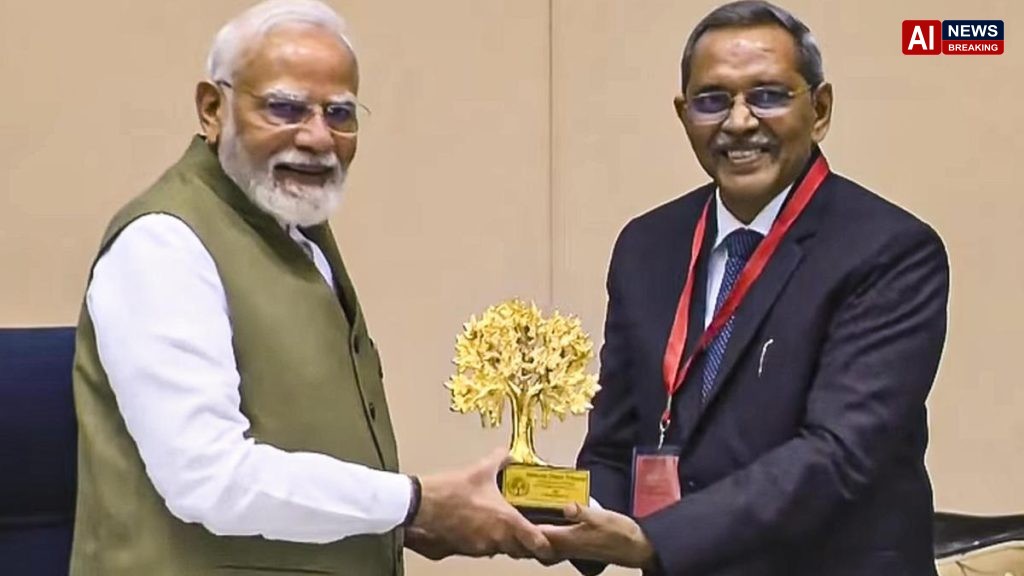
Prime Minister Narendra Modi opened the National Green Tribunal’s inaugural climate conference on Monday, using the platform to underscore the stark disparities that separate the world’s richest and poorest nations in the battle against climate change. Addressing a gathering that included Chief Justice of India Surya Kant, Union Environment, Forest and Climate Change Minister Bhupender Yadav, Attorney General R. Venkataramani and NGT chairperson Justice Prakash Shrivastava, Modi framed the event as a “crucial juncture” for India to showcase its commitment to sustainable development while calling for a more equitable global response to the climate emergency.“The climate crisis is not a distant threat; it is here, and it is already reshaping lives across the globe,” the Prime Minister began, his remarks echoing the urgency that has characterised recent international summits..
He highlighted how low‑lying island nations, sub‑Saharan Africa and parts of South Asia are bearing the brunt of rising sea levels, extreme weather events and agricultural disruption, despite contributing minimally to the greenhouse gases that fuel these changes. “We cannot allow climate inequality to become a new axis of injustice,” Modi warned, urging both developed and developing countries to share technology, finance and expertise in a manner that reflects historical responsibility.Modi’s speech was punctuated by references to India’s own climate challenges and its growing role as a climate leader. He pointed to the country’s ambitious renewable energy targets, noting that India aims to achieve 450 gigawatts of renewable capacity by 2030, a figure that would make it the world’s largest producer of clean power..
The Prime Minister also cited the launch of the International Solar Alliance in 2015, a coalition he helped found, as evidence of India’s willingness to forge multilateral solutions that benefit the global South. “Our vision is not just to meet our own energy needs but to help the world transition to a low‑carbon future,” he said.The presence of Chief Justice Surya Kant added a judicial dimension to the proceedings, signalling the growing recognition that climate change is as much a legal issue as an environmental one. In his opening remarks, the Chief Justice emphasized the importance of an independent and empowered National Green Tribunal that can enforce environmental regulations swiftly and transparently..
He urged the tribunal to adopt a proactive stance, noting that delayed adjudication often translates into irreversible ecological damage. “Justice must be timely, for the planet does not wait,” he declared, invoking the principle that the right to a clean environment is intrinsic to the fundamental rights guaranteed by the Constitution.Minister Bhupender Yadav, who heads the Union Ministry of Environment, Forest and Climate Change, outlined the government’s policy roadmap for the conference. He announced a series of new guidelines aimed at bolstering climate resilience in vulnerable regions, including accelerated funding for climate‑smart agriculture, enhanced flood‑risk mapping, and the creation of a national climate data hub..
Yadav also unveiled a fresh tranche of financial incentives for industries that adopt carbon‑capture technologies, a move intended to align India’s industrial growth with its emissions‑reduction targets. “Our approach is holistic,” he said, “combining mitigation, adaptation and capacity‑building to ensure that no community is left behind.”Attorney General R. Venkataramani offered a legal perspective on the obligations that arise from international climate accords..
He reminded the audience that India, as a signatory to the Paris Agreement, is bound by nationally determined contributions (NDCs) that must be periodically revised and strengthened. Venkataramani stressed the need for clear, enforceable mechanisms to track progress, arguing that “transparent reporting and accountability are essential to prevent the erosion of trust between nations.” He also highlighted recent jurisprudence in Indian courts that has begun to recognise climate‑related tort claims, suggesting that legal recourse may become an increasingly important tool for citizens seeking redress for environmental harms.Justice Prakash Shrivastava, chairperson of the National Green Tribunal, spoke about the tribunal’s expanded mandate in light of the conference’s theme. He announced the creation of a dedicated climate change bench within the NGT, tasked with adjudicating cases that involve cross‑border environmental impacts, climate‑related displacement and corporate responsibility for greenhouse‑gas emissions..
Shrivastava reiterated the tribunal’s commitment to “expedite cases that affect the most vulnerable,” noting that a backlog of environmental litigations has, in the past, delayed crucial mitigation measures. He also called for greater public participation in tribunal proceedings, encouraging NGOs, academia and affected communities to file amicus briefs and expert testimonies.The conference, which will run for three days, features a slate of panel discussions, workshops and research presentations. Topics range from renewable energy financing and climate‑smart urban planning to the legal implications of loss and damage, a contentious issue that has dominated negotiations at the United Nations Framework Convention on Climate Change (UNFCCC)..
International experts from the United Nations Development Programme, the World Bank and leading climate think‑tanks are slated to share insights, while Indian scientists will showcase recent advances in solar storage, electric‑vehicle technology and carbon‑sequestration methods.Observers noted that the event comes at a pivotal moment for global climate diplomacy. The latest UN climate summit, COP28, is set to convene later this year, and developing nations have been vocal about the need for concrete commitments on climate finance. India, which has previously advocated for a $100 billion annual fund to aid vulnerable countries, is expected to push for a binding framework that links financial assistance to verifiable emissions reductions..
Analysts suggest that Modi’s emphasis on climate inequality at the NGT conference may serve to bolster India’s negotiating position, presenting the country as both a responsible emitter and a champion for the interests of the Global South.In concluding the inaugural session, Modi reiterated that the conference is not merely a symbolic gathering but a “call to action” for policymakers, businesses and civil society alike. He urged participants to translate discussions into tangible policies that can be implemented at the state and local levels, emphasizing that “the success of our climate agenda depends on the collective will of every Indian citizen.” As the audience filed out of the hall, the atmosphere was one of cautious optimism, with many attendees expressing hope that the National Green Tribunal’s new climate focus will accelerate India’s transition to a greener, more resilient future while spotlighting the moral imperative to address the inequities that have long plagued the global climate fight..
Updated: September 19, 2026