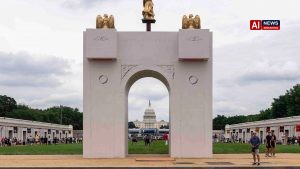
 Plaintiffs in Trump arch project seek injunction to stop administration from beginning work Nov. 5
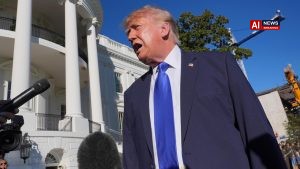
  Trump says he ‘heard something about’ Justice Department probe into longtime ally Corey Lewandowski
  Trump administration stopped sharing evidence in Good and Pretti killings, Minnesota officials say
  Tamil Nadu CM orders Chennai flood‑prevention review.
  India and Bangladesh work
 President Droupadi Murmu Honours 48 Teachers on Teachers’ Day 2026, Says Quality Education Key to Viksit Bharat
** President Droupadi Murmu led a dignified ceremony at Rashtrapati Bhavan to present the National Teaching Excellence Awards, honoring teachers from remote villages to elite universities. Her remarks linked education to constitutional ideals and the New Education Policy, underscoring the profession’s vital role in nation‑building and social mobility.
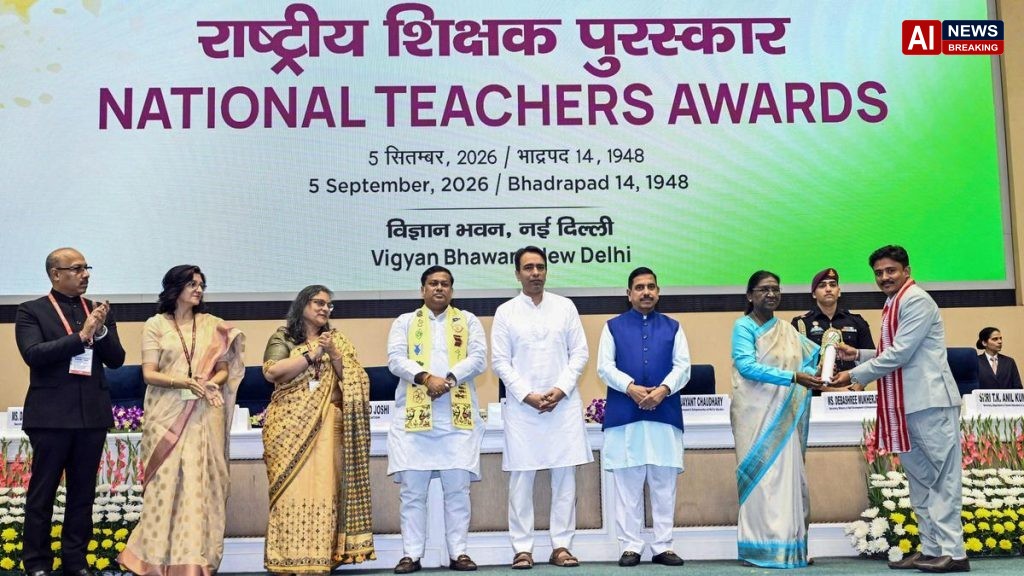
President of India confers National Awards on teachers - AI News Breaking
President Droupadi Murmu presided over a solemn and dignified ceremony at Rashtrapati Bhavan in New Delhi, conferring the prestigious National Teaching Excellence Awards on a select group of educators from across the nation. The event, which drew attention from media outlets and educational stakeholders alike, served as a formal recognition of the pivotal role teachers play in shaping the intellectual and moral fabric of Indian society. By honoring these individuals, the highest office in the land underscored the critical importance of quality education as a fundamental driver of social mobility and national development..
The awards, instituted to identify and encourage excellence in the teaching profession, highlight the dedication required to nurture future generations in an era of rapid technological and social change.In her address to the distinguished guests and awardees, President Murmu articulated a profound commitment to the principles embedded within the Indian Constitution. She emphasized that education remains the most effective means of realizing the ideal of equality of opportunity, a cornerstone of the nation’s democratic ethos. Her remarks recalled the vision of the founding fathers, who believed that an informed and educated citizenry is essential for the sustenance of democracy..
By linking the stature of the teaching profession directly to constitutional values, the President elevated the discourse from mere academic achievement to a broader societal imperative. This perspective resonates with the ongoing national dialogue regarding the transformative potential of the New Education Policy, which seeks to make learning more inclusive and holistic.The recipients of the awards represented a diverse cross-section of the Indian educational landscape, reflecting the varying challenges and triumphs found in different regions and disciplines. Among them were instructors from remote rural areas who have worked tirelessly to bring literacy and basic education to marginalized communities, alongside distinguished professors from premier institutions who have contributed significantly to research and higher learning..
This diversity was intentional, aiming to spotlight the universal value of teaching regardless of the resources available or the geographic location. It served as a reminder that the impact of a dedicated teacher is not limited by infrastructure but is defined by commitment, empathy, and pedagogical skill.Critics and analysts note that such national recognition is crucial at a time when the teaching profession faces mounting pressures, including large class sizes, inadequate resources in public schools, and the rapid shift toward digital learning tools. By placing these educators in the national spotlight, the government aims to reinvigorate pride within the profession and encourage more individuals to pursue careers in teaching..
The ceremony thus functions not only as an award distribution but also as a strategic signal of policy priority, reinforcing the state’s commitment to strengthening the backbone of the education system. This visible support is seen as vital for retaining talent and improving the overall quality of instruction across the country.One of the highlighted awardees, a secondary school teacher from a tribal district in Central India, shared her experience of overcoming logistical hurdles to ensure that students from disadvantaged backgrounds could access quality education. Her story exemplifies the resilience and innovation required in the field, as she developed localized teaching materials and community engagement strategies to bridge the learning gap..
Such narratives provide a human face to the statistics often cited in educational reports, illustrating the tangible difference that individual dedication can make in the lives of young learners. Her presence at the ceremony served as an inspiration to peers nationwide, demonstrating that excellence in teaching is possible even in the most challenging environments.Another recipient, a senior professor from a leading engineering college, was recognized for his contributions to integrating ethical frameworks into technical education. His work underscores the growing understanding that technical proficiency must be coupled with social responsibility, a theme increasingly prevalent in curricular reforms..
The inclusion of such figures in the awards ceremony signals a broader appreciation for the multifaceted nature of modern education, which now extends beyond rote learning to encompass critical thinking, ethical reasoning, and global citizenship. This shift reflects the evolving needs of a globalized economy and the complex societal challenges that future graduates will face.President Murmu also took the opportunity to commend the silent but indispensable support provided by educational aid workers, administrative staff, and parents. She acknowledged that the success of any teacher is often a collective effort, relying on a supportive ecosystem that includes home and community..
This holistic view of education aligns with contemporary pedagogical theories that emphasize collaboration and shared responsibility in student development. By recognizing this network of support, the President reinforced the idea that education is a societal endeavor, requiring concerted efforts from all stakeholders to succeed.The ceremony was marked by moments of reflection on the historical challenges faced by the Indian education system, from colonial legacies to post-independence expansion efforts. These historical references provided context for current achievements, illustrating the long journey toward universal literacy and equitable access..
The President’s remarks served as a bridge between past struggles and future aspirations, reminding attendees that while significant progress has been made, the work is far from complete. This historical perspective adds depth to the celebration, framing the awards not just as individual accolades but as milestones in a national journey toward knowledge and enlightenment.In addition to the ceremonial aspects, the event included a panel discussion featuring education experts and policymakers who addressed contemporary issues such as teacher training, mental health support for educators, and the integration of artificial intelligence in classrooms. These discussions offered a forward-looking dimension to the proceedings, highlighting the need for continuous adaptation and innovation in the teaching profession..
The insights shared by these experts provided a roadmap for addressing emerging challenges, suggesting that the role of the teacher is evolving from being a sole source of information to becoming a facilitator of learning in a digital age.The broadcasting of the event to a wide audience ensured that the messages of dedication and excellence reached beyond the immediate attendees to educators and students across the country. Media coverage accompanied by interviews with the awardees helped disseminate their stories, inspiring local initiatives and community-based educational projects. This widespread reach amplifies the impact of the awards, creating a ripple effect that encourages recognition of good practices at the grassroots level..
It fosters a culture of appreciation for teaching, which is essential for sustaining morale and professionalism within the workforce.As the ceremony concluded, the sense of occasion was one of renewed commitment and collective hope. The President’s final words urged the nation to continue investing in its teachers, recognizing them as the architects of a just and equitable society. This call to action resonates with the broader goals of national development, where human capital is the most valuable resource..
The event stands as a testament to the enduring belief that through education, individuals can transcend barriers and contribute meaningfully to the nation’s progress. It reinforces the conviction that honoring teachers is not merely a gesture of gratitude but a strategic investment in the future of India.Looking ahead, stakeholders hope that this recognition will translate into tangible policy measures that improve working conditions, provide better remuneration, and enhance professional development opportunities for teachers nationwide. The visibility gained from such national awards can potentially influence legislative and administrative decisions, leading to reforms that address systemic issues in the education sector..
Ultimately, the conferment of these awards serves as a catalyst for broader conversations.
Updated: September 5, 2026
President Droupadi Murmu presented the National Teaching Excellence Awards at Rashtrapati Bhavan, highlighting educators from remote villages to elite institutions as vital to India’s democratic and developmental goals. The ceremony also underscored the government’s push to elevate the teaching profession amid challenges and to align it with the broader reforms of the New Education Policy.
Insight: Elevating teachers to the national stage signals a political pivot: education is now being framed as the linchpin of India’s democratic promise, not just a social service.