Use of Chief Minister C. Joseph Vijay’s deep fake videos to collect money: Rajasthan youth moves Madras High Court seeking bail
 Florida officer took possession of man’s home after finding him dead 4 years ago, police say
 Jury weighs fate of US woman who says father forced her into Syria’s war zone when she was a teen
 France bans certain protests to restore public
Prison inmates set up stall at Dasara exhibition in Mysuru
**
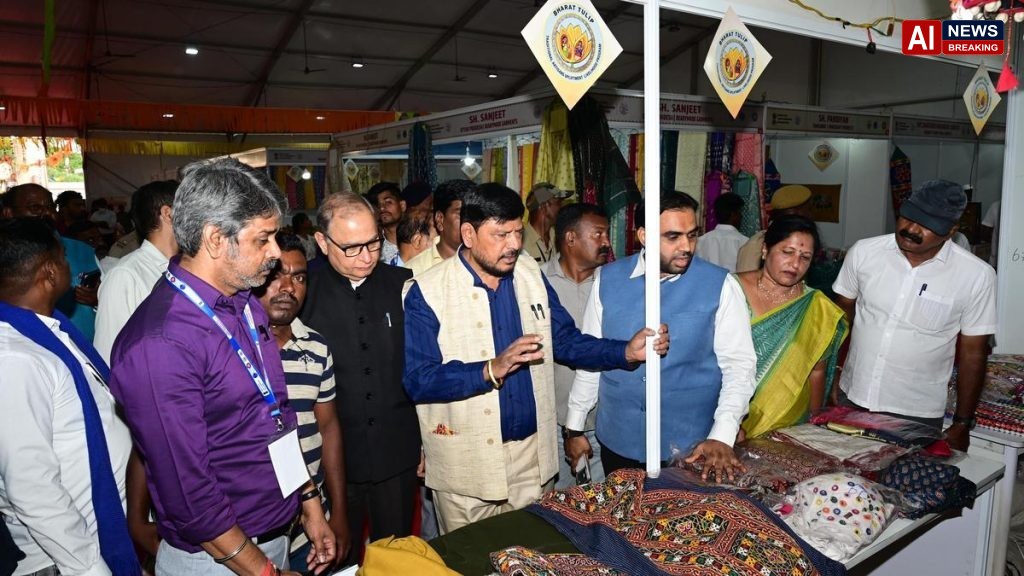
Prison inmates set up stall at Dasara exhibition in Mysuru - AI News Breaking
prison inmates stall dasara:
A modest wooden stall tucked away in the bustling Dasara exhibition grounds in Mysuru has become an unexpected highlight of the week‑long festival, drawing crowds not only for its colourful decorations but for the story behind its goods. Operated entirely by inmates from the nearby Central Prison, the stall offers a range of freshly baked breads, biscuits and pastries, all prepared within the prison’s vocational training unit. Visitors who stop by are greeted by the warm scent of oven‑baked goods and the friendly smiles of men who, for a few hours each day, trade their prison uniforms for aprons and serve the public as part of a rehabilitation programme aimed at reintegrating offenders into society.The initiative, launched in early September, is the result of a collaborative effort between the Karnataka Prison Department, the Mysuru Municipal Corporation and a local non‑governmental organisation that specialises in prison reform..
The programme was conceived as a practical extension of the vocational training already offered to inmates, which includes carpentry, tailoring and horticulture. “We wanted to give the prisoners a real‑world platform where they could see the impact of their work beyond the prison walls,” said Deputy Commissioner of Prisons Ramesh Kumar, who supervised the project’s rollout. “When a visitor buys a loaf of bread and learns that it was made by someone serving a sentence, it humanises the inmates and opens a dialogue about rehabilitation.”The bakery unit inside the prison, established in 2018, initially produced simple staples such as plain loaves and rusks for the prison canteen..
Over the past two years, the range has expanded to include sweet treats such as coconut biscuits, carrot muffins and even a modest version of Mysuru’s famous Mysore Pak, adapted to meet health and safety standards for public consumption. All ingredients are sourced from approved vendors, and the finished products undergo a strict quality‑check process overseen by external food‑safety auditors before they are allowed to leave the prison premises. The stall’s manager, a senior prison officer named Anil Sharma, monitors the inventory and ensures that the pricing remains affordable, with most items sold for between ₹20 and ₹80.For the inmates, the stall offers more than a chance to earn a small stipend; it provides a sense of purpose and a tangible connection to the community..
“When I knead the dough, I think about my family and how I want to be useful again,” said Rajesh, a 34‑year‑old serving a five‑year term for a non‑violent offence. “Seeing people smile after tasting what we made makes me feel proud, and it reminds me that I am not just a number in a cell.” According to prison officials, the programme has contributed to a noticeable reduction in behavioural incidents within the facility, as participants report higher morale and a greater willingness to engage in other educational activities.Visitors to the Dasara exhibition have responded enthusiastically to the stall’s offerings, often pausing their stroll through the carnival rides and cultural performances to purchase a treat. “I was curious at first, but the biscuits are genuinely good,” said Meera, a local schoolteacher who stopped by with her children..
“It’s heartening to see something positive come out of a place we usually associate with punishment. It makes you think about the importance of second chances.” Social media posts featuring photos of the stall and its products have garnered thousands of likes and shares, further amplifying the message that rehabilitation can be both humane and productive.The financial model of the venture is modest but sustainable. Proceeds from sales are split between a fund that supports the prison’s vocational programmes, a small contribution to the families of the inmates, and a modest personal allowance for the participating prisoners, which they can use to purchase essential items or save for release..
The Karnataka State Government has pledged to extend the model to other prisons across the state if the pilot continues to succeed, citing the Dasara stall as a “showcase of innovative correctional reform.” Officials hope that the visibility provided by the high‑profile festival will encourage other municipalities to explore similar collaborations.Critics, however, caution that while such initiatives are commendable, they must be accompanied by broader systemic changes to ensure genuine reintegration. Human rights advocate Sunita Rao noted that the programme should not be used to mask deeper issues such as overcrowding and limited access to legal aid within the prison system. “Providing a bakery stall is a step forward, but it should not distract from the need for comprehensive reforms that address the root causes of recidivism,” she said..
In response, the prison department reiterated that the bakery project is part of a larger strategic plan that includes education, mental‑health support and post‑release employment assistance.The stall’s popularity has also sparked interest from local entrepreneurs looking to collaborate on future product lines. A nearby café owner, Ravi Menon, approached the prison officials with a proposal to co‑brand a line of “Freedom‑Inspired” pastries that could be sold in his establishment year‑round, with a portion of profits earmarked for the prison’s vocational training fund. While negotiations are still underway, such partnerships hint at the potential for the initiative to evolve from a seasonal attraction into a permanent conduit between inmates and the wider economy.As Dasara draws to a close, the wooden stall will be dismantled, but the impact of its brief presence is likely to linger..
For the prisoners who have spent weeks perfecting a crust or fine‑tuning a spice blend, the experience has reinforced the belief that skill and dignity can coexist behind bars. For the visitors, it has offered a tangible reminder that rehabilitation is not an abstract policy but a lived reality that can enrich both the individual and the community. The success of the Mysuru exhibition stall may well serve as a template for other correctional institutions seeking to blend vocational training with public engagement, illustrating how a simple act of sharing food can bridge divides and foster a more inclusive society..
In Mysuru’s Dasara fair, a modest stall run by Central Prison inmates sold freshly baked treats, turning vocational training into a public showcase of rehabilitation. The initiative, praised for boosting inmate morale and community engagement, is being eyed for replication across Karnataka’s correctional facilities.
The stall turns the festival’s spectacle into a subtle referendum on punishment, proving that when society tastes an inmate’s labor, the line between “criminal” and “citizen” blurs and the demand for humane reintegration swells. Its ripple—greater morale behind bars, public goodwill, and a blueprint for market‑linked rehabilitation—forces policymakers to confront whether token gestures can ever replace the systemic overhaul that true second chances require.