Europe warns of Russia’s hybrid attacks but struggles to counter them
  Former chief election commissioner calls SIR scheme illegal.
  A Corruption Scandal Is Reshaping Brazil’s Presidential Election
  US citizen injured in Illinois after ICE agents mistook him for fugitive, tried to arrest him
  At 10 years old, Smithsonian’s Black museum is undaunted amid pressure from Trump administration
 Punjab Launches Ambitious Underground Power Supply Network in Satouj Village
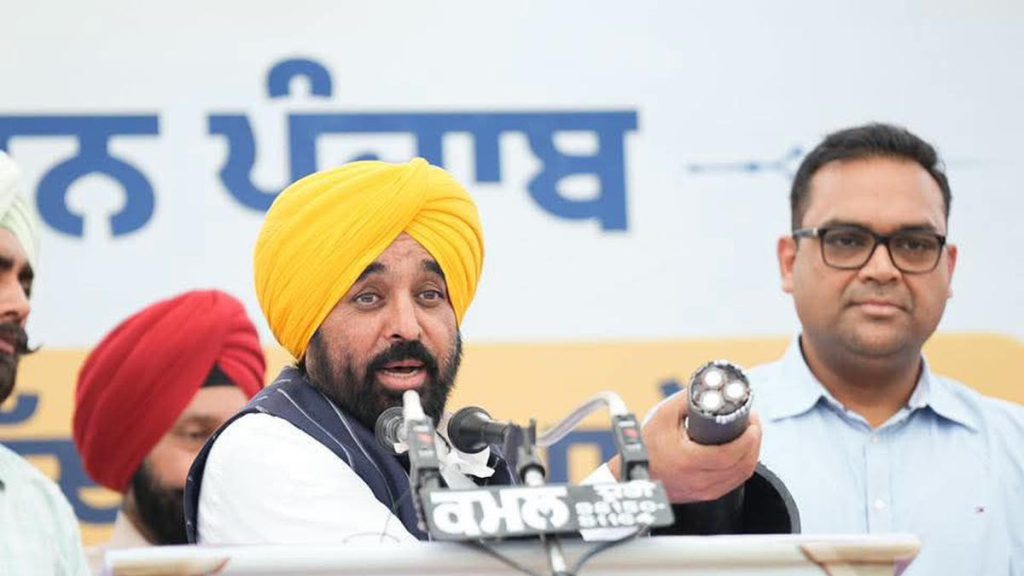
Powering a Safer Future: Punjab’s Ambitious Underground Power Supply Network
Summary
In a significant move to mitigate the risks of electrical accidents and crop fires, the Punjab government has launched an underground power supply network in Satouj village.
The initiative, announced by Chief Minister Bhagwant Singh Mann, aims to eliminate exposed electricity wires, thereby reducing the likelihood of devastating fires and accidents.
Updated: May 20, 2026
Powering a Safer Future: Punjab’s Ambitious Underground Power Supply Network
Summary
In a significant move to mitigate the risks of electrical accidents and crop fires, the Punjab government has launched an underground power supply network in Satouj village. The initiative, announced by Chief Minister Bhagwant Singh Mann, aims to eliminate exposed electricity wires, thereby reducing the likelihood of devastating fires and accidents.
Core News
As part of the project, Punjab Power Corporation Limited has laid underground power cables in Satouj village, replacing visible overhead wires. This innovative approach not only ensures the safety of residents but also protects the environment by minimizing the risk of fires and reducing the visual impact of power lines.
Impact Analysis
The underground power supply network is expected to have far-reaching economic and social benefits:
1. Reduced risk of crop fires: The main cause of fires in Punjab’s agricultural lands is electricity-related, resulting in significant losses for farmers. By eliminating overhead wires, the risk of such fires decreases, ensuring better yield and productivity for farmers.
2. Enhanced safety: The initiative will prevent electrical accidents, which often result in fatalities and injuries. This will lead to a reduction in healthcare costs and increased productivity due to reduced absenteeism.
3. Boost to tourism: Rural areas like Satouj village will attract more tourists, attracted by the cleanliness and safety provided by the underground power supply network. This can lead to an increase in local businesses, creating jobs and income opportunities.
4. Model for other states: Punjab’s innovative approach to underground power supply can serve as a model for other states in India, promoting nationwide adoption and reducing the risk of electrical accidents and crop fires.
Broader Implications
The Punjab government’s initiative sends a strong signal that India is committed to adopting cutting-edge technology to ensure the safety and well-being of its citizens. This project has several broader implications:
1. Environmental sustainability: The underground power supply network reduces the environmental impact of power transmission and distribution, aligning with the nation’s goal of becoming carbon neutral by 2070.
2. Government commitment to rural development: Punjab’s focus on improving rural infrastructure reflects the government’s commitment to bridging the rural-urban divide and enhancing the quality of life for citizens in rural areas.
3. Potential for energy efficiency: The underground power supply network may also lead to energy efficiency gains, as less electricity is lost in transmission and distribution, contributing to the nation’s energy security.
In conclusion, Punjab’s underground power supply network in Satouj village marks a significant step towards reducing the risks associated with electrical accidents and crop fires. As the nation looks to adopt this innovative approach, it will not only boost rural development but also contribute to India’s long-term progress towards becoming a sustainable and equitable society.
Punjab's bold move underground could have far-reaching implications, not just for its rural communities, but also for the nation's broader goal of achieving carbon neutrality by 2070.
This initiative may set a precedent for widespread adoption of underground power supply networks, paving the way for a cleaner, safer, and more sustainable electric infrastructure across India.
This is a developing story. More updates will follow as new information becomes available.