Europe warns of Russia’s hybrid attacks but struggles to counter them
  Former chief election commissioner calls SIR scheme illegal.
  A Corruption Scandal Is Reshaping Brazil’s Presidential Election
  US citizen injured in Illinois after ICE agents mistook him for fugitive, tried to arrest him
  At 10 years old, Smithsonian’s Black museum is undaunted amid pressure from Trump administration
 Putin Wages Anti-NATO Tirade at Russia’s Diminished Victory Day Parade in Moscow Amid Ukraine War Tensions
putin wages antinato tirade:
Victory Day Parade Becomes a Platform for Putin’s Anti-NATO Rhetoric Amid Ukraine War Tensions
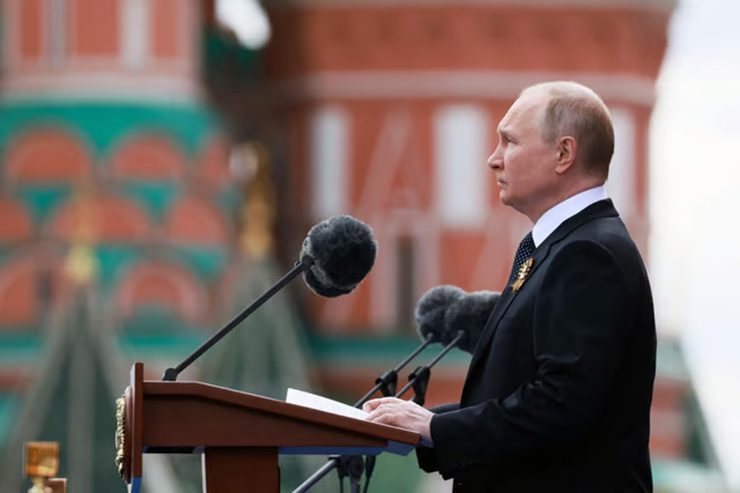
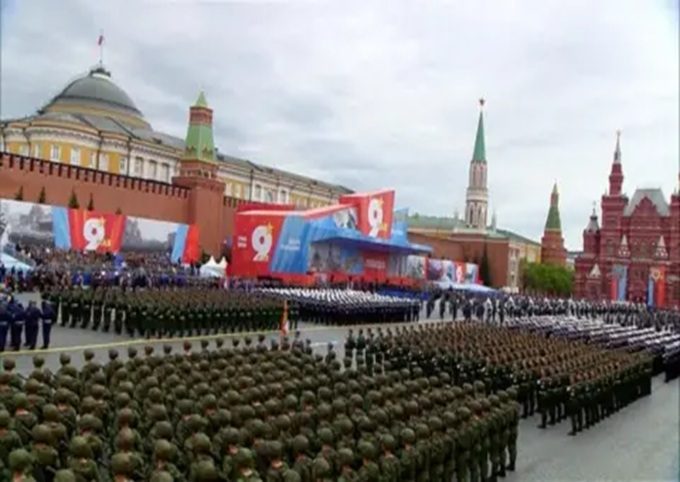
On May 9, Russian President Vladimir Putin made his annual Victory Day speech, albeit in a significantly scaled-back Victory Day parade, amidst the ongoing conflict in Ukraine.
The event, held in Moscow’s iconic Red Square, commemorates the Soviet Union’s victory over Nazi Germany in World War II, but this year’s festivities were marred by the harsh realities of war, economic sanctions, and increasing international isolation.
Updated: May 9, 2026
Victory Day Parade Becomes a Platform for Putin’s Anti-NATO Rhetoric Amid Ukraine War Tensions
On May 9, Russian President Vladimir Putin made his annual Victory Day speech, albeit in a significantly scaled-back Victory Day parade, amidst the ongoing conflict in Ukraine. The event, held in Moscow’s iconic Red Square, commemorates the Soviet Union’s victory over Nazi Germany in World War II, but this year’s festivities were marred by the harsh realities of war, economic sanctions, and increasing international isolation.
What Happened
In his address, Putin launched a scathing attack on NATO, accusing the alliance of fueling global tensions and attempting to weaken Russia. He claimed that Western nations are encouraging conflict and stirring up dangerous geopolitical rivalries, positioning Russia as a defender of national sovereignty and historical truth. In defense of Moscow’s actions in Ukraine, Putin reiterated that Russia remains united behind its special military operation, praising Russian soldiers fighting on the front lines and drawing parallels with the sacrifices made by Soviet troops during World War II.
Background
The ongoing conflict in Ukraine, which began in February 2022, has seen significant advancements by Russian forces, but at a tremendous human and economic cost. Despite the Kremlin’s claims of a special military operation, the international community widely regards the invasion as a war of aggression. In response, NATO and Western nations have imposed severe economic sanctions on Russia, causing widespread economic hardship.
Victory Day, a patriotic holiday in Russia, has traditionally been marked by grand military parades and grandiose celebrations. However, this year’s event was drastically scaled back, an indication of the country’s deteriorating economic situation and growing international isolation.
Key Concerns
Putin’s Victory Day speech raises several key concerns:
1. Escalation of Tensions: By continuing to demonize NATO and accusing Western nations of fueling global tensions, Putin’s rhetoric heightens the risk of further escalation, potentially drawing in more countries and worsening the conflict in Ukraine.
2. War Fatigue: The speech’s tone, linking Russia’s military actions in Ukraine to the sacrifices of Soviet troops during World War II, suggests that the Kremlin may be trying to boost morale and distract from the war’s devastating human cost.
3. International Isolation: The scaled-back Victory Day parade underscores Russia’s growing isolation on the world stage, with many countries boycotting the event or sending low-level delegations.
Scaled-Back Military Display
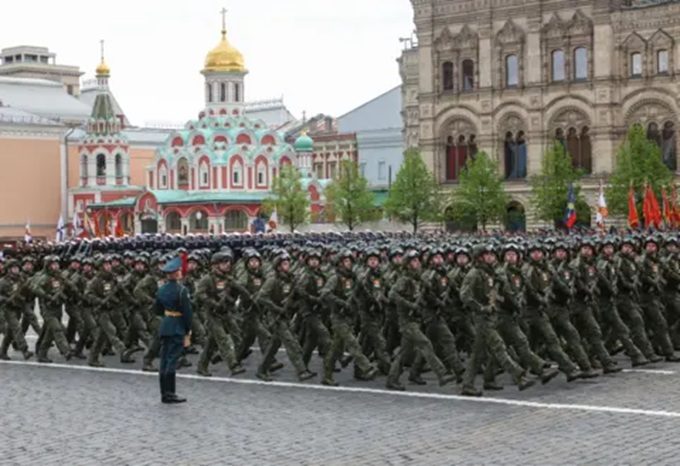
Unlike the grand military spectacles seen in previous years, the 2026 Victory Day parade was significantly reduced in scale. Analysts and observers noted the absence of large numbers of heavy armored vehicles and advanced military equipment that traditionally dominate the event.
The toned-down ceremony reflected the immense strain Russia’s military resources are facing after more than four years of conflict in Ukraine. Several tanks and military assets that usually participate in the parade are believed to have been redirected to active combat zones.
The reduced display also highlighted security concerns following repeated drone attacks and cross-border strikes linked to the war. Russian authorities imposed tight security measures across Moscow ahead of the event, with increased surveillance and restrictions in place.
Despite the scaled-back format, columns of soldiers marched through Red Square while fighter jets flew overhead displaying the colors of the Russian flag. Veterans of World War II were seated alongside government officials and foreign guests invited by the Kremlin.
Putin Draws Historical Parallel
During his speech, Putin once again attempted to frame the Ukraine war within the historical memory of World War II. The Kremlin has consistently used Victory Day symbolism to justify its military actions, arguing that Russia is fighting against what it describes as modern-day extremism and Western aggression.
Critics, however, argue that the comparison distorts history and is intended to rally domestic support for a prolonged war that has caused massive casualties and economic pressure inside Russia.
Putin emphasized that Russians “honor the courage and sacrifice” of Soviet soldiers who defeated Nazi Germany, adding that the country would continue to defend its national interests against external threats.
Ukraine War Overshadows Celebrations
Victory Day has traditionally been one of Russia’s most important national holidays, showcasing military strength and patriotic unity. But since the invasion of Ukraine began in 2022, the annual celebration has increasingly become intertwined with the realities of war.
This year’s parade came as fighting continued across eastern and southern Ukraine, with both sides reporting heavy attacks. Ukrainian officials have repeatedly accused Russia of targeting civilian infrastructure, while Moscow claims it is conducting operations against military objectives.
The conflict has reshaped Russia’s economy and foreign relations, pushing Moscow into deeper confrontation with Western governments. NATO countries have expanded military support for Ukraine, including weapons deliveries, intelligence sharing, and training programs.
Putin’s criticism of NATO during the parade reflected Moscow’s broader narrative that the alliance is using Ukraine as a proxy to weaken Russia strategically.
International Reactions
Western leaders dismissed Putin’s comments as an attempt to deflect responsibility for the war. NATO officials have repeatedly stated that the alliance poses no threat to Russia and that support for Ukraine is intended to help Kyiv defend its sovereignty.
At the same time, some countries maintaining closer ties with Moscow sent representatives to the parade, signaling that Russia still retains diplomatic partnerships despite Western sanctions and isolation efforts.
Political analysts say Victory Day remains a crucial platform for Putin to project resilience both domestically and internationally. Even with a smaller parade and ongoing military setbacks, the Kremlin continues to use the occasion to reinforce patriotic messaging and demonstrate continuity of state power.
Symbolism Amid Uncertainty
The 2026 Victory Day parade underscored how deeply the Ukraine conflict has transformed modern Russia. What was once primarily a commemoration of Soviet victory in World War II has increasingly become a stage for wartime messaging and geopolitical confrontation.
Putin’s speech sought to portray Russia as standing firm against external enemies, but the reduced scale of the military showcase also reflected the long-term costs of the war.
As the conflict drags on with no clear resolution in sight, Victory Day celebrations are likely to remain both a symbol of national pride and a reminder of the mounting challenges facing the Kremlin.
Insight:
Vladimir Putin’s Victory Day speech showcases a desperate attempt to rewrite history and divert attention from Russia’s dwindling influence and the catastrophic human toll of the Ukraine war. By doubling down on anti-NATO rhetoric, Putin risks further entrenching Russia’s international isolation.