Europe warns of Russia’s hybrid attacks but struggles to counter them
  Former chief election commissioner calls SIR scheme illegal.
  A Corruption Scandal Is Reshaping Brazil’s Presidential Election
  US citizen injured in Illinois after ICE agents mistook him for fugitive, tried to arrest him
  At 10 years old, Smithsonian’s Black museum is undaunted amid pressure from Trump administration
 Rahul Gandhi Rejects CBI Chief Selection Process, Calls It a ‘Biased Exercise’
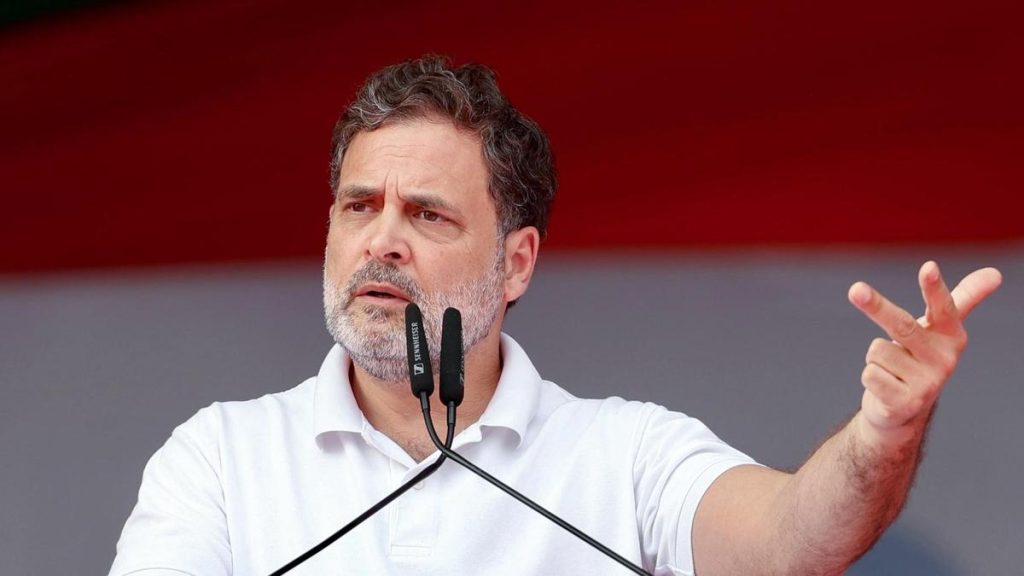
rahul gandhi rejects chief:
Congress leader Rahul Gandhi has refused to endorse the selection process for the next CBI Director, calling the exercise “biased” and raising concerns over transparency and institutional independence. His dissent during the high-level appointment meeting has intensified the political debate over the autonomy of India’s premier investigative agency.
The disagreement highlights growing opposition allegations that key constitutional and investigative institutions are being influenced politically, while the government maintains that the appointment process follows established legal procedures.
A fresh political confrontation has erupted over the appointment of the next Director of the Central Bureau of Investigation (CBI), after Congress leader Rahul Gandhi publicly dissented from the selection process, declaring that he “won’t be part of a biased exercise.”
Rahul Gandhi’s sharp remarks came during deliberations by the high-powered committee responsible for selecting the head of India’s premier investigative agency. His refusal to endorse the process has added another layer of political controversy to the functioning and perceived independence of the CBI, an institution that has frequently been at the center of political battles in India.
The development is significant not only because of the high-profile nature of the appointment, but also because it revives broader questions regarding institutional autonomy, opposition participation in constitutional processes, and the relationship between investigative agencies and political power.
How the CBI Director Is Selected
The Director of the Central Bureau of Investigation is appointed through a statutory selection process designed to ensure bipartisan consultation and institutional credibility.
Under existing legal provisions, the selection committee includes:
- The Prime Minister
- The Chief Justice of India or a nominated Supreme Court judge
- The Leader of Opposition in the Lok Sabha, or the leader of the single largest opposition party
As one of the key members of this panel, Rahul Gandhi’s dissent carries substantial political and symbolic significance.
The committee’s role is to evaluate shortlisted candidates and recommend the final appointment for one of the most powerful investigative positions in the country.
Rahul Gandhi’s Objection
Rahul Gandhi’s criticism centered on what he described as a “biased exercise,” implying that the process lacked fairness, neutrality, or genuine consultation.
According to opposition sources, the Congress leader raised concerns over:
- The manner in which candidates were shortlisted
- The transparency of the process
- Perceived executive influence in appointments
- The broader functioning of investigative agencies under the current government
While the exact details of the internal deliberations remain confidential, Rahul Gandhi’s public dissent was clearly intended to send a political message about institutional independence.
His refusal to endorse the process also reflects the Congress party’s larger narrative that constitutional and investigative institutions are increasingly being subjected to political pressure.
Government’s Position
The government has rejected allegations of bias and maintains that the appointment process fully complies with legal and constitutional norms.
Officials argue that:
- The committee mechanism itself ensures checks and balances
- Multiple institutional stakeholders participate in the decision
- The process follows established precedents
- Allegations of bias are politically motivated
The ruling side has also accused the opposition of attempting to delegitimize institutions whenever outcomes do not align with its political expectations.
Government supporters insist that the CBI selection framework remains transparent and legally sound.
Why the CBI Matters Politically
The Central Bureau of Investigation occupies a uniquely powerful position in India’s governance structure. The agency handles:
- Corruption investigations
- Economic offenses
- High-profile criminal cases
- Politically sensitive probes
- Inter-state and national investigations
Because of its vast powers and political sensitivity, control and credibility of the CBI have long been subjects of intense debate.
Over the years, multiple political parties—including those currently in power and opposition—have accused governments of using the agency selectively against rivals.
The Supreme Court itself once famously referred to the CBI as a “caged parrot,” a phrase that continues to shape public discourse around the institution’s autonomy.
Congress and Institutional Autonomy Narrative
Rahul Gandhi’s dissent fits into a broader opposition strategy centered on institutional independence.
In recent years, the Congress party has repeatedly alleged misuse or politicization of:
- Central investigative agencies
- Tax authorities
- Constitutional bodies
- Law enforcement mechanisms
The opposition argues that democratic accountability depends on ensuring these institutions operate free from political interference.
By publicly objecting to the CBI Director selection process, Rahul Gandhi appears to be reinforcing this larger political narrative ahead of future electoral battles.
BJP-Congress Political Clash Intensifies
The disagreement is likely to deepen the already sharp confrontation between the BJP and Congress.
BJP’s Likely Counterattack
The ruling party is expected to argue that:
- Congress historically misused institutions while in power
- Rahul Gandhi is undermining constitutional processes
- Opposition criticism is aimed at weakening public trust in institutions
- The appointment process remains fully legitimate
Congress Strategy
Congress, meanwhile, will likely continue emphasizing:
- Accountability and transparency
- Independent institutions
- Checks on executive power
- Democratic consultation mechanisms
The issue may become part of a wider political campaign regarding governance and constitutional functioning.
Impact on the Incoming CBI Director
The controversy surrounding the selection process could create immediate challenges for the newly appointed CBI chief.
Even before assuming office, the incoming Director may face:
- Questions regarding perceived neutrality
- Heightened political scrutiny
- Increased media attention
- Opposition skepticism in sensitive investigations
Maintaining institutional credibility will therefore become a critical priority for the new leadership.
The Director’s handling of politically sensitive cases in the coming months could significantly influence public perceptions of the agency’s independence.
The Larger Institutional Debate in India
The latest controversy reflects a much wider debate unfolding in Indian politics: how to preserve institutional trust in an increasingly polarized political environment.
Independent institutions are central to democratic governance because they:
- Enforce accountability
- Investigate wrongdoing impartially
- Maintain rule of law
- Provide checks on executive power
However, when political actors publicly question the neutrality of these institutions, public confidence can erode.
At the same time, critics argue that transparency and scrutiny are necessary precisely to protect institutional independence.
This tension has become one of the defining features of contemporary Indian politics.
Opposition’s Strategic Messaging
Rahul Gandhi’s decision to publicly dissent was likely calculated not only as an institutional objection but also as political messaging.
The Congress leader appears to be positioning himself as:
- A defender of democratic institutions
- A critic of centralized executive power
- A voice challenging perceived institutional imbalance
This strategy aligns with the opposition bloc’s broader attempt to frame upcoming political contests around constitutional values and governance accountability.
Legal and Constitutional Dimensions
Legally, the appointment process does not require unanimity among committee members. A dissenting opinion from one member does not automatically invalidate the selection.
However, dissent carries political significance because it introduces questions about consensus and legitimacy.
Constitutional experts note that bipartisan consultation mechanisms were designed precisely to avoid perceptions of unilateral control over sensitive appointments.
When major opposition figures openly reject the process, it inevitably shapes public debate around institutional trust.
Public Perception and Political Optics
In modern politics, perception often matters as much as procedure.
For supporters of the government, Rahul Gandhi’s dissent may appear as political obstructionism. For opposition supporters, it reinforces concerns about centralization of institutional authority.
The controversy is also likely to dominate television debates, parliamentary discussions, and digital political campaigns.
The optics are particularly important because the CBI frequently investigates cases involving influential political leaders and business figures.
A Continuing Battle Over Institutions
The dispute over the next CBI Director is unlikely to end with the appointment itself. Instead, it reflects a continuing battle over the credibility, independence, and political perception of India’s major institutions.
As political polarization deepens, appointments to constitutional and investigative posts are increasingly becoming arenas for broader ideological and political conflict.
Rahul Gandhi’s public dissent ensures that the debate over institutional autonomy will remain central to national political discourse in the months ahead.
AI Insight
Rahul Gandhi’s refusal to endorse the CBI Director selection process is part of a larger opposition strategy focused on institutional legitimacy and democratic accountability. The move is politically significant because it shifts attention from the individual appointment to the structure of power governing investigative agencies. For the BJP, the challenge will be defending procedural legality and institutional credibility. For the opposition, the goal is to frame the debate around checks and balances in governance. In the long term, repeated political battles over investigative agencies risk affecting public trust unless transparency and bipartisan confidence in appointments are strengthened.