
 Europe warns of Russia’s hybrid attacks but struggles to counter them
  Former chief election commissioner calls SIR scheme illegal.
  A Corruption Scandal Is Reshaping Brazil’s Presidential Election
  US citizen injured in Illinois after ICE agents mistook him for fugitive, tried to arrest him
  At 10 years old, Smithsonian’s Black museum is undaunted amid pressure from Trump administration
 Rahul Gandhi Slams Modi and Banerjee, Sparking Indian Politics Storm
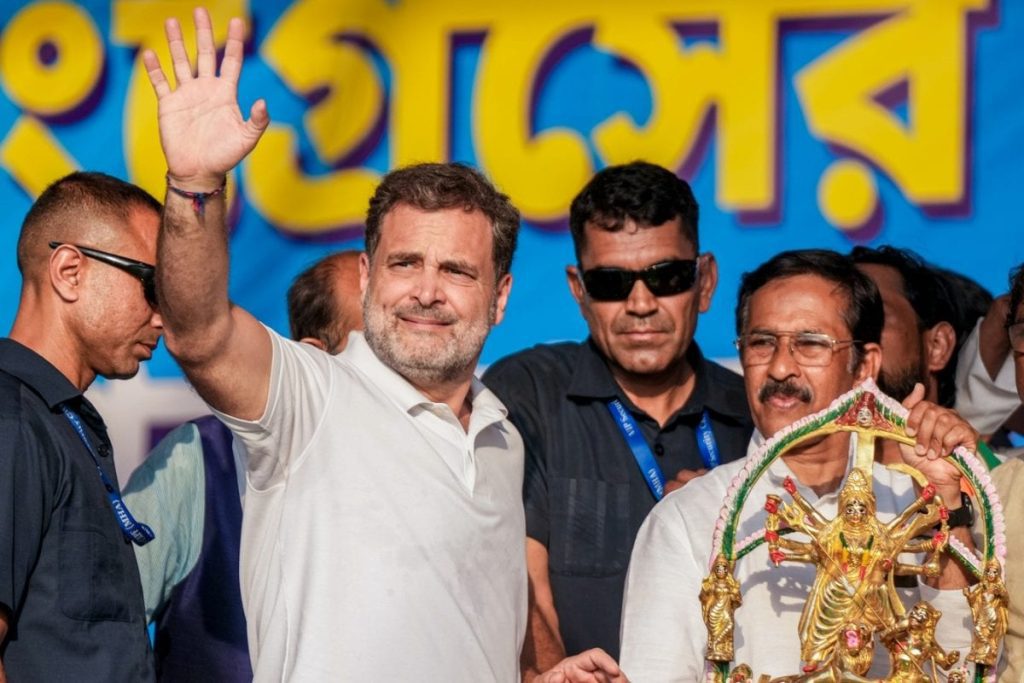
Economic and Geopolitical Fallout of Rahul Gandhi’s Attack on BJP and TMC
Rahul Gandhi’s scathing attack on Prime Minister Narendra Modi and West Bengal Chief Minister Mamata Banerjee has ignited a storm in Indian politics.
Gandhi’s allegation that both leaders prioritize the interests of the rich and corporate entities has significant economic and geopolitical implications.
Updated: April 26, 2026
Economic and Geopolitical Fallout of Rahul Gandhi’s Attack on BJP and TMC
Rahul Gandhi’s scathing attack on Prime Minister Narendra Modi and West Bengal Chief Minister Mamata Banerjee has ignited a storm in Indian politics. Gandhi’s allegation that both leaders prioritize the interests of the rich and corporate entities has significant economic and geopolitical implications.
During a poll rally, Rahul Gandhi criticized Modi’s alleged pro-rich politics, stating that the Prime Minister’s economic policies favor the corporate sector. He also targeted Mamata Banerjee, claiming that she has replicated a similar elite-focused governance model in West Bengal.
Impact Analysis
Gandhi’s words carry substantial weight, given his position as a key opposition leader. If his allegations gain traction, it could have several consequences:
1. Election Implications: The attack may hurt the BJP’s chances in the upcoming West Bengal assembly elections, potentially affecting their prospects nationwide.
2. Corporate Confidence: If investors believe that the government is tilting the scales in favor of the rich and corporate entities, it may lead to a decrease in business confidence and investment.
3. Social Unrest: Gandhi’s rhetoric may embolden the poor and marginalized, potentially leading to increased social unrest and protests.
4. Regional Divide: The attack on Mamata Banerjee may exacerbate the divide between the Centre and the state governments, particularly in Bengal.
Broader Implications
Gandhi’s comments have far-reaching implications beyond the current election cycle:
1. Global Perceptions: India’s image as a pro-business and investor-friendly country may suffer if the world perceives its government as catering to the interests of the wealthy and corporate elite.
2. Economic Inequality: If the economy continues to favor the rich and corporate entities, it may widen the wealth gap and exacerbate social inequality, leading to long-term stability and growth concerns.
3. Populism and Nationalism: Gandhi’s words reflect a growing trend towards populism and nationalism in Indian politics, potentially leading to increased polarization and social unrest.
4. Party Realignment: Rahul Gandhi’s attack may signal a potential shift in the opposition’s strategy, with the INC and other parties focusing more on appealing to the poor and marginalized voters.
Rahul Gandhi’s attack on the BJP and TMC represents a pivotal moment in India’s economic and social landscape – a clash between the interests of the elite and those of the marginalized masses.
As a reflection of the widening social and economic divide, Gandhi’s comments may be a symptom of a deeper structural issue, where the pursuit of corporate interests comes at the expense of the country’s most vulnerable populations
This is a developing story. More updates will follow as new information becomes available.




