Europe warns of Russia’s hybrid attacks but struggles to counter them
  Former chief election commissioner calls SIR scheme illegal.
  A Corruption Scandal Is Reshaping Brazil’s Presidential Election
  US citizen injured in Illinois after ICE agents mistook him for fugitive, tried to arrest him
  At 10 years old, Smithsonian’s Black museum is undaunted amid pressure from Trump administration
 Russia and Ukraine Exchange Massive Missile and Drone Strikes as Air War Intensifies Across Borders
Russia and Ukraine Trade Deadly Blows With Missiles and Drones - AI News Breaking
russia ukraine exchange massive:
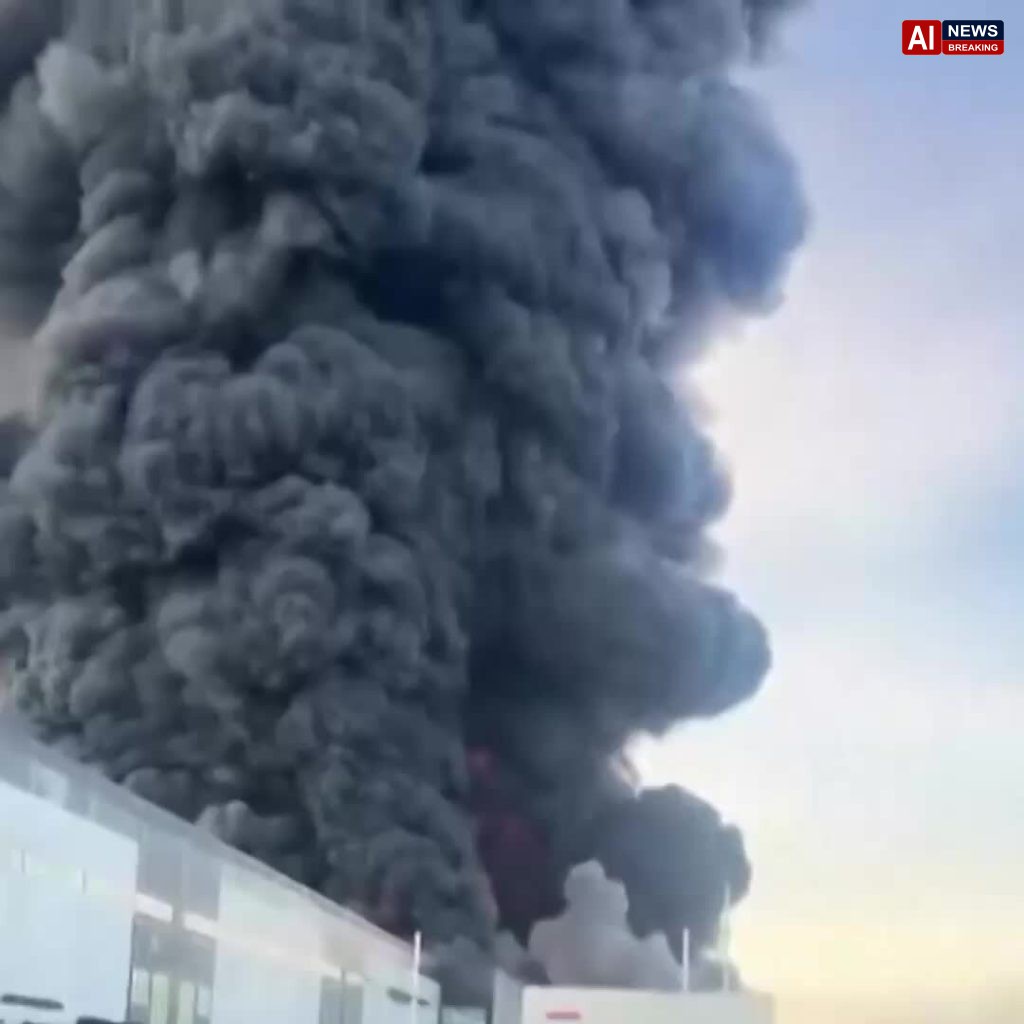
Russia and Ukraine launched fresh waves of missile and drone attacks against each other, escalating the ongoing air campaign in the fourth year of the war. Ukrainian strikes reportedly ignited fires at warehouses and strategic facilities inside Russia, while Russian bombardments targeted Kyiv and other Ukrainian cities, causing casualties and infrastructure damage.
Points to Note
- Russia and Ukraine have exchanged fresh missile and drone attacks.
- Ukrainian strikes reportedly targeted warehouses and infrastructure inside Russia.
- Russia continued missile and drone bombardments against Kyiv and other cities.
- The Black Sea has emerged as an increasingly active theater of operations.
- The conflict’s air campaign is becoming central to both countries’ military strategies.
The war between Russia and Ukraine has entered another dangerous chapter, with both nations intensifying their long-range air campaigns in a series of reciprocal missile and drone attacks that have struck deep inside each other’s territory.
Over the past several days, Ukrainian drones have targeted warehouses, logistics hubs and industrial facilities across Russia, while Moscow has responded with large-scale missile and drone barrages against Kyiv and other Ukrainian cities. The latest escalation underscores the increasingly sophisticated and expansive nature of the conflict, which shows few signs of nearing a negotiated settlement.
The latest exchange of attacks highlights a broader trend that has emerged over the past year: the battlefield is no longer confined to the front lines. Instead, both sides are increasingly seeking to weaken their opponent’s military capabilities, logistics networks and public morale through deep-strike operations.
Ukrainian Drone Campaign Reaches Deep Into Russia
Ukraine has significantly expanded its use of long-range drones, targeting sites far beyond the immediate conflict zone.
Recent strikes have reportedly hit:
- Warehouses and logistics centers.
- Oil depots.
- Military-related industrial facilities.
- Cargo and fuel vessels.
- Infrastructure linked to Russian supply chains.
Among the most notable targets were facilities associated with Wildberries, Russia’s largest e-commerce platform. Ukrainian officials have suggested that some logistics hubs support the broader Russian war effort, while analysts believe the attacks are intended to demonstrate that the war can directly affect daily life inside Russia.
Ukrainian President Volodymyr Zelensky has increasingly described these operations as efforts to impose “long-range sanctions” on Russia by disrupting critical infrastructure and supply networks.
Russia Continues Missile Barrages Against Ukraine
At the same time, Russia has maintained pressure on Ukrainian cities through repeated missile and drone strikes.
Kyiv has faced multiple major attacks in recent weeks, with Russian forces deploying a combination of:
- Ballistic missiles.
- Cruise missiles.
- Shahed-style drones.
- Hypersonic weapons.
- Guided aerial bombs.
Ukrainian authorities have reported casualties and extensive damage to civilian infrastructure, including schools, businesses and residential areas.
In one of the latest incidents, Russian strikes targeted locations near Kyiv, resulting in deaths and dozens of injuries. Ukrainian officials have launched investigations into several attacks, describing them as potential war crimes.
Air War Becoming Central to the Conflict
Military analysts note that the Russia-Ukraine conflict is increasingly being defined by air power rather than territorial gains alone.
Key developments include:
- Larger drone swarms.
- More frequent missile attacks.
- Expanded targeting of logistics infrastructure.
- Greater use of domestically produced drones.
- Increased emphasis on air defense systems.
Ukraine’s growing drone capabilities have enabled strikes hundreds—and in some cases thousands—of kilometers from the border, while Russia continues to leverage its larger missile arsenal to sustain pressure on Ukrainian population centers.
Black Sea Emerging as New Battleground
Another significant development has been the increasing military activity in the Black Sea.
Ukraine has claimed responsibility for attacks on:
- Cargo ships.
- Oil tankers.
- Russian maritime logistics assets.
- Supply routes connected to Crimea.
Drone units operating in southern Ukraine have reportedly conducted sustained operations aimed at disrupting Russian maritime activity near Crimea and the Sea of Azov.
These operations have complicated shipping routes and added further pressure to regional trade and grain exports, which remain vital to Ukraine’s economy.
International Concerns Continue to Grow
The continued escalation has drawn concern from governments around the world.
Western allies have maintained military support for Ukraine, particularly in the areas of:
- Air defense systems.
- Missile interceptors.
- Intelligence sharing.
- Military training.
- Financial assistance.
Meanwhile, diplomatic efforts aimed at securing a ceasefire have made limited progress, with both Moscow and Kyiv continuing to pursue military objectives.
Analysts warn that the expanding use of long-range weapons increases the risk of miscalculation and could further complicate future peace negotiations.
Human Cost Continues to Rise
Despite technological advancements on the battlefield, civilians continue to bear much of the burden of the conflict.
Recent attacks have resulted in:
- Civilian casualties.
- Damage to homes and public infrastructure.
- Disruptions to transportation and commerce.
- Continued displacement of populations.
- Increased humanitarian challenges.
As the conflict approaches another year with no clear resolution in sight, the humanitarian impact remains one of its most devastating consequences.
What Comes Next?
Military experts believe both Russia and Ukraine will continue investing heavily in long-range strike capabilities.
Future trends may include:
- Larger drone operations.
- Increased use of artificial intelligence in targeting.
- Expanded electronic warfare capabilities.
- Greater emphasis on missile defense.
- Continued attacks on strategic infrastructure.
With neither side showing signs of backing down, the air war appears set to remain a defining feature of the conflict in the months ahead.
Insights : The Russia-Ukraine war is evolving from a conflict defined primarily by territorial battles into one increasingly characterized by long-range precision strikes and drone warfare. Advances in unmanned systems have allowed both sides to project power far beyond the front lines, fundamentally changing the nature of modern conflict. As drone technology becomes cheaper and more accessible, the lessons emerging from Ukraine are likely to influence military doctrine worldwide for decades to come.