 Tao Tokyo Spring 2027
 Karnataka SIR: Teaching on the back burner
 Trump administration offers mixed messages on limits to Ukraine’s Starshield access
 US Treasury proposes a rule to crack down on high-tech investments in China, other adversaries
 Calley Means, a key MAHA advocate, resigns as a top RFK Jr. adviser
SC criticises Patna HC ruling that removing salwar does not constitute rape attempt
**
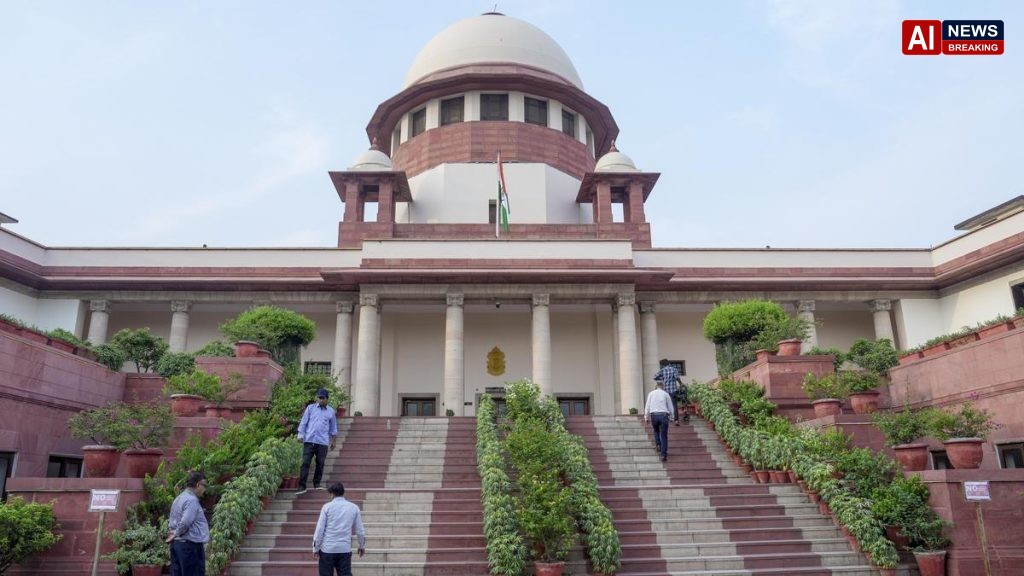
SC criticises Patna HC ruling that removing salwar does not constitute rape attempt - AI News Breaking
criticises patna ruling that:
The Supreme Court on Monday issued a pointed rebuke of a Patna High Court decision that had held the removal of a woman’s salwar did not amount to an attempt at rape, describing the ruling as “shocking” and ordering the matter to be referred back for further scrutiny. The apex court’s intervention comes after a lower‑court verdict that acquitted the accused, a 27‑year‑old resident of Nalanda district, on grounds that the act of pulling down the victim’s traditional garment did not satisfy the legal definition of an attempted sexual assault under the Indian Penal Code.In its 21‑paragraph order, the Supreme Court observed that the High Court’s judgment had “failed to appreciate the gravity of the offence” and “undermined the protective intent of the law.” The bench, comprising Justices R. Nageswara Rao, noted that the removal of a woman’s clothing is a form of sexual violence that can inflict severe psychological trauma and is frequently used as a precursor to more serious sexual crimes..
The justices stressed that jurisprudence across India has increasingly recognised non‑penetrative acts, including forced disrobement, as constituting an attempt to commit rape when the intent is evident.The case originated in late 2022, when the victim, a 22‑year‑old college student from Patna, reported that she had been approached by the accused in a public market. According to her statement, he seized her by the waist, forcefully pulled down her salwar, and threatened her with further violence if she resisted. The victim’s family filed a First Information Report (FIR) alleging attempted rape, outraging local residents and prompting protests that called for stricter enforcement of women’s safety laws..
The Patna High Court, however, in a judgment delivered in April 2024, concluded that the act of removing the garment, while indecent, fell short of the statutory requirement of “sexual intercourse or any act of sexual nature” as stipulated in Section 376 of the IPC, thereby granting the accused a clean chit.Legal experts have criticised the High Court’s reasoning as anachronistic. Professor Anjali Sharma of the National Law School, Bangalore, argued that “the law must evolve to reflect contemporary understandings of consent and bodily autonomy. The Supreme Court’s clarification aligns with the broader judicial trend that recognises coercive sexual acts, even without penetration, as serious offences.” Similarly, a senior counsel for the victim’s family, Arvind Singh, said that the lower court’s decision had “sent a chilling message to survivors of sexual violence, suggesting that certain forms of intimidation are beyond the reach of criminal law.”The Supreme Court’s order not only condemned the Patna High Court’s interpretation but also directed that the case be reheard by a different bench of the High Court, with specific instructions to examine the evidence in light of recent Supreme Court pronouncements on sexual assault, including the landmark Navtej Singh Johar v..
Union of India (2022) decision which expanded the scope of sexual offences to include acts that compromise a person’s dignity and autonomy. The apex court also ordered a fresh investigation by the Patna Police, urging the authorities to consider forensic evidence, witness testimonies and any digital footprints that could shed light on the accused’s intent.In addition to the procedural directives, the Supreme Court issued a notice to the state government, urging it to review its guidelines for handling cases of non‑penetrative sexual violence. The notice asks the government to assess whether the existing provisions under the Protection of Children from Sexual Offences (POCSO) Act and the Criminal Law (Amendment) Act 2013 adequately cover such incidents, and to recommend amendments if necessary..
The bench highlighted that the “societal impact of forced disrobement, especially in a culture where clothing carries significant symbolic weight, cannot be dismissed as a mere act of indecency.”The ruling has sparked a flurry of reactions on social media, with many users expressing relief at the Supreme Court’s stance while also calling for swift justice for the victim. Hashtags such as #JusticeForPatnaWomen and #ClothingIsNotAWeapon trended across platforms, underscoring public frustration with perceived judicial leniency in sexual offence cases. Women’s rights organisations, including the All India Democratic Women’s Association, welcomed the decision, stating that it “reinforces the principle that any violation of a woman’s bodily integrity, however subtle, is a serious crime.”Political leaders have also weighed in..
The state’s chief minister, Nitish Kumar, issued a statement saying that the government will “cooperate fully with the Supreme Court’s directives” and “ensure that the law is applied without prejudice to protect women’s dignity.” Opposition parties, meanwhile, have accused the state administration of being complacent, demanding a thorough audit of all pending sexual assault cases in Bihar.As the case is sent back to the Patna High Court for a re‑examination, legal analysts anticipate that the higher bench’s guidance will influence not only this specific proceeding but also future judgments across India’s courts. The Supreme Court’s emphasis on a broader interpretation of sexual violence could pave the way for more victims to secure convictions in instances where the perpetrator’s conduct falls short of traditional definitions of rape but nonetheless constitutes a grave violation of personal liberty. The outcome of the rehearing will be closely watched by both advocates of women’s rights and those who caution against over‑broad criminalisation, marking another pivotal moment in India’s evolving jurisprudence on sexual offences..
Updated: October 9, 2026
Summary: The Supreme Court slammed a Patna High Court ruling that dismissed the removal of a woman’s salwar as not constituting attempted rape, labeling the decision “shocking” and sending the case back for fresh scrutiny. The apex bench emphasized that forced disrobement is a form of sexual violence, directing a new hearing, a fresh police probe and urging the state to review laws on non‑penetrative sexual offenses.
The Supreme Court’s rebuke signals a decisive shift toward recognizing bodily autonomy as a core component of sexual‑offence law, forcing lower courts to abandon archaic, narrow definitions that have long shielded coercive acts. By mandating a fresh review, the apex bench not only pressures legislative reform but also sets a precedent that could expand criminal liability for a broader spectrum of gender‑based violence across India.