Indonesia denies foreign claim to rescued orangutans
 Turkey hosts COP31 climate talks in Antalya.
 Pope meets Argentine bishops.
 APOD: 2026 November 8 – Major Fireball Meteor
 Indonesian Horror Hit ‘Pabrik Gula’ Gets 2028 Sequel as MD Entertainment Lines Up Three Imax Films
Sharjeel Imam moves Supreme Court seeking bail in UAPA case over 2020 Delhi riots
**
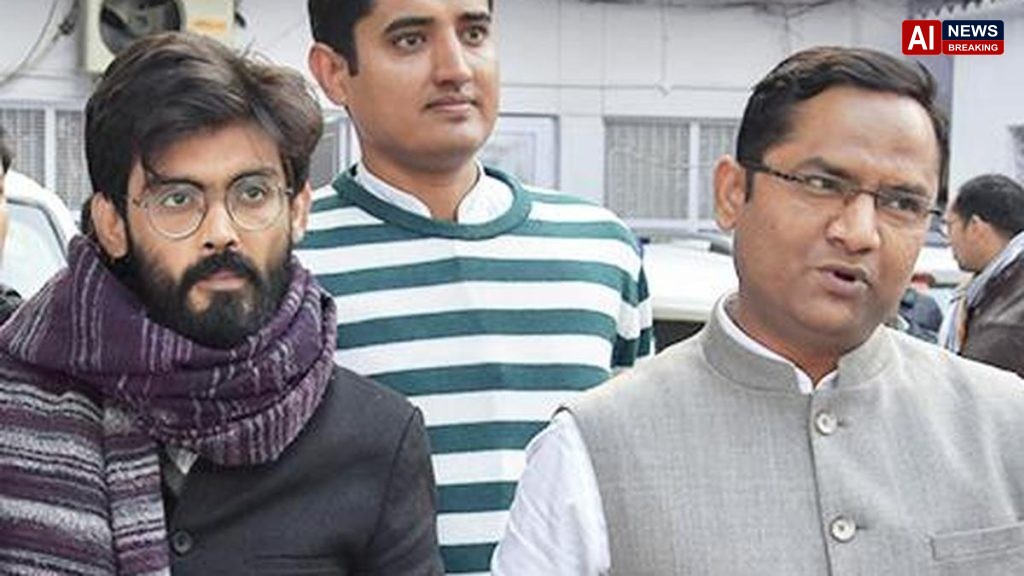
Sharjeel Imam moves Supreme Court seeking bail in UAPA case over 2020 Delhi riots - AI News Breaking
Sharjeel Imam, a former student leader of the Aam Aadmi Party who was arrested in connection with the 2020 Delhi riots, has filed a petition before the Supreme Court seeking bail under the stringent Unlawful Activities (Prevention) Act (UAPA). The plea, lodged on Tuesday, argues that the procedural timeline of the case and the volume of evidence cited by the prosecution render his continued detention untenable. Imam’s legal team contended that the charge sheet, submitted on September 25, 2020, enumerates eighteen accused and relies on the testimony of more than nine hundred witnesses, among them forty‑seven protected witnesses, raising concerns about the fairness and practicality of a trial that could extend for years.The petition, signed by senior advocate Pankaj Bhardwaj, highlighted that the investigation had been ongoing for over three years without any substantive progress towards a resolution..
It pointed out that the UAPA, which mandates a higher threshold for bail due to its anti‑terrorism orientation, should not be invoked where the allegations do not involve acts of terrorism or organized conspiracies against the state. Imam’s counsel maintained that the alleged offences, primarily related to incitement and participation in violent clashes, fall within the ambit of ordinary criminal law, and that invoking the UAPA amounts to an over‑reach that undermines the principle of proportionality in criminal jurisprudence.The Supreme Court, in its preliminary hearing, noted the gravity of the charges but also the need to balance state security concerns with individual liberties. The bench, comprising Justices R..
Gavai and Surya Kant, referred to precedent where bail under the UAPA was denied only when the prosecution could demonstrate a clear and imminent threat to public order. The court requested the Delhi Police to submit a detailed status report on the investigation, including the status of the protected witnesses, many of whom have been placed under anonymity due to fears of intimidation. The judges also raised the question of whether the protection of these witnesses had been adequate, given the protracted nature of the case and the high-profile media attention it has attracted.The petitioners argued that the protective measures for witnesses, while technically in place, have not been sufficient to guarantee their safety or willingness to testify..
They cited several instances where protected witnesses have withdrawn or altered their statements, citing pressure from various quarters. This, they claimed, casts doubt on the reliability of the evidence and further weakens the prosecution’s case. The defence also emphasized that the delay in filing the charge sheet—more than a year after the riots—contravenes the principle of a speedy trial enshrined in Article 21 of the Constitution, which guarantees the right to life and personal liberty.The Delhi Police, for its part, defended the length of the investigation, stating that the scale of the riots, which resulted in over fifty deaths and widespread property damage, necessitated a thorough and methodical approach..
Officials highlighted that the charge sheet includes a comprehensive list of offences ranging from rioting and murder to criminal conspiracy, and that the inclusion of protected witnesses is essential to counter potential tampering. They also underscored that the UAPA was invoked because the police believe Imam played a pivotal role in orchestrating violence that threatened communal harmony, an interpretation that aligns with the Act’s broader purpose of preventing activities that destabilise the nation’s internal security.Legal analysts observing the proceedings noted that the case sits at a confluence of several contentious issues: the use of anti‑terrorism legislation against political activists, the protection of witnesses in high‑stakes communal violence cases, and the broader debate over the criminalisation of dissent. Professor Anjali Sharma of Delhi University’s law faculty remarked that the Supreme Court’s handling of the bail petition could set a precedent for how the UAPA is applied in future cases that involve mass unrest rather than outright terrorism..
She warned that an overly expansive interpretation of the Act risks eroding civil liberties, while a too‑narrow reading could hamper the state’s ability to deter and punish coordinated violent acts.Human rights organisations have also weighed in, urging the court to consider the impact of prolonged pre‑trial detention on Imam’s right to a fair trial. Amnesty International released a statement asserting that the use of the UAPA in this context appears to be a “strategic tool” to suppress political opposition, and called for a transparent assessment of the evidence before any decision on bail is rendered. Similarly, the National Human Rights Commission has sought a response from the Ministry of Home Affairs regarding the procedural safeguards in place for protected witnesses and the overall conduct of the investigation.The petition’s filing comes at a time when the political climate surrounding the 2020 riots remains highly charged..
The Delhi government, led by the Aam Aadmi Party, has repeatedly demanded a swift and impartial inquiry into the violence, alleging that the central authorities have been reluctant to hold accountable those linked to the ruling party at the national level. In contrast, the Union Home Ministry maintains that the investigation is being conducted in accordance with the law and that any attempt to expedite the process must not compromise evidentiary standards or the safety of witnesses.As the Supreme Court deliberates, the next steps will likely involve a hearing on the status report from the Delhi Police, followed by arguments on whether the conditions for bail under the UAPA have been met. The bench’s decision could either reinforce the stringent bail standards that the Act imposes, thereby keeping Imam in custody pending trial, or it could signal a more measured approach that balances state security imperatives with fundamental rights..
Observers note that a bail grant would not equate to acquittal, but would allow Imam to prepare his defence more effectively while the extensive evidentiary material is scrutinised.Regardless of the outcome, the case underscores the complexities inherent in applying anti‑terrorism statutes to incidents of communal unrest. It also highlights the judiciary’s pivotal role in interpreting statutes that carry far‑reaching consequences for individual liberty and public order. As the nation watches, the Supreme Court’s ruling will be dissected for its legal reasoning and its broader implications for the balance of power between law enforcement agencies, political actors, and civil society in a democratic framework..
Former AAP leader Sharjeel Imam has petitioned the Supreme Court for bail under the UAPA, arguing that the protracted investigation, massive witness list and lack of terrorism evidence make his continued detention untenable. The court, while acknowledging the seriousness of the charges, has asked Delhi police for a detailed status report on the case and witness protection before deciding on bail.
The Supreme Court’s pause on Imam’s UAPA bail signals a cautious recalibration: if the bench leans toward a narrower reading, it could curb the Act’s use as a political tool, reinforcing civil liberties against broad state power. Conversely, a firm denial would cement a precedent that anti‑terrorism