Indonesia denies foreign claim to rescued orangutans
 Turkey hosts COP31 climate talks in Antalya.
 Pope meets Argentine bishops.
 APOD: 2026 November 8 – Major Fireball Meteor
 Indonesian Horror Hit ‘Pabrik Gula’ Gets 2028 Sequel as MD Entertainment Lines Up Three Imax Films
Sonia Gandhi announces memoir release.
**
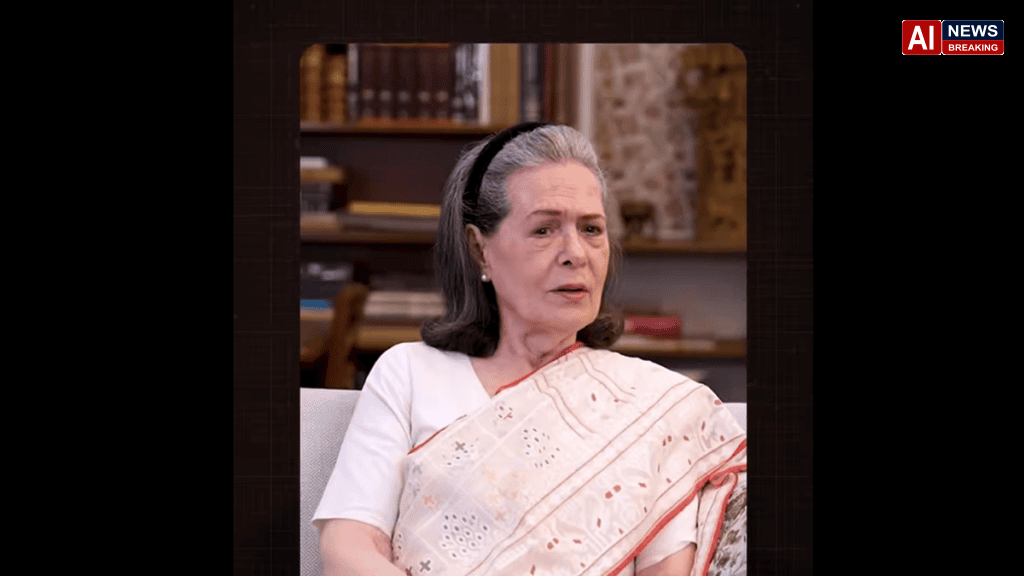
Sonia Gandhi says her memoir is bound to create ‘tamasha’ - AI News Breaking
Sonia Gandhi, the longtime matriarch of the Indian National Congress, has sparked a fresh wave of interest in the party’s turbulent history by announcing the forthcoming publication of her memoir, slated for release on 10 November. In a brief televised interview, the 84‑year‑old political veteran said the book would offer a “personal account of the journey that has been lived through, the decisions taken and the consequences endured”. She added that while numerous biographies and journalistic accounts have chronicled her life and the Congress’s fortunes, “now it is my turn to speak directly”..
The announcement has already ignited a flurry of commentary across the Indian media landscape, with many observers predicting the memoir could become a “tamasha”, a term used in Hindi to describe a spectacle or public drama.The memoir, tentatively titled My Life, My Times, is expected to run to roughly 300 pages and will be published by a leading Indian imprint. Gandhi’s spokesperson confirmed that the manuscript has been completed and is undergoing standard editorial processes, but declined to reveal details of the content beyond the general promise of “first‑hand recollections”. The publisher has described the work as “a candid, reflective narrative that traces the arc of modern Indian politics through the lens of a figure who has been at its centre for over three decades”..
No advance excerpts have been released, and the book’s price has not yet been disclosed.Gandhi’s decision to write a memoir comes at a moment of significant introspection for the Congress party. In recent national elections the party suffered its worst performance since independence, winning only 23 seats in the Lok Sabha and seeing its vote share dip below 12 percent. Analysts have linked the decline to a combination of leadership crises, organisational decay and the rise of a populist narrative championed by the ruling Bharatiya Janata Party (BJP)..
Within this context, Gandhi’s memoir may serve both as a personal reckoning and as a strategic attempt to re‑assert her relevance in a party that has increasingly looked to younger faces for renewal.Political commentators note that memoirs by senior Indian politicians have historically functioned as both historical documents and vehicles for shaping public perception. Former Prime Minister Manmohan Singh’s A Journey: My Autobiography and former Defence Minister A. K. Antony’s A Tale of Two Nations are among the recent examples that combined personal anecdotes with policy insights..
In those cases, the authors sought to influence the narrative surrounding contentious decisions and to cement their legacies. Observers therefore expect Gandhi’s book to address key moments such as the 1999 Kargil conflict, the 2002 Gujarat riots, the 2008 Indo‑US nuclear deal and the 2014 electoral defeat that ended the Congress‑led United Progressive Alliance’s decade‑long governance.Critics, however, caution that the memoir could also become a platform for political point‑scoring. The BJP, which currently controls the Union government, has already issued a statement warning that “any attempt to rewrite history will be met with rigorous scrutiny”..
Opposition parties within the opposition, including the Aam Aadmi Party and regional stalwarts, have expressed similar scepticism, suggesting that Gandhi may use the book to deflect blame for the Congress’s recent setbacks and to portray the party’s decline as a consequence of external forces rather than internal mismanagement.The timing of the release also aligns with the Congress’s preparations for the upcoming state assembly elections in several key battlegrounds, including Karnataka, Madhya Pradesh and Rajasthan. Party insiders have hinted that the memoir could be leveraged as a rallying tool for volunteers, a means of galvanising grassroots support and a way to re‑energise a cadre that has felt demoralised after successive defeats. Some senior Congress figures have privately welcomed the prospect, noting that an authentic personal narrative could help bridge the gap between the party’s older leadership and its younger aspirants.Nonetheless, the logistical challenges of translating a personal memoir into a political asset should not be underestimated..
The Indian publishing market is currently saturated with political non‑fiction, and readers have demonstrated a growing appetite for investigative works that expose systemic issues rather than autobiographical recollections. Market analysts predict that the memoir’s commercial success will hinge on its ability to offer fresh insights or previously undisclosed information, rather than reiterating well‑known episodes of Gandhi’s public life.From a scholarly perspective, the memoir is expected to become a primary source for future research on post‑1990 Indian politics. Historians and political scientists will likely scrutinise Gandhi’s accounts of internal party dynamics, her relationships with key figures such as former Prime Ministers P. V..
Narasimha Rao, Atal Bihari Vajpayee and Narendra Modi, and her reflections on the evolving role of dynastic politics in a democratic framework. The book may also shed light on the decision‑making processes behind major policy initiatives, including the National Rural Employment Guarantee Act and the Right to Information Act, which have been hailed as milestones of the Congress era.The public reaction to the announcement has been mixed across social media platforms. While some supporters have expressed anticipation, posting messages like “Finally, a voice from within the family,” others have adopted a more critical tone, with hashtags such as #GandhiMemoirDebate and #Tamasha trending in the days following the interview..
The term “tamasha” was invoked by detractors who fear the memoir could devolve into a sensationalist narrative rather than a measured recollection. Proponents, on the other hand, argue that the book could serve as a necessary corrective to a media environment they perceive as hostile to the Congress.As the release date approaches, the Indian political arena appears poised for a renewed focus on the Congress’s legacy and its future trajectory. Whether Sonia Gandhi’s memoir will indeed become the “tamasha” some anticipate, or whether it will emerge as a sober, reflective piece that contributes meaningfully to the nation’s political discourse, remains to be seen..
What is clear is that the book will add another layer to the complex tapestry of India’s democratic story, inviting both scrutiny and conversation at a time when the country’s political landscape is undergoing rapid transformation..
Updated: October 27, 2026
Sonia Gandhi’s memoir may be less about setting the record straight and more about re‑branding a fading dynasty as a rallying banner for a demoralized grassroots, buying time for Congress to reinvent itself before the next electoral knockout.
If the book leans into candid backstage drama rather