Use of Chief Minister C. Joseph Vijay’s deep fake videos to collect money: Rajasthan youth moves Madras High Court seeking bail
 Florida officer took possession of man’s home after finding him dead 4 years ago, police say
 Jury weighs fate of US woman who says father forced her into Syria’s war zone when she was a teen
 France bans certain protests to restore public
Supplyco’s Go Express marts will function for longer hours: Keralam Civil Supplies Minister Anoop Jacob
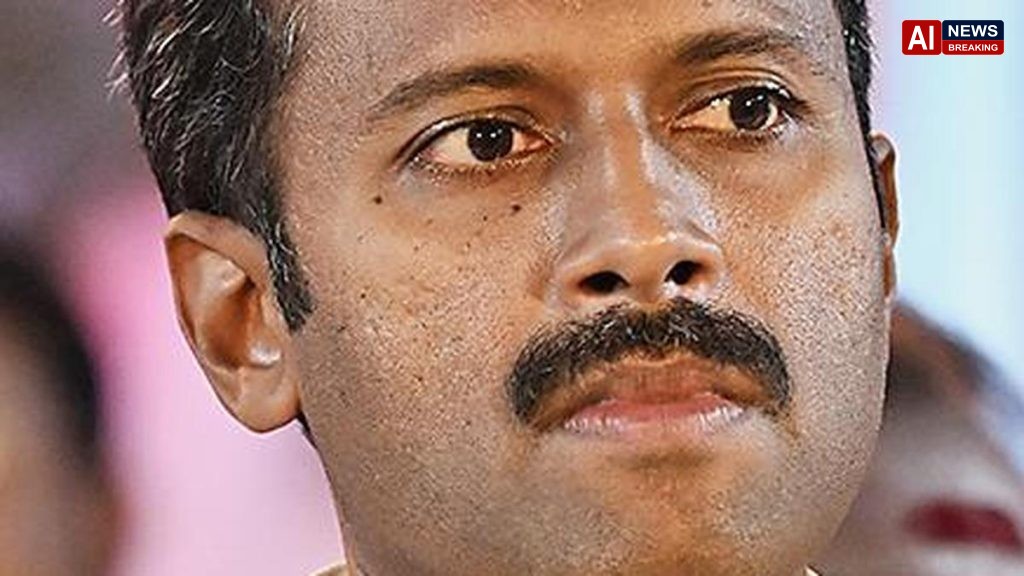
Supplyco’s Go Express marts will function for longer hours: Keralam Civil Supplies Minister Anoop Jacob - AI News Breaking
supplycos express marts will:
The Kerala government has announced that the operating hours of Go Express marts, the retail outlets of the state‑run Supplyco, will be extended in a bid to alleviate the acute shortage of essential food items reported in several districts. Civil Supplies Minister Anoop Jacob, speaking at a press briefing in Thiruvananthapuram on Thursday, said the move is part of a broader strategy to ensure that the most vulnerable sections of society can access affordable staples without having to endure long queues or travel great distances. “We are listening to the concerns of the people and will act swiftly to make the supply chain more responsive,” Jacob told reporters, adding that the decision follows a series of complaints from grassroots organisations and local self‑government bodies.The proposal to keep Go Express stores open for longer periods comes after a wave of grievances from residents of the “extremely poor” category, a classification used by the state to identify households whose monthly income falls below a certain threshold..
These families are entitled to subsidised food kits under the state’s poverty alleviation programme, yet recent surveys indicate that the kits are often unavailable or delayed. In some blocks, the shortage has forced beneficiaries to seek alternatives in the private market, where prices are considerably higher. The minister acknowledged that the shortfall has “undermined the very purpose of the scheme” and pledged that the government would scrutinise the distribution mechanism to prevent recurrence.Supplyco, the public sector corporation that manages the Go Express network, operates more than 1,800 outlets across Kerala, supplying rice, wheat, pulses, cooking oil and other basic commodities at prices fixed by the state..
The corporation has long been lauded for its role in stabilising food prices, especially during periods of market volatility. However, the recent disruption has vulnerabilities in the supply chain, particularly in remote taluks where logistics and warehousing facilities are limited. Jacob said the ministry would commission a task force comprising officials from the Department of Civil Supplies, the Finance Ministry and Supplyco’s senior management to conduct a forensic audit of inventory levels, procurement schedules and transport routes.In addition to extending operating hours, the minister outlined a set of ancillary measures aimed at streamlining the delivery of food kits..
One proposal under consideration is the introduction of “kit‑on‑demand” kiosks at selected Go Express locations, where beneficiaries can collect pre‑packed parcels of rice, wheat and oil by presenting their entitlement cards. The kiosks would be equipped with digital inventory management systems that update stock levels in real time, reducing the likelihood of stock‑outs. Jacob indicated that pilot projects for the kiosks are already underway in the districts of Malappuram and Idukki, where demand has been particularly intense.Another avenue being explored is the partnership with local self‑government institutions, such as panchayats and municipal bodies, to act as distribution hubs for the kits..
By leveraging the existing network of community centres and public schools, the government hopes to bring the supplies closer to the doorsteps of the poor. “Decentralisation is key,” Jacob remarked, noting that the involvement of grassroots institutions not only cuts down on travel time for beneficiaries but also creates a layer of accountability, as local officials can monitor usage and report discrepancies promptly.The minister also signalled a possible shift towards a more flexible pricing model for the kits. While the current scheme offers a fixed subsidy that reduces the cost of a kilogram of rice to ₹3, the government is reviewing whether a tiered approach—where the subsidy varies according to the household’s exact income level—might be more equitable..
This suggestion follows a recent study by the Centre for Development Studies, which found that a uniform subsidy sometimes benefits households that are not truly in need, thereby diluting resources meant for the destitute. Jacob stressed that any change would be evidence‑based and would involve consultations with civil society groups and academic experts.To address the logistical bottlenecks that have plagued the supply chain, the state is also contemplating the use of private freight operators for the last‑mile delivery of kits to remote villages. While Supplyco has traditionally relied on its own fleet of trucks and vans, the surge in demand during the pandemic the limitations of this model, especially during monsoon seasons when road conditions deteriorate..
The minister clarified that any engagement with private firms would be governed by strict quality‑control standards and would be subject to periodic audits to prevent price gouging or diversion of stocks.The announcement has been met with cautious optimism by opposition parties and NGOs working in the field of food security. The state’s main opposition, the United Democratic Front, welcomed the extension of store hours but urged the government to provide a concrete timeline for the implementation of the proposed kit‑distribution reforms. “A promise without a roadmap does little to restore confidence among those who are already struggling,” said a spokesperson for the coalition..
Similarly, the Kerala Association of Food Workers, a trade union representing supply‑chain employees, called for assurances that the extended hours would not lead to worker fatigue or compromise safety standards.Analysts point out that while longer operating hours may provide immediate relief, the underlying challenge is ensuring a steady inflow of commodities from the national market. Kerala imports a significant portion of its rice and wheat, and global price fluctuations can have a direct impact on state inventories. The Finance Ministry’s recent budget note highlighted the need for a buffer stock strategy, recommending that the state maintain a reserve equivalent to three months’ consumption of essential grains..
Such a buffer would allow the government to cushion the market against sudden spikes in demand or disruptions in supply, thereby safeguarding the food‑kit programme.In the interim, the civil supplies department has urged beneficiaries to register their grievances through the official portal, where complaints are logged and addressed within a stipulated period. The portal, launched in 2022, integrates data from the state’s poverty‑line survey, allowing officials to verify eligibility instantly. Jacob assured that the department would prioritize cases where individuals have reported repeated non‑availability of kits, and that corrective action would be taken against any anomalies discovered in the distribution chain.The extended hours at Go Express marts are slated to begin from the first week of November, with a pilot phase in ten high‑demand districts before a statewide rollout..
The government will monitor footfall, sales data and beneficiary feedback to gauge the effectiveness of the measure. If successful, the model could be replicated for other essential services, such as the distribution of LPG cylinders and subsidised cooking fuel, which have also faced supply constraints in recent months. Jacob concluded by emphasizing the administration’s commitment to “leaving no one behind,” reiterating that food security remains a cornerstone of Kerala’s development agenda..
Updated: October 12, 2026
This development highlights evolving dynamics and may have broader implications in the near term.