 ‘Heated Rivalry’ Superfans Hit Theaters for Shane and Ilya on the Big Screen: ‘They Invented Chemistry’
 Mass Killing in Poland Becomes Cause for a Political Fight
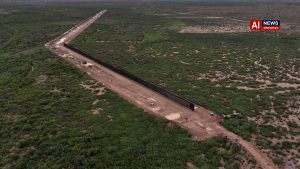
 Supreme Court clears way for Trump administration to resume Texas border wall construction.
 Democrats plan to use new power to rein in Trump’s education agenda, but their tools are limited
Supreme Court clears way for Trump administration to resume Texas border wall construction.
**
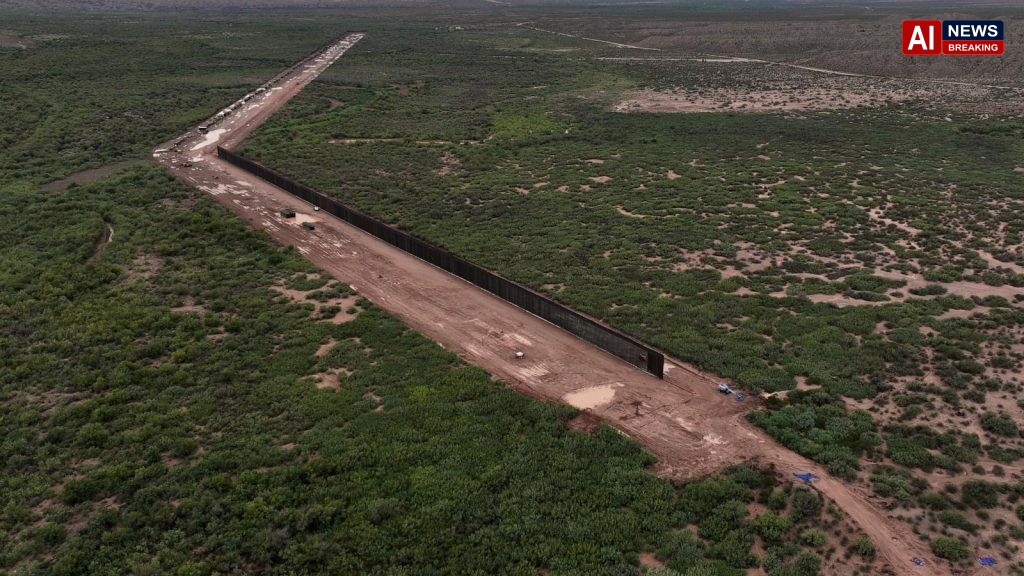
Court clears the way for border wall construction in Texas’s Big Bend to resume - AI News Breaking
supreme court clears trump:
The United States Supreme Court on Monday issued an order that clears a major procedural hurdle for the Trump administration’s plan to resume construction of a border barrier in the Big Bend region of Texas. The Court’s per curiam decision granted the administration’s request for a stay of the district court’s injunction, effectively allowing work to proceed while the underlying legal challenges continue in lower courts. The ruling marks a significant moment in the long‑running debate over the scope of executive authority, the allocation of federal funds, and the environmental and cultural impacts of the wall.The case stems from a 2022 lawsuit filed by a coalition of environmental groups, Native American tribes, and private landowners who argued that the Department of Homeland Security (DHS) had exceeded its statutory authority when it reallocated billions of dollars from other federal programs to finance the wall’s construction..
The plaintiffs also contended that the administration had failed to comply with the National Environmental Policy Act (NEPA) and the Endangered Species Act (ESA), which require rigorous environmental assessments before any major federal project can proceed. District Court for the Western District of Texas issued a nationwide injunction halting all wall construction pending a full hearing on these issues.The Supreme Court’s order does not resolve the substantive questions raised by the plaintiffs; rather, it addresses the procedural request for a temporary stay. In a brief written opinion, the Court noted that the administration had demonstrated a likelihood of success on the merits of its claim that the reallocation of funds was permissible under the Defense Production Act and the 2020 National Defense Authorization Act..
The justices also highlighted the importance of maintaining the status quo to avoid “irreparable harm” to national security interests, a standard that typically favors the government in cases involving border security.Justice Sonia Sotomayor, joined by Justices Elena Kagan and Ketanji Brown Jackson, filed a dissenting opinion, arguing that the lower court’s injunction should remain in place until the plaintiffs’ claims are fully adjudicated. The dissent emphasized that the environmental and cultural resources at risk in the Big Bend area – including the Rio Grande riparian ecosystem, several federally listed species, and lands sacred to the Tigua and other indigenous peoples – merit careful scrutiny. “The Court’s willingness to sidestep the detailed factual record compiled by the district court threatens to undermine the procedural safeguards that Congress enacted to protect our natural heritage,” Sotomayor wrote.Legal analysts say the decision is consistent with the Court’s recent pattern of granting deference to the executive branch in matters of immigration and border enforcement..
Over the past two years, the Court has upheld the administration’s authority to use emergency powers to divert funds for wall construction in other parts of the Southwest, despite similar challenges. The Big Bend ruling, however, is notable because it involves a region that had previously been left largely untouched by the wall, raising unique environmental and cultural concerns that differ from the more urbanized sections of the border.The Biden administration, which inherited the wall project from its predecessor, has signaled its intent to comply with the Supreme Court’s order while simultaneously pursuing a broader review of the wall’s compliance with NEPA and ESA requirements. In a statement released by the White House, officials said the administration would “continue to work closely with the Department of Homeland Security, the Department of the Interior, and relevant stakeholders to ensure that any construction proceeds in a manner consistent with the law.” The statement also underscored that the administration remains committed to a “comprehensive, humane, and technologically driven” approach to border security, suggesting that physical barriers will be just one component of a larger strategy.Local reactions in the Big Bend area are mixed..
Residents of Brewster County, where much of the proposed construction is to take place, have expressed both support and concern. Some ranchers welcome the prospect of a barrier, citing reductions in illegal crossings and drug trafficking as potential benefits to public safety. Others, however, worry about the impact on tourism, which accounts for a substantial portion of the local economy, and fear that construction could damage the region’s iconic landscapes that attract hikers, birdwatchers, and outdoor enthusiasts from around the world.Tribal leaders have reiterated their opposition..
The Southern Tiwa Tribe, whose ancestral lands intersect the proposed wall route, issued a press release describing the construction as “a direct violation of treaty obligations and a desecration of sacred ground.” The tribe, along with several others, is pursuing separate litigation alleging that the government failed to consult adequately under the federal government’s trust responsibility, a claim that may eventually be heard by the Supreme Court if it survives lower‑court rulings.Environmental groups remain vigilant. The Sierra Club, the Natural Resources Defense Council, and the Audubon Society have pledged to file an appeal of the Supreme Court’s stay, arguing that the administration’s reliance on broad statutory interpretations does not excuse the need for detailed environmental analysis. In a joint statement, the groups warned that “accelerated construction in a fragile desert ecosystem could irreversibly harm water resources, disrupt migration corridors for endangered species, and set a dangerous precedent for bypassing environmental law.”Congressional oversight is also expected to intensify..
Several members of the House Committee on Homeland Security have requested a briefing from DHS on the revised timeline and budget for the Big Bend segment, citing concerns about cost overruns and the transparency of the reallocation process. A bipartisan group of legislators is drafting a bill that would require the administration to submit a supplemental environmental impact statement before any further ground is broken, a move that could re‑ignite legal challenges if passed.The practical implications of the Supreme Court’s order are already being felt on the ground. Within days of the decision, DHS contractors mobilized equipment to the designated construction sites, and preliminary grading work began near the Rio Grande’s bend near Big Bend National Park..
The work, described by officials as “pre‑construction activities” such as clearing vegetation and installing temporary access roads, is intended to lay the groundwork for the eventual erection of steel and concrete barriers. The agency has pledged that all work will comply with the Army Corps of Engineers’ permitting requirements, though critics argue that such permits can be obtained quickly under expedited procedures.As the legal battles continue, the Big Bend wall project stands at the intersection of national security, environmental stewardship, and indigenous rights. The Supreme Court’s stay underscores the delicate balance the judiciary must strike between allowing the executive branch to act on pressing policy concerns and ensuring that statutory and constitutional safeguards are not circumvented..
Whether the construction proceeds without further interruption will depend not only on the outcome of the pending lawsuits but also on the political will of a Congress that remains sharply divided over the role.
The U.S. Supreme Court has granted the Trump administration a temporary stay of a district‑court injunction, allowing work to resume on a new border wall section in Texas’s Big Bend area while legal challenges over funding and environmental law continue. The decision, praised by some for safeguarding national security, is met with fierce opposition from environmental groups, Indigenous tribes, and local residents who fear irreversible ecological damage and cultural desecration.
The Court’s quick green light shows a judiciary that leans toward executive expediency when “national security” is invoked—yet it leaves a fragile desert ecosystem and treaty‑bound tribes in a legal limbo that could set a slippery precedent for future environmental disputes. Meanwhile, the wall’s advance