Trump administration offers mixed messages on limits to Ukraine’s Starshield access
 US Treasury proposes a rule to crack down on high-tech investments in China, other adversaries
 Calley Means, a key MAHA advocate, resigns as a top RFK Jr. adviser
 Spotify Tightens Family Plan Controls with QR Code Verification
 Use of Chief Minister C. Joseph Vijay’s deep fake videos to collect money: Rajasthan youth moves Madras High Court seeking bail
Supreme Court issues notices to MP Sanjay Raut, journalist Nikhil Wagle over remarks targeting CJI, judiciary
**
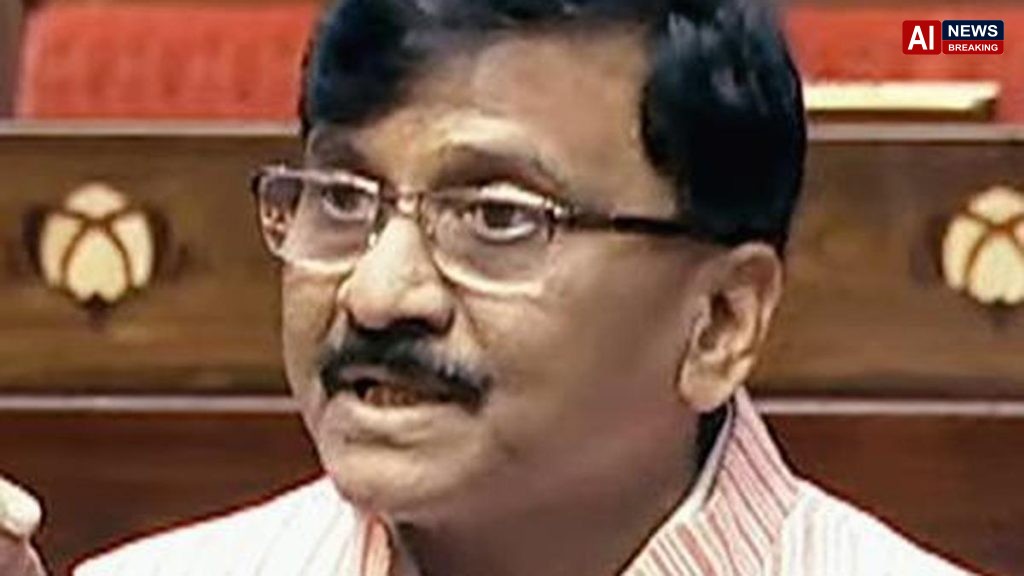
Supreme Court issues notices to MP Sanjay Raut, journalist Nikhil Wagle over remarks targeting CJI, judiciary - AI News Breaking
Supreme Court issues notices to MP Sanjay Raut, journalist Nikhil Wagle over remarks targeting CJI, judiciary The Supreme Court of India on Monday issued formal notices to Shiv Sena MP Sanjay Raut and veteran journalist Nikhil Wagle, seeking their response to allegations of contempt of court. The notices stem from statements made by the two public figures that criticised the Chief Justice of India and the functioning of the higher judiciary. The Court’s move follows a petition filed by the Supreme Court Bar Association (SCBA), which argued that the remarks crossed the line from permissible criticism into conduct that could erode public confidence in the apex court..
In the petition, SCBA President and senior advocate Pradeep Rai contended that the comments made by Raut and Wagle were not merely expressions of opinion but targeted attacks aimed at the institutional integrity of the Supreme Court. Rai asserted that such statements, if left unchecked, could undermine the rule of law by fostering a climate of mistrust towards the judiciary. The petition seeks a finding of contempt and appropriate sanctions, while also requesting the court to issue guidelines to prevent similar incidents in the future..
Sanjay Raut, a member of the Lok Sabha and a senior figure in the Shiv Sena, had previously taken to social media to voice concerns about what he described as a “biased” judiciary. In a series of tweets, he accused the Chief Justice of India of favouring certain political interests and suggested that the court was being used as a “political weapon”. The SCBA argued that such language not only impugns the personal reputation of the CJI but also casts doubt on the impartiality of the entire judicial system..
Nikhil Wagle, a well‑known investigative journalist, published an editorial in his newspaper that echoed many of Raut’s grievances. Wagle’s piece accused the Supreme Court of “overstepping its constitutional mandate” and called for a “thorough review of its powers”. While the article framed its critique as a matter of public interest, the SCBA maintained that the tone and content crossed into contempt, given the potential to sway public perception against the court’s authority..
Legal experts note that the Supreme Court’s decision to issue notices is a procedural step, allowing the respondents to present their defense before any judgment is rendered. “The notices are not a declaration of guilt,” explained former judge Justice A.K. “They simply ensure that due process is followed, giving the accused an opportunity to explain the context and intent behind their remarks.” The court’s approach reflects its longstanding practice of balancing freedom of speech with the need to protect the dignity of the judiciary..
The incident has reignited a broader debate in India about the limits of free expression, especially when it involves criticism of state institutions. Civil liberties groups argue that the threat of contempt proceedings can have a chilling effect on legitimate dissent. Meanwhile, proponents of stricter enforcement contend that unchecked vitriol can degrade the public’s trust in essential democratic pillars, including the courts..
In response to the notices, Sanjay Raut’s office issued a statement asserting that the MP’s comments were made in good faith and were protected under the constitution’s guarantee of free speech. The statement also warned that any punitive action could set a dangerous precedent for silencing political critique. Similarly, Nikhil Wagle’s legal counsel submitted a filing that the journalist’s editorial was an exercise of journalistic duty, aimed at fostering informed public discourse on judicial reforms..
The SCBA, however, maintains that criticism of the judiciary must remain within the bounds of respect and factual accuracy. In a recent press conference, Pradeep Rai emphasized that while the court welcomes constructive feedback, it cannot tolerate language that suggests corruption or bias without substantive evidence. “The Supreme Court is an institution that must be shielded from baseless attacks that could diminish its authority,” he said..
Observers note that the Supreme Court’s recent track record includes several high‑profile contempt cases involving politicians, media personalities, and activists. Critics argue that the court’s expansive use of contempt powers may be perceived as overreach, while supporters claim it is necessary to preserve the sanctity of judicial proceedings. The current notices to Raut and Wagle will likely be scrutinised within this larger context..
If the court eventually finds the remarks to be contemptuous, potential penalties could range from reprimand to monetary fines, or even brief imprisonment, although such severe measures are rare. Historically, the Supreme Court has preferred to issue warnings or modest fines in cases involving public figures, reserving harsher punishments for repeated or flagrant violations. The outcome of this case may therefore set an indicative tone for future enforcement..
The matter also carries political ramifications, given Raut’s position within the Shiv Sena, a party that has recently aligned itself with the ruling coalition at the centre. Some analysts suggest that the court’s action could be interpreted as a test of the judiciary’s independence amidst a charged political environment. Others caution against reading too much into the procedural step, reminding that the legal process is still in its early stages..
As the notices circulate, both the MP and the journalist are expected to file their replies within the stipulated timeframe, after which the Supreme Court will schedule hearings to consider the merits of the case. The proceedings are likely to draw attention from legal scholars, media watchdogs, and political commentators, all watching closely to see how the balance between free speech and judicial respect is navigated in India’s largest democracy..
Updated: October 16, 2026
Summary: The Supreme Court has served formal notices to Shiv Sena MP Sanjay Raut and journalist Nikhil Wagle, asking them to explain remarks that the Supreme Court Bar Association deems contemptuous of the Chief Justice and the judiciary. Their replies will determine whether the court proceeds with contempt proceedings, sparking fresh debate over the limits of criticism of India’s highest court.
The court’s move signals a tightening of the line between robust criticism and perceived institutional sabotage, hinting that India’s judiciary may now police its own image as aggressively as it adjudicates cases.
If the notices translate into harsh contempt rulings, they could chill dissent from both politicians and the press, reshaping