Europe warns of Russia’s hybrid attacks but struggles to counter them
  Former chief election commissioner calls SIR scheme illegal.
  A Corruption Scandal Is Reshaping Brazil’s Presidential Election
  US citizen injured in Illinois after ICE agents mistook him for fugitive, tried to arrest him
  At 10 years old, Smithsonian’s Black museum is undaunted amid pressure from Trump administration
 Supreme Court stays Allahabad High Court order against senior IAS officer.
** “The Supreme Court has stayed an Allahabad High Court order holding a senior IAS officer responsible for his subordinates’ misconduct, sparking a debate about the accountability of government officials and the need for balancing fairness with responsibility in governance.”
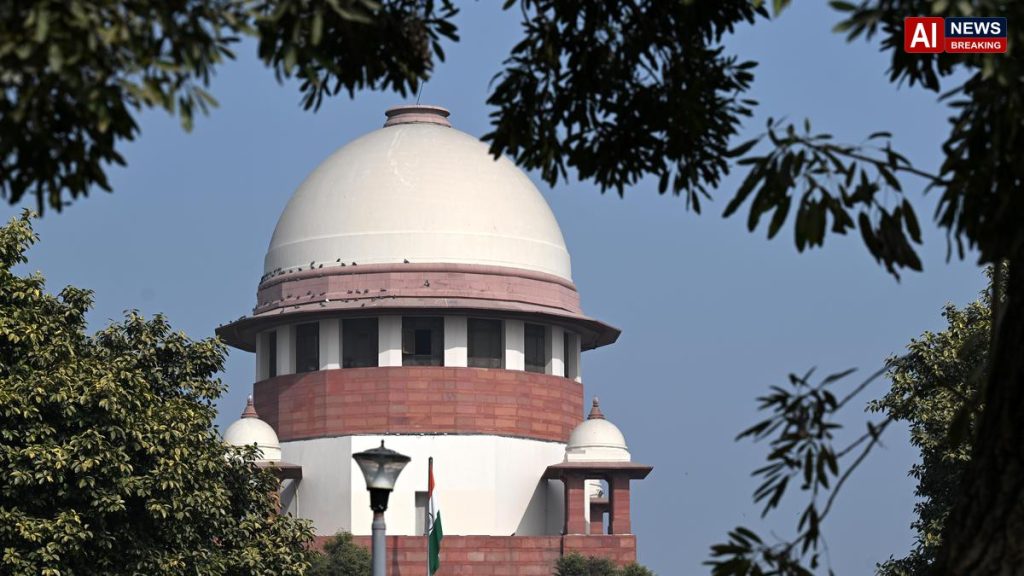
Supreme Court Seeks Centre's Response on Plea to Ban Polygamy Among Muslims, Rekindling Debate on Personal Laws and Gender Equality - AI News Breaking
Supreme Court stays adverse Allahbad High Court order against senior IAS officer The Supreme Court has stayed an adverse order passed by the Allahabad High Court against a senior Indian Administrative Service (IAS) officer, in a judgement that has sparked a renewed debate about the accountability of government officials. The High Court had held the officer responsible for the misconduct of his subordinates and had also ordered him to pay damages to individuals affected by their actions. The Allahabad High Court’s order was passed in a case where it was alleged that the officer had failed to take adequate action against some of his subordinates who were accused of corruption and misconduct..
The High Court had observed that as a superior officer, it was the responsibility of the IAS officer to ensure that his subordinates were acting in a manner that was consistent with the norms of good governance and that any instances of misconduct were dealt with promptly. The High Court had also observed that the officer’s failure to take action against his subordinates had led to a loss of public trust in the government and its institutions. The Court had further noted that the officer’s inaction had also resulted in a significant amount of damage to the reputation of the government and its officials..
However, the Supreme Court has stayed the order of the Allahabad High Court pending a review of the case. The review has been ordered in response to a plea filed by the IAS officer that the High Court’s order was unreasonable and unfair. The Supreme Court has also stayed any further action against the officer pending the review..
In its order, the Supreme Court has observed that while it is true that superior officers have a professional obligation to ensure that their subordinates are acting in a manner that is consistent with good governance, it is also important to ensure that such officers are held accountable for their actions. The Court has noted that the High Court’s order may have been excessive and unfair, particularly in the absence of any prima facie evidence of wrongdoing by the IAS officer. The Supreme Court has also observed that the High Court’s order may have set a bad precedent for holding government officials accountable for the actions of their subordinates..
The Court has noted that while accountability is an essential aspect of good governance, it must be ensured that such accountability is fair and reasonable. The case has sparked a renewed debate about the accountability of government officials and the need for ensuring that such accountability is balanced with fairness and reasonableness. Many experts have argued that the High Court’s order was excessive and unfair, particularly in the absence of any prima facie evidence of wrongdoing by the IAS officer..
On the other hand, some experts have argued that the High Court’s order was necessary in order to ensure that government officials are held accountable for their actions and that such accountability is an essential aspect of good governance. They have noted that the Supreme Court’s decision to stay the order may have set a bad precedent. The stay order of the Supreme Court has been welcomed by the IAS officer and his supporters, who have argued that the High Court’s order was unfair and excessive..
They have argued that the Supreme Court’s decision to stay the order has ensured that justice is being served. The Allahabad High Court’s order has been criticized by many experts and observers, who have argued that it was excessive and unfair. They have noted that the High Court’s order may have set a bad precedent for holding government officials accountable for the actions of their subordinates..
The case has significant implications for the governance of India and the accountability of government officials. It has highlighted the need for ensuring that government officials are held accountable for their actions, while also ensuring that such accountability is fair and reasonable. The Supreme Court’s decision to stay the order will be closely watched by all stakeholders, including the government, the civil society and the public at large..
The case has once again highlighted the importance of ensuring that government officials are held accountable for their actions in a fair and reasonable manner. The judgment has set a precedent for accountability..
The Supreme Court has temporarily halted an Allahabad High Court ruling that held a senior IAS officer responsible for his subordinates’ misconduct, pending a review of the case. The High Court’s initial order has sparked controversy over the accountability of government officials and the need for balancing fairness with responsibility in such cases.
The Supreme Court’s decision to stay the Allahabad High Court’s order against a senior IAS officer could be seen as a blow to the push for increased transparency and accountability in Indian governance. This move may inadvertently shield powerful officials from meaningful consequences, potentially undermining the system of checks and balances that is crucial for good governance.