
 Europe warns of Russia’s hybrid attacks but struggles to counter them
  Former chief election commissioner calls SIR scheme illegal.
  A Corruption Scandal Is Reshaping Brazil’s Presidential Election
  US citizen injured in Illinois after ICE agents mistook him for fugitive, tried to arrest him
  At 10 years old, Smithsonian’s Black museum is undaunted amid pressure from Trump administration
 Takaichi invokes Abe’s legacy
Japan’s Prime Minister Sanae Takaichi is invoking the legacy of her mentor and hero, Shinzo Abe, to drive a nationalist agenda focused on defense policy and economic growth, amid rising tensions with China and concerns about regional stability, with many analysts arguing that her approach is driven by a pragmatic calculus to assert Japan’s national interests and protect its sovereignty.
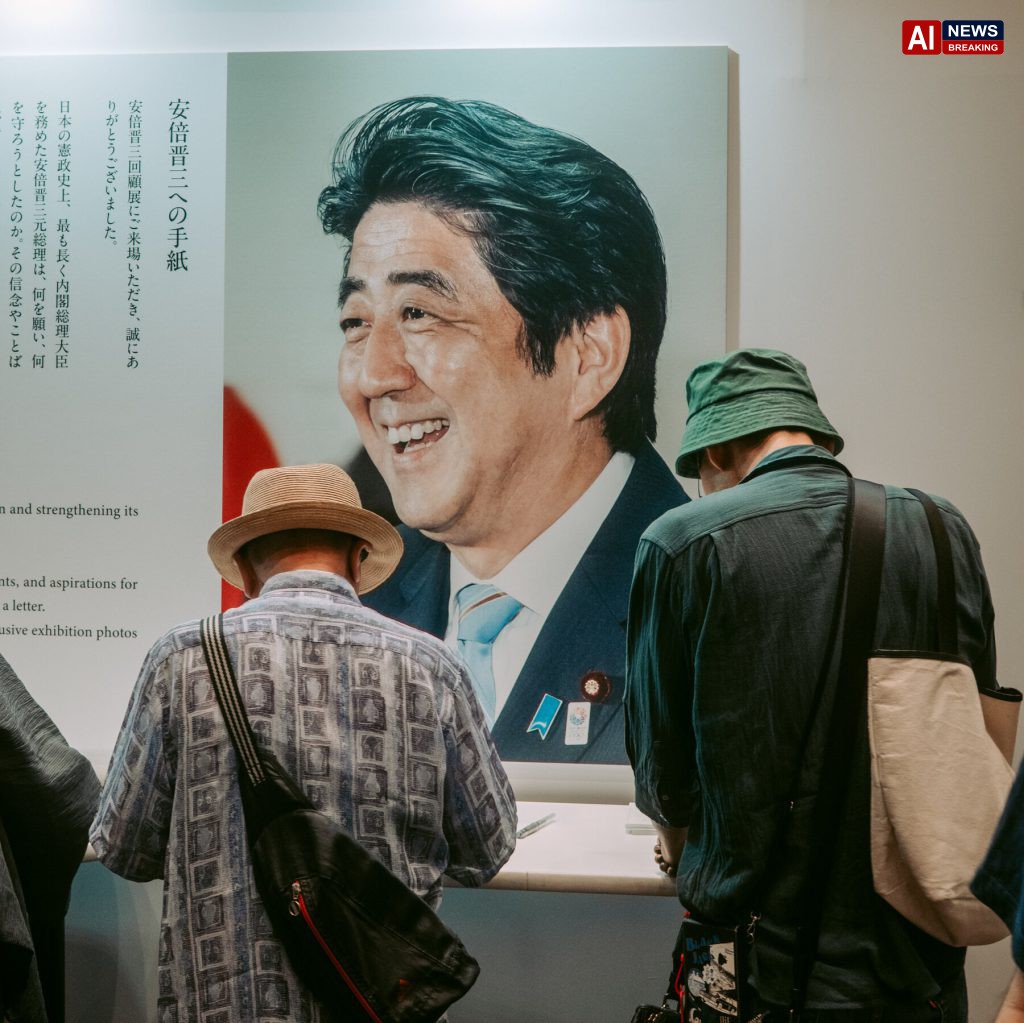
Takaichi invokes Abe's legacy - AI News Breaking
takaichi invokes abes legacy:
Prime Minister Sanae Takaichi has been drawing on her close relationship with the late Shinzo Abe, her mentor and hero, in a bid to propel her nationalist agenda in Japan. Abe, who was assassinated in 2022, was a key figure in shaping Japan’s defense strategy and pushing for a more assertive role in regional affairs. Takaichi has sought to capitalize on the enduring legacy of Mr..
Abe, using his influence to bolster her own policy initiatives. Sources close to the government suggest that Ms. Takaichi’s leadership style is heavily informed by Mr..
Abe’s approach to politics, which emphasized a strong national identity and a commitment to protecting Japan’s interests. This approach is likely to resonate with many ordinary Japanese citizens, who have grown increasingly concerned about the country’s military and economic security in the face of a rising China and an increasingly complex global environment. Takaichi’s efforts to invoke Mr..
Abe’s legacy have focused primarily on defense policy, where she has sought to reorient Japan’s military strategy around the concept of proactive defense. This approach, which is deeply rooted in Mr. Abe’s own ideas, involves a greater emphasis on military modernization and a willingness to take a more assertive role in regional security affairs..
Takaichi of seeking to revive the Abe era in its entirety, which they say could destabilize relations with neighboring countries and undermine Japan’s commitment to peace and non-proliferation. However, many analysts argue that Ms. Takaichi’s efforts to revive Mr..
Abe’s nationalist agenda are being driven by a more pragmatic calculus. In an era of rising geopolitical tensions and an increasingly divided global order, Japanese leaders are keenly aware of the need to assert their country’s national interests and protect its sovereignty. Takaichi is seeking to tap into a powerful reservoir of nationalist sentiment that exists among many ordinary Japanese citizens..
Takaichi’s approach, however, point out that her emphasis on nationalist sentiment may be at odds with the country’s long-standing commitment to pacifism and the principles of the US-Japan security alliance. While many Japanese citizens may support a strengthening of their country’s military, there are significant concerns about the implications of such a move for regional stability and Japan’s relations with key allies. Despite these concerns, Ms..
Takaichi remains committed to reorienting Japan’s defense strategy around the concept of proactive defense. This involves a greater emphasis on military modernization, a willingness to take a more assertive role in regional security affairs, and a focus on bolstering Japan’s military capabilities in the face of a rising China. While this approach is likely to resonate with many ordinary Japanese citizens, it is also likely to generate significant controversy and debate..
Takaichi’s efforts to revive Mr. Abe’s nationalist agenda have also focused on the economy, where she has sought to push forward with a range of policy initiatives aimed at driving growth and competitiveness. This includes a renewed emphasis on infrastructure development, a commitment to supporting Japan’s small and medium-sized enterprises, and a focus on promoting the country’s high-tech industries..
While these initiatives are likely to have significant benefits, they are also likely to be influenced by a nationalist logic that prioritizes domestic interests over international obligations. Takaichi’s approach is likely to have significant implications is in the country’s relations with neighboring countries, particularly China. Japan’s ties with China have been strained in recent years, largely due to a range of diplomatic and economic issues..
Takaichi is potentially seeking to revive a more assertive approach towards Beijing, which could exacerbate tensions and undermine regional stability. Takaichi has faced significant pressure from opposition politicians and civil society groups to reconsider her approach to nationalism and defense policy. While many Japanese citizens support a strengthening of their country’s military, there are significant concerns about the implications of such a move for regional stability and Japan’s relations with key allies..
Takaichi’s policies argue that her emphasis on nationalist sentiment is at odds with the country’s long-standing commitment to pacifism and the principles of the US-Japan security alliance. Takaichi remains committed to pushing forward with her agenda, which she believes is essential for protecting Japan’s interests and promoting its well-being. In an effort to build support for her nationalist agenda, Ms..
Takaichi has sought to mobilize public opinion and create a sense of momentum around her policy initiatives. This has involved a range of high-profile appearances and speeches, as well as a renewed emphasis on grassroots outreach and communication. Despite the challenges and controversies surrounding Ms..
Takaichi’s nationalist agenda, analysts argue that her approach is likely to have significant implications for Japan’s national identity and its place in the world. As the country continues to navigate a rapidly changing global landscape, Ms. Takaichi’s efforts to revive Mr..
Abe’s legacy are an important indicator of the country’s evolving priorities and its commitment to its national interests. Many experts believe that Japan’s future direction will be shaped by the ongoing debates over nationalism and defense policy, with Ms. Takaichi’s policies set to have a lasting impact on the country’s relations with neighboring countries and its position in the world..
As the debate over nationalism and defense policy continues, one thing is clear: Prime Minister Sanae Takaichi’s efforts to revive Mr. Abe’s legacy are at the center of a national conversation that will shape Japan’s future for generations to come..
Updated: July 23, 2026
The invocation of Shinzo Abe’s legacy by Prime Minister Sanae Takaichi marks a pivotal moment in Japan’s national identity crisis, as the country navigates a treacherous landscape of rising nationalism, defense militarization, and regional tensions. By resurrecting Abe’s hawkish policy agenda, Takaichi risks destabilizing Japan’s commitment to pacifism and the principles of the US-Japan security alliance, setting the stage for a protracted struggle over the country’s future orientation in a rapidly changing world order.




