Europe warns of Russia’s hybrid attacks but struggles to counter them
  Former chief election commissioner calls SIR scheme illegal.
  A Corruption Scandal Is Reshaping Brazil’s Presidential Election
  US citizen injured in Illinois after ICE agents mistook him for fugitive, tried to arrest him
  At 10 years old, Smithsonian’s Black museum is undaunted amid pressure from Trump administration
 Tamil Nadu BJP Crisis Deepens After Annamalai Exit: Vice President and Senior Leaders Reported to Quit Party Amid Internal Turmoil
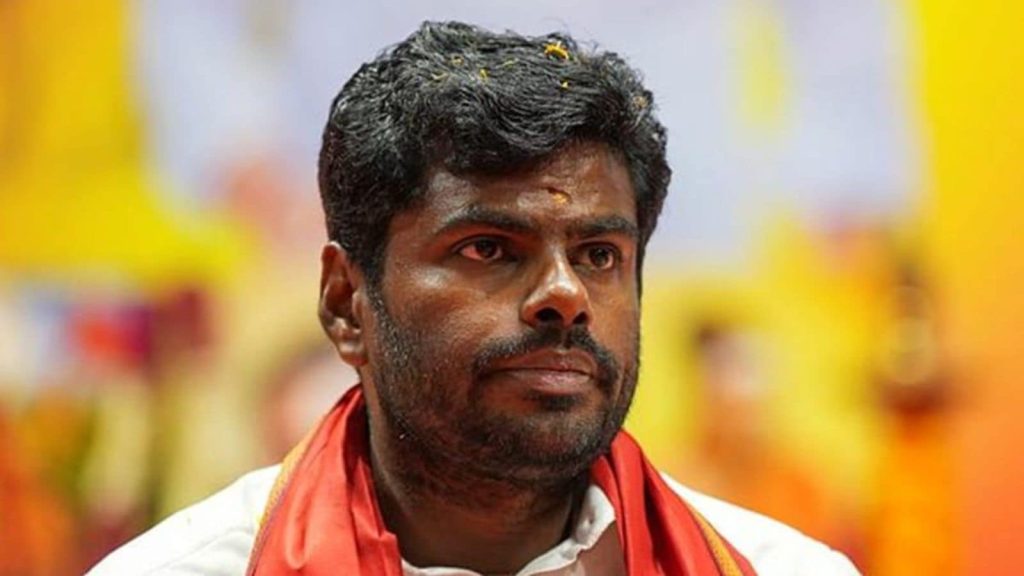
tamil nadu crisis deepens:
Following the reported exit of Tamil Nadu BJP leader K. Annamalai, the party is witnessing internal instability with its Vice President and several senior leaders allegedly stepping away. The developments signal widening factional rifts within the state unit and raise questions about BJP’s organizational stability in Tamil Nadu ahead of key political battles.
Tamil Nadu’s political landscape has been shaken by reports suggesting a significant internal crisis within the Bharatiya Janata Party (BJP) state unit. The situation reportedly escalated after the exit of K. Annamalai, one of the party’s most prominent and aggressive state leaders in recent years. In the aftermath, reports indicate that the Tamil Nadu BJP Vice President, along with several senior leaders, have walked out of the party structure, signaling a possible organizational fracture.
The development has triggered intense political debate across the state and at the national level, as Tamil Nadu remains one of India’s most politically competitive and ideologically distinct states. The BJP has historically struggled to establish a deep-rooted organizational base in Tamil Nadu, where Dravidian parties such as the DMK and AIADMK dominate electoral politics.
Against this backdrop, the reported internal exits have raised questions about leadership continuity, cadre morale, and the BJP’s long-term electoral strategy in the state.
Who Is K. Annamalai and Why His Exit Matters
K. Annamalai, a former IPS officer turned politician, emerged as one of the BJP’s most visible faces in Tamil Nadu politics. Known for his aggressive political communication style, grassroots outreach efforts, and vocal criticism of the ruling DMK government, he played a crucial role in expanding BJP’s visibility in the state.
Key aspects of Annamalai’s political profile:
- Former Indian Police Service (IPS) officer
- Tamil Nadu BJP state president (recent tenure)
- Strong social media presence and youth outreach
- Vocal critic of Dravidian political narratives
- Instrumental in mobilizing cadre-based activism
His leadership was often seen as central to BJP’s attempt to reposition itself in Tamil Nadu from a peripheral force to a competitive opposition party.
Therefore, any exit or restructuring involving him has immediate ripple effects across the party organization.
Immediate Fallout: Vice President and Senior Leaders’ Exit Reports
Following Annamalai’s reported exit, political reports suggest that the Tamil Nadu BJP Vice President, along with multiple senior functionaries, have stepped away from the party structure. While official confirmations vary depending on sources, the development has already created strong political ripples.
Key reported developments include:
- Resignations or walkouts by senior state leadership figures
- Internal dissatisfaction among district-level coordinators
- Disruption in ongoing organizational restructuring efforts
- Uncertainty regarding leadership succession in the state unit
This sequence of events suggests that the issue may not be isolated, but part of a broader internal realignment or factional conflict.
Tamil Nadu BJP: A Historically Challenging Political Environment
To understand the gravity of these developments, it is important to examine BJP’s historical position in Tamil Nadu.
Unlike many northern and western states where the BJP has established strong organizational dominance, Tamil Nadu presents a distinct political ecosystem shaped by:
- Dravidian ideological politics
- Strong regional identity movements
- Linguistic and cultural nationalism
- Entrenched regional parties (DMK and AIADMK)
The BJP has historically functioned as a smaller player in this ecosystem, often relying on alliances or strategic electoral partnerships rather than independent dominance.
Core structural challenges faced by BJP in Tamil Nadu:
- Limited grassroots penetration in rural belts
- Strong regional party loyalty among voters
- Ideological resistance to national party narratives
- Leadership turnover and organizational instability
In this context, leadership figures like Annamalai were considered crucial to expanding BJP’s independent political footprint.
Why Internal Leadership Stability Matters in Tamil Nadu BJP
Political parties depend heavily on organizational continuity, especially in states where they are still expanding their base. In Tamil Nadu BJP’s case, leadership stability is directly linked to:
- Cadre motivation and retention
- Election campaign coordination
- Alliance negotiation strength
- Public perception of party credibility
When senior leaders exit or disengage, it can lead to:
- Fragmentation of local units
- Confusion over leadership authority
- Reduced campaign efficiency
- Weakening of voter outreach networks
The reported departure of both Annamalai and senior leaders therefore represents more than a symbolic setback—it potentially affects the operational machinery of the party.
Factionalism Within Political Parties: A Common but Critical Phenomenon
Internal differences are not uncommon in large political organizations. However, the intensity and timing of such developments often determine their political impact.
Factionalism in parties typically emerges due to:
- Leadership transition disputes
- Ideological disagreements
- Candidate selection conflicts
- Central vs state leadership tensions
- Strategic direction differences
In Tamil Nadu BJP’s case, the reported exits may reflect underlying tensions regarding:
- Leadership style and centralization
- Electoral strategy in alliance politics
- Role of regional identity in BJP messaging
- Distribution of organizational authority
Impact on BJP’s Electoral Strategy in Tamil Nadu
Tamil Nadu is expected to be a crucial battleground in upcoming electoral cycles. The BJP has been attempting to position itself as a stronger challenger by:
- Strengthening booth-level organization
- Expanding youth outreach
- Building issue-based campaigns
- Leveraging national leadership visibility
However, internal instability can disrupt these strategies significantly.
Potential electoral consequences include:
1. Weakening of ground-level campaign networks
Local leaders play a critical role in mobilizing voters, and their exit can disrupt coordination.
2. Reduced alliance bargaining power
Political allies often assess organizational stability before forming coalitions.
3. Narrative disadvantage
Opposition parties may frame the situation as organizational decline.
4. Cadre uncertainty
Party workers often depend on leadership clarity for direction.
Role of Leadership Personalities in BJP’s State Expansion Model
The BJP’s expansion strategy in non-traditional states has often relied on strong regional leaders who can:
- Localize national narratives
- Bridge cultural and ideological gaps
- Build direct voter connect
- Counter entrenched regional parties
In Tamil Nadu, Annamalai was widely seen as such a figure. His communication style and assertive positioning helped the party gain visibility even in politically resistant environments.
Therefore, any disruption involving such leadership figures has amplified consequences compared to more established states.
Reactions Within Political Circles
Although official statements may vary, political reactions to such developments typically fall into three categories:
1. Ruling Party Perspective (DMK and allies):
- May interpret developments as internal instability within BJP
- Could highlight governance stability contrast
- Likely to frame it as organizational weakness
2. Opposition within BJP ecosystem:
- Internal calls for restructuring or reconciliation
- Possible central leadership intervention
- Reassessment of state leadership structure
3. Neutral political observers:
- Analysis of long-term implications
- Focus on whether exits are temporary or structural
- Evaluation of electoral impact
Media and Public Narrative Formation
In modern political environments, media narratives often play a decisive role in shaping public perception of internal party events.
Key narrative trajectories include:
- “Leadership vacuum” framing
- “Organizational crisis” interpretation
- “Strategic realignment” counter-narrative
- “Normal political churn” perspective
The way this situation is framed in the coming days will significantly influence its political impact.
Historical Context: Leadership Changes and Party Stability
Indian political history shows multiple instances where leadership changes have triggered temporary instability:
- Regional parties undergoing succession crises
- National parties facing state-level realignments
- Ideological shifts causing factional splits
However, outcomes vary significantly depending on:
- Central leadership response speed
- Replacement leadership quality
- Cadre loyalty strength
- Electoral timing
In some cases, such crises lead to renewal; in others, they result in long-term decline in a region.
Organizational Rebuilding Challenges
If the reported exits are sustained, the Tamil Nadu BJP may face the following rebuilding challenges:
1. Leadership vacuum filling
Identifying a consensus leader acceptable to all factions.
2. Cadre consolidation
Preventing further fragmentation at district and booth levels.
3. Alliance recalibration
Reassessing relationships with AIADMK or other regional players.
4. Communication strategy overhaul
Rebuilding narrative coherence after leadership disruption.
Possible Future Scenarios
Based on current developments, several scenarios are possible:
Scenario 1: Rapid Consolidation
Central leadership intervenes, stabilizes state unit, and appoints interim leadership.
Scenario 2: Partial Fragmentation
Some leaders return after negotiations, but factional divisions remain.
Scenario 3: Structural Split
A breakaway faction forms a separate political identity or aligns with other parties.
Scenario 4: Strategic Reset
Complete organizational overhaul with new leadership and strategy.
Broader Implications for National Politics
While the immediate impact is state-specific, Tamil Nadu’s political importance means that such developments can influence:
- National alliance strategies
- Electoral resource allocation
- Opposition narrative framing
- Perception of BJP’s southern expansion
Tamil Nadu remains a key state in India’s federal political balance, making stability in its major parties strategically significant.
Conclusion: A Defining Moment for Tamil Nadu BJP
The reported exit of K. Annamalai and subsequent departure of senior leaders represents a potentially significant turning point for the Tamil Nadu BJP. Whether this evolves into a temporary restructuring phase or a deeper organizational crisis will depend on the party’s internal response mechanisms in the coming weeks.
At its core, the situation highlights the challenges national parties face in integrating strong regional leadership within complex state political ecosystems. Tamil Nadu, with its distinct ideological and cultural political landscape, has historically demanded adaptive leadership models—and any disruption in that balance can have amplified consequences.
From an analytical systems perspective, this development reflects a recurring pattern in political organizations undergoing rapid expansion in non-native regions: dependence on high-visibility leaders creates both growth acceleration and structural vulnerability. When such leaders exit or are removed, the organization often experiences a “coordination shock,” where informal influence networks temporarily override formal hierarchy. The key determinant of recovery is not the exit itself, but the speed and clarity of institutional replacement mechanisms. In this case, the Tamil Nadu BJP’s ability to stabilize cadre confidence and re-establish leadership legitimacy will define whether this episode becomes a transient disruption or a structural inflection point.