 Top Saudi Cleric Calls Fight Against Houthis a Religious Duty
  Andhra to sell super-fine rice at ₹50 a kg, onions at ₹35, and pay MSP to move farmers off paddy
  OpenAI agents hack Australian Health website.
  Once Sentenced to Death, Mary Jane Veloso Receives Pardon in the Philippines
  A Russian Software Company Duped the Secret Service, U.S. Prosecutors Say
 Trump Media Reports 238 Million Q2 Loss as Crypto Values Fall, Refocuses on Truth Social and Trump Posts
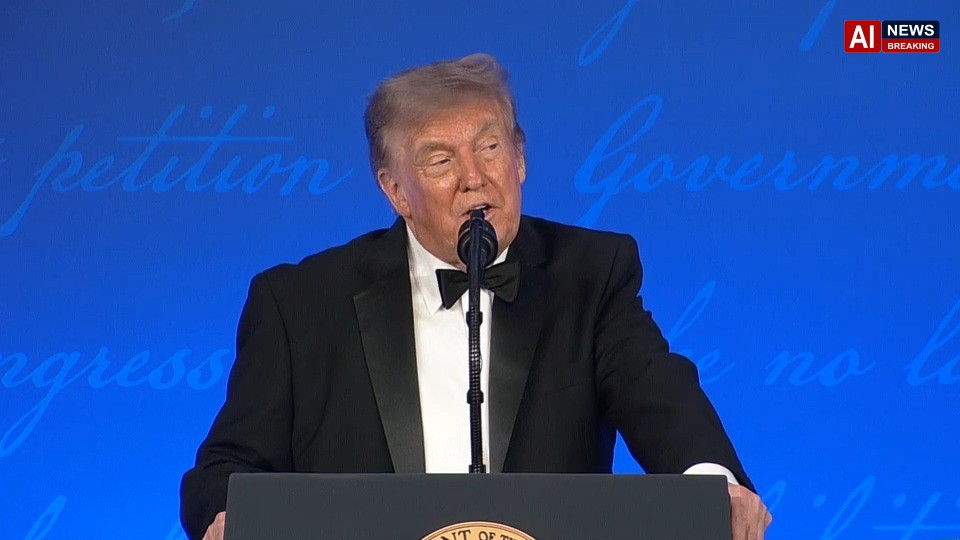
Trump Returns to White House Correspondents' Dinner, Unleashes on Media During Hour-Long Speech - AI News Breaking
trump media reports million:
Trump Media & Technology Group, the parent company of Truth Social, has reported a $238 million net loss for the second quarter of 2026, highlighting the financial risks created by the company’s expansion into cryptocurrency and other businesses beyond its original social-media focus.
The loss represents a major deterioration from a year earlier and comes as the company reassesses its strategy under new leadership. Rather than continuing to pursue a broad collection of businesses, Trump Media is moving back toward its core social-media operation, with Truth Social at the center of the company’s plans.
At the same time, the company is attempting to turn one of its most valuable assets—the speed and influence of Donald Trump’s posts—into a new commercial product. Through a service called Truth API, financial companies can receive rapid access to posts from influential Truth Social accounts, including posts from President Donald Trump.
The strategy represents a significant change in direction. Trump Media had increasingly moved into cryptocurrency, digital assets, online betting and other businesses in an effort to diversify its revenue sources. But falling crypto valuations created substantial losses during the latest quarter, putting renewed attention on whether the company can build a sustainable business around its original media and social-networking operations.
Trump Media’s $238 Million Quarterly Loss
Trump Media reported a net loss of approximately $238.1 million for the second quarter of 2026, according to reports on the company’s latest financial results. The loss was more than ten times the loss recorded during the same period a year earlier.
The scale of the loss is significant when compared with the company’s revenue.
Trump Media generated approximately $1.7 million in revenue during the quarter, a figure that was more than twice the amount recorded a year earlier. While the increase represents growth, the company’s revenue remains extremely small compared with the size of its reported quarterly loss.
That disparity is one of the most important elements of the latest results.
The company is not currently operating like a conventional large-scale technology or media company that generates substantial recurring revenue from advertising, subscriptions or other commercial services. Instead, its financial position has been strongly influenced by the value of assets on its balance sheet and investments in businesses outside its traditional social-media operation.
The latest quarter illustrates the risks associated with that approach.
Trump Media’s cryptocurrency holdings had become an important component of its corporate strategy. When digital-asset prices declined, the company was required to recognize substantial unrealized losses associated with those holdings. Reports indicate that approximately $190.4 million of the quarterly loss was connected to unrealized losses on crypto assets and related securities.
That does not mean the company necessarily spent $190 million in cash during the quarter.
An unrealized loss generally reflects a decline in the market value of an asset that remains on a company’s balance sheet. If the asset is still held, the loss can change again when the market moves.
Nevertheless, such losses can have a major effect on reported earnings and investor sentiment.
For Trump Media, the effect is especially important because cryptocurrency had become a central part of its diversification strategy.
Crypto Expansion Becomes a Financial Challenge
Trump Media’s move into cryptocurrency was intended to create another source of value and potentially transform the company into a broader technology and financial-services business.
The company accumulated significant exposure to Bitcoin and other digital assets.
But cryptocurrency is inherently volatile, and the latest quarterly results demonstrate how quickly an aggressive digital-asset strategy can affect reported financial performance.
As crypto prices fell, the market value of Trump Media’s holdings declined. Those declines contributed heavily to the company’s quarterly loss.
This creates a complicated picture for investors.
On one hand, the reported $238 million loss looks extremely severe. On the other hand, a large portion of the loss came from changes in the value of assets rather than from the company’s traditional operating activities.
That distinction matters.
Trump Media’s operating losses also increased, indicating that the company’s challenges are not limited to cryptocurrency accounting. According to the latest reporting, operating losses rose to approximately $164 million.
The company therefore faces two separate problems.
The first is the volatility of its investment and cryptocurrency portfolio.
The second is the need to build a profitable underlying media and technology business.
The second problem may ultimately be more important.
If Trump Media can grow Truth Social and develop recurring commercial services, the company could gradually become less dependent on fluctuations in asset prices.
If it cannot, large swings in cryptocurrency values could continue to dominate its financial statements.
Revenue Is Growing, But Remains Very Small
One of the more positive elements in the quarterly report is the increase in revenue.
Trump Media generated approximately $1.7 million in second-quarter revenue, more than double the amount reported in the same quarter a year earlier.
The percentage growth sounds impressive, but the absolute number remains modest.
For a publicly traded company with a high-profile brand, a large shareholder base and a significant market presence, revenue of only a few million dollars per quarter remains a major challenge.
The company therefore needs to find ways to convert its large audience, political influence and digital platforms into sustainable commercial revenue.
That is where Truth API becomes particularly important.
Rather than relying exclusively on conventional advertising, Trump Media is attempting to monetize the speed and market importance of posts published on Truth Social.
The idea is straightforward.
Donald Trump’s social-media posts can sometimes have an immediate effect on financial markets, politics, international relations and investor expectations. A financial institution that receives those posts a few seconds or moments earlier could potentially gain useful information.
Trump Media is now attempting to sell that speed as a financial-data service.
What Is Truth API?
Truth API is a new licensed data service launched by Trump Media.
The service is designed to provide financial-services companies with rapid access to posts from some of the most influential accounts on Truth Social.
The company has described the service as providing the fastest access to posts from its most influential accounts.
The product is particularly notable because Donald Trump is one of the platform’s most influential users.
Trump’s posts can move markets.
A statement about tariffs can affect stocks and currencies. A comment about the Federal Reserve can influence expectations about interest rates. A statement concerning oil production or international conflicts can affect commodity prices. Comments about individual companies, cryptocurrencies or government policy can trigger rapid market reactions.
For financial institutions, speed can therefore have monetary value.
Trump Media is attempting to capture some of that value through Truth API.
According to reporting, the service is being offered to financial firms for approximately $60,000 to $100,000 per month, depending on the arrangement. Ten firms, largely high-frequency trading companies, had already signed on, according to company leadership.
If those customers remain with the service, Truth API could become a meaningful source of recurring revenue.
Even a relatively small number of high-paying institutional customers could generate more revenue than traditional advertising on the platform.
That makes the service strategically important for a company whose quarterly revenue remains below $2 million.
Selling Speed in the Age of Algorithmic Trading
The business model behind Truth API reflects a broader change in financial markets.
Modern markets are increasingly dominated by automated systems capable of processing enormous amounts of information in fractions of a second.
For traders, information itself is not always the most valuable asset.
Sometimes the advantage comes from receiving information before competitors.
A company announcement, government statement, central-bank comment or political post can move financial markets rapidly. Trading firms therefore spend enormous amounts of money building systems that collect, process and distribute information as quickly as possible.
Trump’s Truth Social account presents an unusual example of this phenomenon.
Because Trump is simultaneously a major political figure and a highly active social-media user, his posts can carry economic significance.
A post about tariffs can alter expectations for global trade.
A statement about Iran or another geopolitical crisis can affect oil prices.
A comment about a company can influence its share price.
A statement concerning cryptocurrency can trigger sudden buying or selling.
Truth API attempts to turn that influence into a commercial data product.
For Trump Media, this is more than a technological experiment.
It could become part of a broader strategy to transform Truth Social’s unique position in the political and financial information ecosystem into recurring revenue.
Why Trump’s Posts Have Financial Value
The economic value of Trump’s social-media activity is closely connected to his position as president.
Unlike ordinary social-media influencers, Trump’s statements can potentially signal changes in government policy.
A presidential statement can affect expectations about tariffs, sanctions, trade, energy policy, foreign relations, regulation and government spending.
That makes speed particularly important for professional investors.
For example, if Trump publishes a statement about a major tariff policy, traders may immediately reassess companies that depend heavily on international supply chains.
If he comments on oil production or sanctions, energy markets may react.
If he makes a statement about the Federal Reserve or interest rates, investors can change their expectations about monetary policy.
If he comments on a major technology company or cryptocurrency, markets can respond almost instantly.
The value of Truth API therefore does not necessarily come from exclusive information.
It comes from faster access to public information.
That distinction is important.
The posts are ultimately public communications. Trump Media is not necessarily selling secret government information.
Instead, it is attempting to sell a faster, structured and commercially useful delivery mechanism.
The Ethical Debate Around Truth API
The service has already raised questions about the relationship between political influence, financial markets and private business.
Critics argue that monetizing rapid access to presidential communications creates uncomfortable questions because Trump’s statements can have direct economic consequences.
The company, however, has defended the service as a normal data-business model.
From a technology perspective, the concept is not unusual.
Financial institutions routinely pay for faster access to market data, corporate announcements, news feeds and other information.
The unusual element is the source.
A presidential social-media account can function simultaneously as political communication, public information and market-moving information.
That creates a unique intersection between government, media and finance.
The debate surrounding Truth API is therefore likely to continue as the service expands.
The central question is not simply whether companies should be allowed to pay for faster data.
It is whether the commercialization of political communication creates risks that are different from those associated with ordinary market information.
Trump Media’s Return to Its Core Business
The company’s latest strategy marks a shift away from its previous expansion.
Trump Media had pursued several businesses outside traditional social media, including cryptocurrency and online betting.
The expansion was intended to create multiple sources of revenue and position the company as a broader technology and financial-services organization.
But the results have been mixed.
The crypto downturn has demonstrated the financial volatility associated with digital assets, while the company’s relatively low operating revenue has highlighted the difficulty of rapidly building multiple businesses at once.
New CEO Kevin McGurn has therefore indicated that the company will refocus on its core social-media business.
That means greater attention to Truth Social and related media products.
The company’s own website describes Truth Social as its flagship social-media platform and identifies Truth+ as its streaming operation, while Truth.Fi is positioned as a forthcoming financial-services and fintech brand.
The change does not necessarily mean Trump Media is abandoning every project outside social media.
The company continues to pursue its planned merger with TAE Technologies, a nuclear-fusion company.
But the broader strategy appears to be moving toward fewer, more focused initiatives rather than aggressively expanding into unrelated markets.
Truth Social Becomes the Center of the Strategy
The most important asset in Trump Media’s portfolio remains Truth Social.
The platform was created as an alternative social network and has been closely associated with Donald Trump’s political communication.
That connection gives Truth Social an unusual competitive advantage.
Trump is not merely an owner or brand ambassador associated with the platform.
He is one of its most important sources of content.
His continued use of Truth Social provides the platform with a built-in source of high-profile material that can attract users and generate news coverage.
This creates a feedback loop.
Trump posts on Truth Social.
The posts generate attention.
News organizations report on them.
The coverage drives additional attention to the platform.
Financial institutions monitor the posts because of their potential market impact.
Trump Media then attempts to monetize that interest through products such as Truth API.
The challenge is converting attention into sustainable revenue.
A large audience does not automatically produce a profitable social network.
The company must still increase advertising, subscriptions, data services or other commercial revenue while controlling operating costs.
The Problem of Scale
The latest financial results show the difficulty Trump Media faces.
Revenue of approximately $1.7 million per quarter is far below what would normally be expected from a major publicly traded technology company.
At the same time, the company has substantial expenses and has experienced large losses from its digital-asset investments.
The result is a business with significant visibility but relatively limited traditional operating revenue.
That creates pressure to develop new monetization models.
Truth API is one attempt.
Streaming through Truth+ is another.
Financial products under the Truth.Fi brand represent another potential source of future revenue.
The company is also pursuing its planned TAE Technologies transaction, which would move Trump Media deeper into the energy and fusion sector.
The strategic question is whether these businesses can eventually produce enough revenue and cash flow to justify the company’s broad ambitions.
Crypto Is Not Necessarily Gone
Although Trump Media is refocusing on social media, that does not mean cryptocurrency has disappeared from its strategy.
The company continues to hold substantial Bitcoin exposure.
Reports indicate that Trump Media had approximately 14,139 Bitcoin by the end of July 2026.
That creates both an opportunity and a risk.
If Bitcoin prices rise significantly, the value of the company’s holdings could increase.
But if cryptocurrency prices fall, the company could again face large paper losses.
The latest quarter has therefore provided a lesson in the importance of managing digital-asset exposure.
Instead of treating Bitcoin purely as a speculative investment, the company has indicated that it wants to develop a more disciplined treasury strategy.
That could include strategies designed to generate additional income from its crypto holdings while maintaining exposure to potential long-term appreciation.
However, such strategies also introduce new risks, including market volatility, counterparty risk and operational complexity.
The company must therefore balance its ideological and strategic support for cryptocurrency with the financial realities of managing a volatile asset.
Cash Position Offers Some Protection
Despite the huge quarterly loss, Trump Media is not necessarily in an immediate liquidity crisis.
The company reportedly had more than $400 million in cash and short-term investments.
That provides an important cushion.
A company with substantial cash reserves can absorb temporary losses more easily than one that has limited liquidity.
However, cash reserves can decline rapidly when a business continues to generate operating losses.
That makes the company’s ability to improve its underlying operations particularly important.
Trump Media therefore has time to execute its new strategy, but time alone does not guarantee success.
The company needs to turn its social-media reach into sustainable earnings.
The $1 Billion Debt Question
Another financial issue facing Trump Media is its debt structure.
Reports indicate that the company has approximately $1 billion in convertible notes, creating a potential financial pressure point if lenders seek early repayment.
That makes the company’s balance-sheet strategy important.
Large cryptocurrency holdings can provide substantial asset value, but their market prices can fluctuate sharply.
Cash and short-term investments provide greater liquidity.
Operating revenue provides recurring support.
The ideal scenario for Trump Media would therefore be to increase recurring revenue while maintaining enough liquid assets to manage debt obligations and strategic investments.
The latest results show that the company still has considerable financial resources, but also significant exposure to market volatility.
What Investors Are Watching
Investors are likely to focus on several issues following the latest results.
The first is revenue growth.
A significant improvement in quarterly revenue would provide evidence that Truth Social and related services are becoming more commercially viable.
The second is operating expenses.
Even if crypto prices recover, the company needs to control the underlying cost of running its businesses.
The third is Truth API.
The data service could become one of the company’s most interesting new revenue streams if institutional customers continue signing up.
The fourth is cryptocurrency exposure.
Bitcoin prices will continue to influence the company’s reported financial performance.
The fifth is the company’s broader corporate strategy.
Investors will want to know whether Trump Media can successfully manage several businesses simultaneously without spreading its resources too thinly.
The Importance of Truth API for Future Revenue
Truth API may be particularly important because it represents a relatively asset-light revenue opportunity.
Unlike cryptocurrency mining or large-scale physical infrastructure, a data service can potentially generate high-margin recurring revenue once the technological infrastructure is established.
If customers pay tens of thousands of dollars per month, even a modest customer base could create meaningful revenue.
For example, ten customers paying an average of $80,000 per month would generate approximately $800,000 in monthly revenue, or about $9.6 million annually.
That would already be significant compared with Trump Media’s recent quarterly revenue.
The exact commercial economics will depend on customer numbers, pricing, infrastructure costs and retention.
But the basic concept demonstrates why the company is interested in monetizing its information ecosystem.
The value is not necessarily in producing more content.
It is in selling access to information that already has influence.
A Different Kind of Social-Media Business
Traditional social-media companies generally monetize user attention.
They sell advertising based on the number of users, engagement levels and demographic information.
Trump Media is exploring a different model.
Its value proposition can include political influence, specialized audiences, premium access and financial information.
That could allow the company to generate revenue from a smaller audience than a conventional social network would require.
However, the model also creates challenges.
Advertising revenue depends on attracting advertisers.
Subscription revenue depends on convincing users to pay.
Data revenue depends on institutional customers seeing enough value to justify expensive subscriptions.
Trump Media therefore needs to determine which combination of these revenue streams can support its long-term business.
Why the Latest Loss Matters Beyond One Quarter
Quarterly losses are not unusual for technology companies, especially companies investing heavily in growth.
But Trump Media’s situation is different because of the size of the loss relative to revenue.
A $238 million quarterly loss alongside $1.7 million in revenue raises questions about the company’s ability to generate sustainable operating earnings.
The crypto-related component makes the number more complicated, but it does not eliminate the underlying challenge.
The company needs to demonstrate that its core businesses can eventually produce significant revenue.
That means the next several quarters could be important.
If Truth Social grows, Truth API expands and other media services begin generating meaningful income, the company could gradually reduce its dependence on investment gains and losses.
If revenue remains low while operating expenses remain high, pressure on management could increase.
Political Influence and Corporate Value
Trump Media occupies an unusual position in the American business landscape.
Its corporate value is closely tied to the political influence of Donald Trump.
That creates both an advantage and a risk.
The advantage is obvious.
Trump is one of the most recognizable political figures in the world, and his social-media activity generates enormous attention.
The risk is concentration.
A business heavily dependent on one individual is exposed to changes in that individual’s political position, communication habits, audience engagement and public influence.
Truth Social’s ability to monetize Trump’s presence is therefore both its greatest competitive advantage and one of its biggest strategic vulnerabilities.
The company will need to build products and services that remain valuable beyond individual posts.
Truth API may be an example of how it is attempting to do that.
The Future of Truth Social
The future of Truth Social will likely depend on whether the company can expand beyond being primarily a political communication platform.
Political content provides attention, but long-term business success requires monetization.
The platform could potentially expand advertising.
It could increase premium services.
It could integrate more financial-data products.
It could develop video and streaming capabilities through Truth+.
It could use its audience to support additional products under the Truth brand.
The company already describes Truth Social as its flagship product, while its broader corporate strategy includes streaming and financial services.
The challenge is execution.
Launching products is relatively easy.
Building profitable businesses is much harder.
Trump Media’s Broader Corporate Ambitions
Despite the decision to refocus on social media, Trump Media has not abandoned its broader ambitions.
The planned TAE Technologies merger demonstrates that the company continues to view itself as more than a social-media company.
TAE Technologies is focused on nuclear fusion technology, an area that is far removed from social networking.
The proposed combination illustrates the company’s ambition to create a diversified technology business.
That strategy could eventually give Trump Media exposure to areas such as energy and artificial intelligence.
But it also raises questions about corporate focus.
Every new business requires management attention, capital and expertise.
A company that is struggling to generate substantial revenue from its core business may face difficulties managing unrelated ventures simultaneously.
The latest leadership shift toward a stronger social-media focus therefore suggests that management recognizes the importance of prioritization.
The Bigger Lesson From the $238 Million Loss
Trump Media’s latest results offer a broader lesson about the risks of rapid corporate diversification.
Companies often expand into new industries when they believe their existing business is not enough to support long-term growth.
Diversification can create new opportunities.
But it can also increase complexity.
Trump Media’s experience with cryptocurrency illustrates this problem.
The company was able to build a substantial digital-asset position, but the value of those assets was highly sensitive to market movements.
A fall in crypto prices therefore had an enormous impact on reported earnings.
By contrast, a recurring subscription or data-service business can provide more predictable revenue.
That may explain why Truth API is attracting attention.
It offers the possibility of recurring institutional revenue based on a service rather than the market price of an asset.
The latest Trump Media results demonstrate an important trend in the modern digital economy: influence itself is becoming a monetizable data asset. The company’s most interesting opportunity may not be cryptocurrency, streaming or even conventional social-media advertising, but the ability to convert high-impact political communication into structured, real-time information for professional users. Truth API illustrates how social-media posts can become part of the financial-information infrastructure when they have the power to move markets.
However, the $238 million loss also demonstrates the danger of mixing a media business with highly volatile financial assets. Cryptocurrency can amplify both gains and losses, while a social-media company requires predictable recurring revenue to support long-term operations. Trump Media’s decision to refocus on Truth Social and related information services could therefore represent a shift from asset speculation toward information monetization. If the company can convert Trump’s enormous communication reach into recurring institutional revenue while controlling operating costs, it could develop a distinctive business model. If it remains dependent on cryptocurrency valuations and politically driven market enthusiasm, quarterly financial volatility could continue to overshadow its underlying media operations.
The next test for Trump Media will not simply be whether Bitcoin rises or falls. It will be whether the company can prove that attention, influence and information can be converted into sustainable cash flow.