Europe warns of Russia’s hybrid attacks but struggles to counter them
  Former chief election commissioner calls SIR scheme illegal.
  A Corruption Scandal Is Reshaping Brazil’s Presidential Election
  US citizen injured in Illinois after ICE agents mistook him for fugitive, tried to arrest him
  At 10 years old, Smithsonian’s Black museum is undaunted amid pressure from Trump administration
 Trump Says Iran Talks Are ‘Last Chance’ as Tehran Denies Negotiations Hormuz Crisis Sends Oil Prices Higher
The US-Iran conflict has taken a new turn as President Donald Trump warns Tehran of a “last chance” for talks, while Iran denies direct negotiations, sparking renewed fears over oil supplies and pushing crude prices higher.
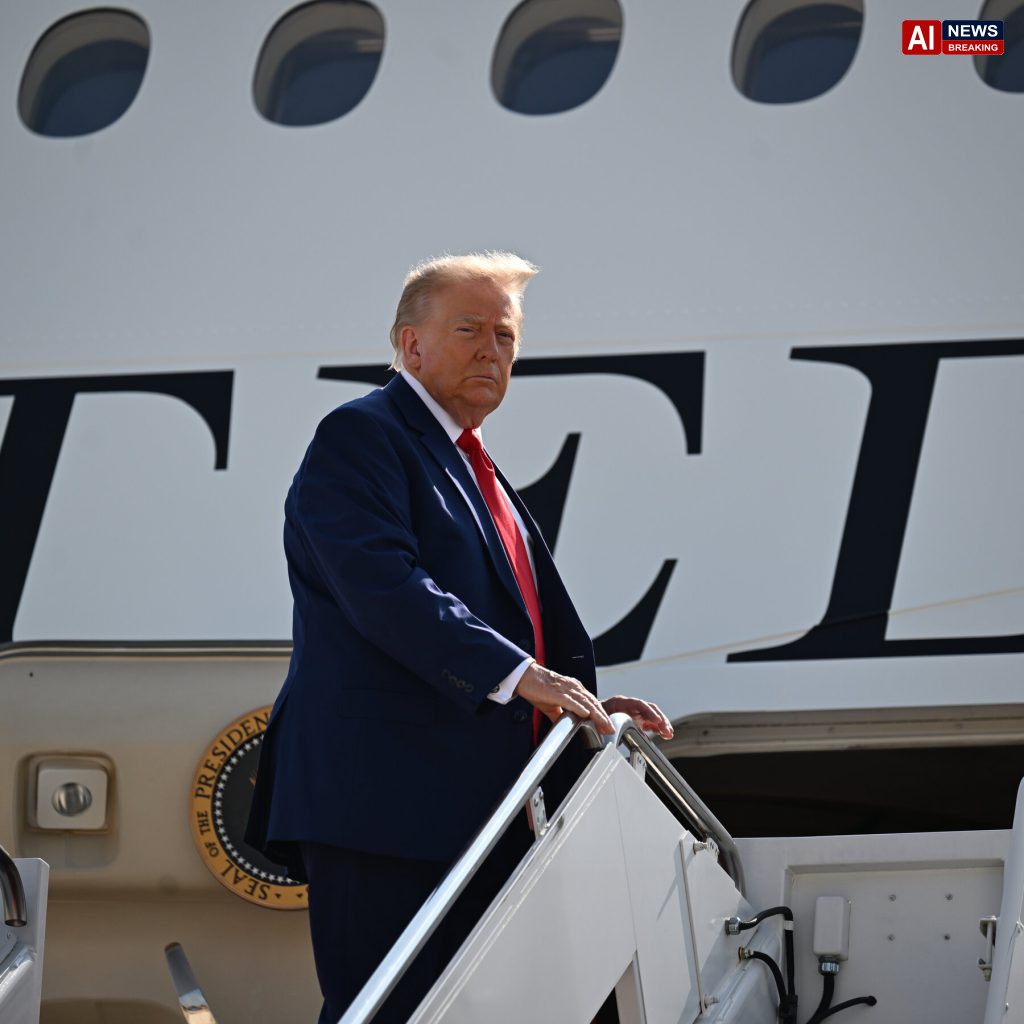
Trump Holds Off on Major War Escalation Against Iran as Advisers Raise Concerns - AI News Breaking
US President Donald Trump says negotiations with Iran are underway and has warned Tehran that the current diplomatic opportunity could be its “last chance” to reach a deal. Iran, however, has denied that direct talks with Washington are taking place, saying its discussions are instead focused on Oman and arrangements for shipping through the Strait of Hormuz.
The conflicting claims have deepened uncertainty around the Middle East conflict, while renewed fears over oil supplies pushed Brent crude back above $86 a barrel and WTI above $82 on August 4.
Trump-Iran Talks Face New Crisis as Tehran Denies Negotiations and Hormuz Remains Shut
A potentially decisive diplomatic moment in the US-Iran conflict has turned into another confrontation over competing claims, with President Donald Trump saying negotiations with Tehran are underway while Iranian officials insist that no direct talks with Washington are taking place.
The contradictory statements have created fresh uncertainty about whether diplomacy is genuinely moving forward or whether both sides are using different channels to pursue their strategic objectives.
At the heart of the dispute is the Strait of Hormuz, one of the world’s most important energy corridors.
Trump has linked a possible agreement to the reopening of the strategic waterway, while Iran has rejected claims that it has agreed to fully reopen the strait. Tehran says it is instead discussing a temporary shipping arrangement with Oman.
The uncertainty has immediately spilled into global energy markets.
After oil prices fell sharply on Monday amid optimism about possible negotiations, crude prices rebounded on Tuesday as traders reassessed the likelihood of a diplomatic breakthrough.
Trump Calls Negotiations Iran’s ‘Last Chance’
Trump has presented the reported negotiations as a critical opportunity for Tehran to reach an agreement and avoid renewed military escalation.
According to the latest reporting, Trump said discussions were underway and described the situation as Iran’s “last chance” to secure a deal.
The US president has also tied the diplomatic effort to the future of the Strait of Hormuz.
Trump indicated that Washington wants the strategic waterway reopened, potentially allowing international shipping to resume at a much higher level.
His comments came after the United States postponed planned military action against Iran, creating a temporary window for diplomacy.
The decision was reportedly influenced by appeals from Gulf countries concerned that another major US attack could trigger a wider regional conflict.
Tehran Flatly Denies Direct Talks With Washington
Iran has offered a sharply different account.
Iranian Foreign Ministry spokesperson Esmaeil Baghaei said Tehran is not currently engaged in negotiations with the United States.
Instead, Iranian officials say discussions are taking place with Oman over maritime arrangements involving the Strait of Hormuz.
That distinction is crucial.
Oman has historically played an important role as a diplomatic intermediary between Iran and Western governments. Therefore, discussions involving Muscat could potentially create an indirect channel for communication.
But Tehran’s public denial suggests that Iran does not currently want to characterize those contacts as formal negotiations with Washington.
The disagreement over whether talks exist illustrates the extraordinary level of mistrust between the two sides.
Why the Strait of Hormuz Is at the Centre of the Crisis
The Strait of Hormuz is one of the most strategically important waterways in the global economy.
The narrow passage connects the Persian Gulf with the Gulf of Oman and the Arabian Sea.
A substantial share of internationally traded oil and liquefied natural gas passes through the region.
According to the latest energy-market reporting, approximately one-fifth of global oil and LNG supplies move through the waterway.
That makes any prolonged disruption potentially damaging to the global economy.
If shipping remains restricted, oil-importing countries could face higher energy costs, while oil producers outside the region could struggle to compensate quickly for disrupted supplies.
For this reason, the future of Hormuz has become one of the most important issues in the US-Iran confrontation.
Iran and Oman Discuss Temporary Shipping Route
While Tehran denies direct negotiations with Washington, it acknowledges that it is talking to Oman about maritime traffic.
Iranian officials say the two countries are working toward a temporary safe shipping route through the Strait of Hormuz.
The objective would be to allow certain vessels to move safely through the strategic waterway.
However, Tehran has emphasized that an agreement with Oman would not automatically mean a full reopening of Hormuz.
Iranian officials have linked broader reopening to the cessation of US attacks against Iran.
This creates a significant gap between the two sides.
Washington appears to want a broad reopening as part of a diplomatic settlement.
Tehran, meanwhile, is signaling that the waterway remains connected to the wider military and political confrontation.
Oil Prices Reverse Course as Diplomatic Hopes Fade
The latest developments have had an immediate impact on global oil markets.
On Monday, oil prices fell by nearly 5% as traders responded to signs that Washington was giving diplomacy another opportunity.
But on Tuesday, crude prices reversed course.
Brent crude futures climbed 2.7% to $86.05 per barrel, while US West Texas Intermediate gained 2.3% to $82.22, according to APAC Media reporting.
The reversal demonstrates how sensitive energy markets have become to every diplomatic statement from Washington and Tehran.
When traders believe that the conflict could end and Hormuz could reopen, the risk premium embedded in oil prices falls.
When negotiations appear uncertain, that premium returns quickly.
Why Oil Markets Are So Nervous
The oil market is not simply reacting to current production.
Traders are also pricing the possibility of future supply disruption.
If the Strait of Hormuz remains restricted, international shipping costs could rise and the availability of crude could become more uncertain.
A prolonged crisis could therefore affect:
- Petrol and diesel prices
- Aviation fuel costs
- Shipping expenses
- Industrial production
- Inflation
- Global economic growth
- Energy-company profits
For oil-importing countries, the consequences could be particularly severe.
The Diplomatic Contradiction Is the Biggest Risk
Perhaps the most important development is not simply that Iran denies talks.
It is that Washington and Tehran appear to be describing completely different diplomatic realities.
Trump says negotiations are happening.
Iran says they are not.
The United States says a deal could reopen Hormuz.
Iran says no such comprehensive agreement exists.
This creates uncertainty about what is actually being negotiated behind the scenes.
It also raises the possibility that intermediaries may be carrying messages between the two sides even though neither government wants to acknowledge formal negotiations.
That could explain some of the conflicting public statements.
But it could also mean that there is no meaningful diplomatic process yet.
Trump’s Pause in Military Action Creates a Narrow Diplomatic Window
The current diplomatic opening emerged after Trump postponed planned US military strikes against Iran.
The president said the decision followed appeals from Gulf allies and indications that a potential agreement could be reached.
Saudi Arabia, Qatar and the United Arab Emirates were among the regional countries reportedly concerned about the consequences of another major escalation.
Their concern is understandable.
A major US-Iran confrontation could spread across the Gulf and threaten energy infrastructure, shipping routes and military facilities.
It could also create another wave of displacement and instability across the Middle East.
Gulf States Fear a Wider Regional War
For Gulf countries, the stakes are exceptionally high.
They are geographically close to Iran and host critical energy infrastructure as well as foreign military forces.
An expanded conflict could potentially expose:
- Oil terminals
- Refineries
- Ports
- Desalination facilities
- Airports
- Shipping routes
- Military installations
Even countries that are not directly involved in the conflict could therefore suffer major economic consequences.
This helps explain why Gulf governments have reportedly pushed for diplomacy rather than another major escalation.
A Tanker Incident Adds to Maritime Anxiety
The diplomatic uncertainty has been accompanied by renewed maritime security concerns.
The UK Maritime Trade Operations agency reported an explosion near a tanker off the coast of Oman, with the crew safe and an investigation launched.
Ships operating in the region have been advised to remain vigilant and report suspicious activity.
The incident occurred at an especially sensitive moment.
Any attack, explosion or unexplained maritime incident can trigger immediate concern among shipping companies and energy traders.
Even if an incident does not directly disrupt oil production, the perception of increased risk can raise insurance and transportation costs.
Iran Rejects Claims of a Hormuz Reopening Agreement
Another major disagreement concerns the future of the Strait itself.
Trump has suggested that an emerging arrangement could result in the immediate reopening of Hormuz.
Iran has rejected that claim.
Iranian officials and state-linked media have said there is no agreement to restore the waterway to its pre-conflict status.
Iranian Foreign Ministry spokesperson Baghaei reportedly said the strait would not simply return to the way it operated before the conflict began.
That position suggests that Tehran views control over Hormuz as a strategic bargaining instrument.
Why Iran Values Control of Hormuz
For Tehran, the Strait of Hormuz represents far more than a shipping route.
It is also a strategic lever.
Iran’s geographic position gives it influence over one of the world’s most important energy corridors.
Control or restriction of the waterway gives Tehran potential leverage over:
- Gulf oil producers
- Western governments
- Asian energy importers
- International shipping companies
- Global financial markets
That makes Hormuz an extremely valuable bargaining chip.
Any agreement that changes the balance of control over the strait could therefore have consequences far beyond the current conflict.
The Nuclear Issue Remains Central
The Strait of Hormuz is not the only issue on the negotiating table.
Trump has repeatedly linked any agreement with Iran to concerns over Tehran’s nuclear program.
The United States has also expressed broader security concerns involving Iran’s military capabilities.
For Tehran, however, sanctions relief, security guarantees and recognition of its sovereignty remain critical concerns.
This means that even if the two sides manage to establish a communication channel, reaching a comprehensive agreement would remain extremely difficult.
The issues are interconnected.
A deal on Hormuz alone may not resolve the nuclear dispute.
Likewise, progress on the nuclear issue may not automatically reopen maritime routes.
The Risk of Miscalculation Is Rising
The biggest danger now may be a breakdown in communication.
When two countries are engaged in active military confrontation while publicly contradicting each other about diplomacy, the risk of miscalculation increases.
One side could interpret a military movement as preparation for an attack.
A political statement could be interpreted as an ultimatum.
A maritime incident could trigger retaliation before investigators determine what actually happened.
That is why even limited diplomatic communication can become extremely important.
What the Next 48 Hours Could Mean
The next stage of the crisis could move in several directions.
Scenario 1: Talks Become Formal
If Washington and Tehran acknowledge negotiations, markets could respond positively.
Oil prices could fall as the geopolitical risk premium declines.
Scenario 2: Indirect Diplomacy Continues
Oman could remain the main intermediary while both governments avoid publicly acknowledging direct negotiations.
This could produce incremental progress but would likely be slower.
Scenario 3: Hormuz Remains Restricted
If the waterway remains difficult to navigate, oil prices could remain elevated.
Shipping and insurance costs could also rise.
Scenario 4: Military Escalation Returns
If negotiations collapse, Trump could revive threats of military action.
That would likely push oil prices higher and increase the risk of a wider regional conflict.
Global Economy Watches Hormuz
The significance of the crisis extends far beyond the Middle East.
Asian economies are particularly exposed because several major energy-importing countries depend heavily on Gulf supplies.
Europe is also vulnerable to higher energy prices.
The United States, while producing substantial quantities of oil itself, would not be insulated from global price movements.
Oil is traded through an interconnected international market.
A disruption in one major supply corridor can therefore affect prices worldwide.
India Also Faces Significant Exposure
For India, developments around Hormuz deserve close attention.
India is one of the world’s largest crude-oil importers and depends heavily on international energy markets.
A sustained increase in crude prices could affect:
- Petrol and diesel prices
- Inflation
- Transportation costs
- Airline expenses
- Industrial production
- The current-account balance
- The Indian rupee
If the crisis persists, the impact could eventually reach households and businesses across India.
Why the Oil Price Reaction Matters
The sharp reversal in crude prices provides an important indication of investor sentiment.
Monday’s almost 5% decline showed how quickly markets can respond to the prospect of peace.
Tuesday’s rebound showed how quickly that optimism can disappear.
This volatility suggests that traders do not yet believe a durable diplomatic settlement is guaranteed.
The market is effectively waiting for evidence rather than relying on political statements alone.
Diplomacy Has a Long Way to Go
Even if Trump and Iranian officials eventually establish formal negotiations, a final agreement would likely require difficult compromises.
The most complicated issues include:
- Iran’s nuclear program
- Sanctions relief
- Regional security
- Missile capabilities
- The Strait of Hormuz
- US military deployments
- Security guarantees
- Verification mechanisms
Each issue has previously contributed to failed negotiations.
The current conflict makes compromise even harder.
A Crisis Built on Mutual Distrust
The central obstacle remains trust.
Iran does not appear willing to accept American assurances without concrete guarantees.
Washington, meanwhile, wants verifiable commitments from Tehran before providing major concessions.
That creates a classic diplomatic dilemma.
Iran wants sanctions relief and security guarantees before making irreversible concessions.
The United States wants Iranian concessions before offering significant relief.
Breaking that cycle will require intermediaries capable of building confidence step by step.
Oman could potentially play an important role in that process.
What Trump’s ‘Last Chance’ Warning Means
Trump’s description of the negotiations as Iran’s “last chance” is significant because it suggests that the diplomatic window may be deliberately limited.
Such language serves two purposes.
First, it puts pressure on Tehran.
Second, it signals to US allies and adversaries that Washington is prepared to return to military pressure if diplomacy fails.
But the same strategy carries risks.
If Tehran believes Washington is issuing an ultimatum rather than offering genuine negotiations, it may become less willing to compromise.
The success of the strategy will therefore depend on whether pressure and diplomacy can operate simultaneously without destroying the possibility of dialogue.
The Strait Could Become the Key to Any Deal
The future of Hormuz may ultimately determine whether the current diplomatic opening succeeds.
For Washington, reopening the waterway would demonstrate that military and economic pressure has achieved a concrete result.
For Tehran, maintaining influence over the strait provides leverage in negotiations.
For Gulf countries, safe shipping is essential to their economies.
For international markets, uninterrupted traffic is critical to energy security.
That makes Hormuz the point where American, Iranian, Gulf and global economic interests intersect.
Insights
The most important feature of the latest US-Iran crisis is the disconnect between diplomatic messaging and verifiable diplomatic activity. Washington is presenting negotiations as an immediate opportunity to resolve the crisis, while Tehran is publicly denying direct talks and pursuing a separate channel with Oman over maritime access. That ambiguity is itself a geopolitical risk.
The Strait of Hormuz has become the central bargaining instrument because it connects military strategy with the global economy. Any durable agreement will therefore need to address not just Iran’s nuclear and security concerns but also the practical question of who controls, protects and guarantees commercial navigation through the waterway.
From an economic perspective, the rapid movement in oil prices is an early warning mechanism. The nearly 5% decline followed by a rebound above $86 for Brent shows that markets remain highly dependent on diplomatic headlines. If negotiations become credible, the geopolitical premium could fall sharply. If talks fail or military action resumes, the opposite could happen quickly.
The broader lesson is that the Iran conflict is no longer simply a regional military confrontation—it is simultaneously a diplomatic crisis, an energy-security crisis and a global economic risk. The outcome around Hormuz could determine not only the next phase of the war but also the direction of oil prices and inflation across major economies.