Trump administration offers mixed messages on limits to Ukraine’s Starshield access
 US Treasury proposes a rule to crack down on high-tech investments in China, other adversaries
 Calley Means, a key MAHA advocate, resigns as a top RFK Jr. adviser
 Spotify Tightens Family Plan Controls with QR Code Verification
 Use of Chief Minister C. Joseph Vijay’s deep fake videos to collect money: Rajasthan youth moves Madras High Court seeking bail
Turkey Raids Pro-Opposition TV Station
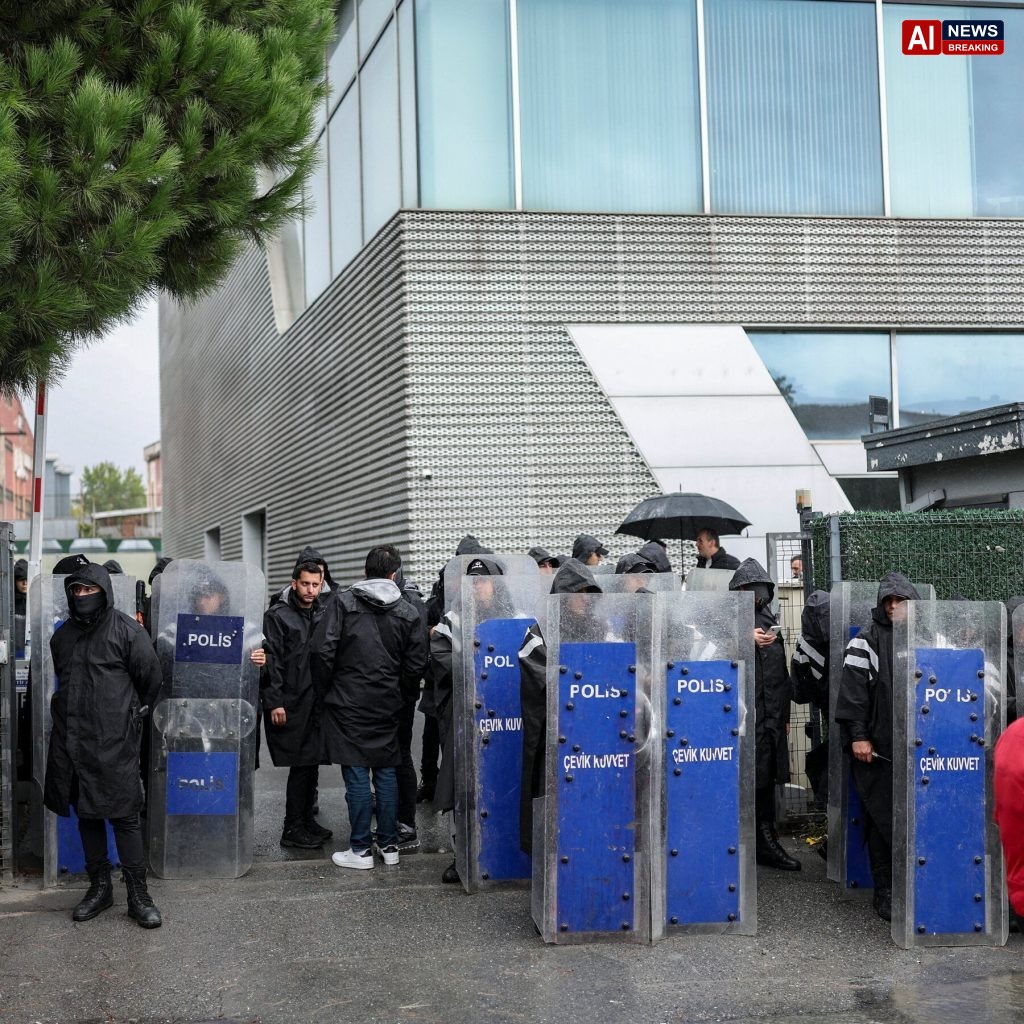
Turkey Raids Pro-Opposition TV Station - AI News Breaking
turkey raids proopposition station:
An Ankara-appointed overseer has taken control of one of Turkey’s most prominent television stations, marking the latest step in a series of government interventions aimed at silencing outlets that have been critical of President Recep Tayyip Erdogan. The move follows the earlier dismissal of senior editors at four other major news organisations, a pattern that analysts say signals a tightening of state control over the country’s media landscape ahead of the upcoming local elections. While officials argue the appointments are necessary to ensure “responsible journalism” and protect national security, opposition figures and international watchdogs warn that the actions amount to an unprecedented assault on press freedom.The station in question, known for its investigative reporting and outspoken commentary on government policies, was placed under the supervision of a former civil servant with close ties to the ruling Justice and Development Party (AKP)..
The overseer, whose name has not been disclosed pending official confirmation, is expected to oversee editorial decisions, personnel appointments and the allocation of resources. Sources within the organisation say the appointment was made overnight, with senior management receiving a formal notice that effectively stripped them of their authority to make independent editorial choices.This latest intervention comes on the heels of a broader crackdown that began earlier this year, when the media regulator, the Radio and Television Supreme Council (RTÜK), revoked the licences of several news channels for alleged violations of broadcasting standards. In the weeks that followed, the government announced the removal of top editors at five other outlets, including two of the country’s leading newspapers..
The dismissals were justified by the state as necessary measures to combat “disinformation” and to align the media with “national interests”, a narrative that has been echoed in speeches by senior AKP officials.Critics argue that the official rationale masks a more overt political motive: to curtail dissent ahead of the 2029 municipal elections, which are expected to be fiercely contested in major cities such as Istanbul, Ankara and Izmir. The opposition coalition, which includes the Republican People’s Party (CHP) and the Peoples’ Democratic Party (HDP), has warned that the suppression of independent voices could skew the electoral playing field. “When the state decides who can speak and who cannot, democracy is undermined,” said Selma Yildirim, a senior analyst at the Istanbul-based think tank Transparency Turkey.International reaction has been swift..
The European Union, which has been negotiating Turkey’s accession for decades, issued a statement urging Ankara to respect media pluralism and to refrain from further politicised appointments. The United States Department of State echoed similar concerns, noting that a free press is a cornerstone of democratic governance. Human Rights Watch and Reporters Without Borders have both called for an immediate reversal of the overseer appointments, warning that Turkey risks further isolation from its Western allies if it continues down this path.The government, for its part, has defended the moves as lawful and necessary..
In a press conference, the Minister of Justice, Ali Sait Cakmak, asserted that “the media must operate within the bounds of the law and with a sense of responsibility to the public.” He added that the overseer would “ensure compliance with the constitution and protect the public from harmful content”. When asked about accusations of political interference, Cakmak responded that “the state does not interfere in editorial content, but it does intervene when the line between journalism and propaganda is crossed”.Legal experts note that the appointment of an overseer is not without precedent; similar mechanisms have been employed during periods of national emergency, such as the aftermath of the 2016 coup attempt. However, they also point out that the legal basis for such interventions is often vague, leaving room for arbitrary application..
“The statutes that allow the government to appoint an overseer are broadly worded, which makes it difficult to challenge these decisions in court,” explained Dr. Emre Aydin, a professor of media law at Bilkent University. “Unless there is a clear violation of specific broadcasting regulations, the judiciary is unlikely to intervene.”The station’s journalists have reacted with a mixture of resignation and defiance..
A spokesperson for the newsroom, who requested anonymity for fear of reprisals, said that staff members have been instructed to continue producing content under the new oversight, but that editorial independence will inevitably be compromised. “We are professionals; we will do our job,” the spokesperson said, “but we cannot guarantee that the stories we pursue will receive the green light they once did.” Some journalists have already begun filing complaints with professional unions, seeking legal recourse and protection for their right to free expression.Meanwhile, the broader media environment in Turkey continues to evolve under increasing pressure. Advertising revenue, which many outlets rely on, has been redirected toward state-friendly platforms, further constraining the financial viability of independent voices..
Media owners, wary of being targeted, have become more cautious in hiring journalists known for their investigative work. This climate of self‑censorship, combined with direct governmental actions, has led to a noticeable decline in the number of critical stories appearing in mainstream outlets over the past year.Observers note that the timing of the overseer’s appointment may also be linked to recent diplomatic tensions between Turkey and several of its NATO allies. The government has been vocal in opposing certain foreign policy decisions made by the United States and the European Union, and it has used domestic media control as a tool to shape public opinion on these matters..
By ensuring that the narrative presented on major television channels aligns with official policy, Ankara aims to consolidate domestic support for its foreign policy agenda.The situation has sparked a debate within Turkish society about the balance between national security and civil liberties. While some segments of the population view the crackdown as a necessary measure to protect the country from destabilising influences, others see it as an erosion of the democratic freedoms that have been hard‑won since the early 2000s. Public opinion polls conducted by independent research firms indicate a growing scepticism toward state‑run media, especially among younger, urban voters who have increasingly turned to online platforms for news.As the year draws to a close, the fate of the overseer and the station’s future remain uncertain..
Legal challenges are expected to be filed in both domestic courts and the European Court of Human Rights, where Turkey has previously been condemned for violations of press freedom. The outcome of these cases could set a precedent for how far the government can go in reshaping the media landscape without breaching international obligations.In the meantime, journalists across the country are navigating an increasingly fraught environment, balancing the need to report truthfully with the risk of professional and personal repercussions. The episode serves as a stark reminder of the fragile nature of press freedom in a nation where political power remains heavily concentrated, and where the line between state authority and media independence is being redrawn.
Updated: October 14, 2026
An Ankara‑appointed overseer has seized control of a leading Turkish TV channel, part of a broader crackdown that has seen senior editors dismissed and licences revoked ahead of local elections. Critics say the move deepens state dominance over the media, prompting warnings from the EU, the United States and press‑freedom groups.