 Australia probes AI‑driven breach of My Health Record portal
  Engineering student’s ‘suicide’ turns out to be murder; two arrested
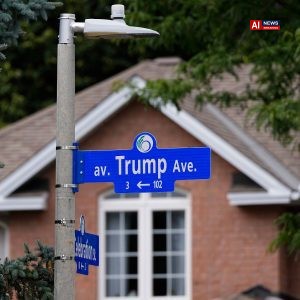
  Canada’s Capital Bids Good Riddance to Trump Avenue as Tensions With U.S. Rise
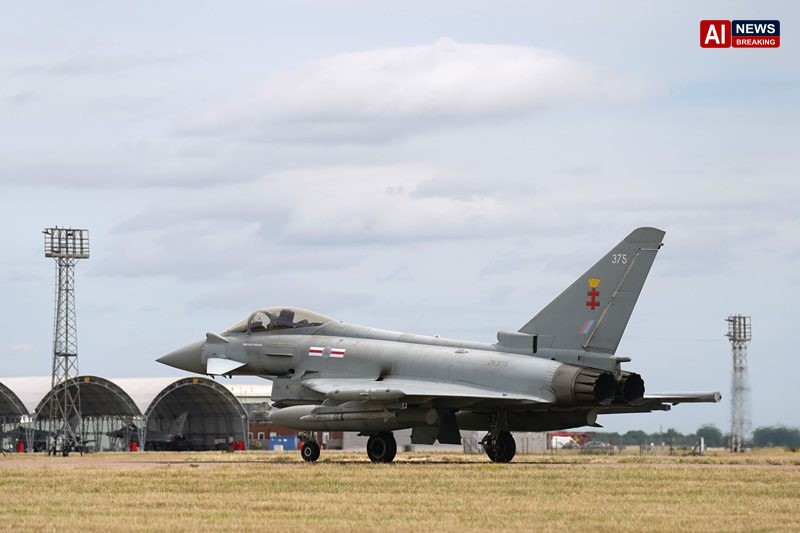
  Pentagon investigates after China obtains parts from F-35 stealth fighter jet
 UK-Israel Rift Deepens Over E1 West Bank Construction as Dispute Grows Over Past Assurances
**

UK urges Israel to halt E - AI News Breaking
ukisrael rift deepens west:
British diplomatic circles have been grappling with a deepening rift in relations with Israel since the announcement last month that construction work would resume in the E1 zone of the West Bank. The area, a narrow stretch of land linking the Israeli settlements of Ma’ale Adumim and Ariel, has long been flagged by the United Nations, the European Union and a number of Arab states as a potential obstacle to the contiguity of a future Palestinian state. The latest escalation has revived accusations that Israel is flouting previously‑made assurances, while senior officials in London contend that they were never offered a binding guarantee.The controversy erupted after the Israeli Ministry of Defense confirmed that the Israel Land Authority had issued permits for a new road and a series of housing units in E1..
The permits, which were granted under the umbrella of “infrastructure development”, were slated to be implemented by the end of the year. Within hours, the British Foreign, Commonwealth & Development Office (FCDO) issued a statement urging Israel to halt any construction that could prejudice the outcome of a negotiated two‑state solution. The statement referenced “previous understandings” that had been reached in private talks between the two capitals, but stopped short of specifying the nature of those understandings.According to diplomatic sources who spoke on condition of anonymity, senior British officials were led to believe that, during a series of meetings in early 2023, Israeli representatives had signalled a willingness to defer any major building activity in E1 until a final status agreement was reached..
The British side interpreted that signal as an informal, yet substantive, commitment. “We were told that Israel would not proceed with any new construction that would alter the facts on the ground in a way that would make a viable Palestinian state impossible,” one source said. The source added that the message was conveyed both in written memoranda and in verbal assurances exchanged at bilateral meetings in London and Jerusalem.Israeli officials, however, have consistently denied that any such promise was ever made..
In a press briefing held on the day the permits were announced, a spokesperson for the Israeli Ministry of Foreign Affairs said that “Israel has not agreed to any moratorium on construction in the West Bank, and any suggestion to the contrary is inaccurate.” The spokesperson further argued that the construction in E1 is essential for the security and logistical needs of existing Israeli communities, and that it does not contravene Israel’s legal obligations under international law, a position that remains contested by the United Nations and numerous human‑rights organisations.The diplomatic impasse has prompted a flurry of activity within the British government. The Prime Minister’s Office convened an emergency meeting of the National Security Council, attended by the Prime Minister, the Defence ary, the Foreign ary and the Chancellor of the Exchequer. Minutes from the meeting, obtained by a coalition of news outlets, reveal that the cabinet was divided..
While the Foreign ary argued for a calibrated response – ranging from a temporary suspension of arms sales to a public rebuke – the Defence ary warned that any punitive measures could jeopardise intelligence sharing arrangements that have been in place for more than two decades.In the wake of the council meeting, the FCDO announced that it would suspend the United Kingdom’s participation in a joint Israeli‑British research programme on water management, citing “the need to reassess the strategic implications of ongoing settlement activity”. The move, though relatively modest in financial terms, is symbolically significant. The programme, which began in 2015, has been hailed as a model of cooperation in a region where political tensions often spill over into scientific collaboration..
Analysts suggest that the suspension may be a pre‑emptive signal to Israel that the UK is prepared to leverage even low‑level partnerships to express disapproval.The fallout has not been limited to diplomatic channels. In Parliament, opposition MPs have pressed the government for a clearer stance. During a debate on the Foreign Affairs Bill, Labour MP Sarah Jones asked the Foreign ary whether the United Kingdom would consider imposing sanctions on Israeli firms directly involved in the E1 construction..
The Foreign ary replied that “the United Kingdom remains committed to a balanced approach that encourages dialogue rather than punitive action”, but added that “the situation will be reviewed regularly and any further steps will be taken in line with international law and our national interests”.Israel’s response to the British diplomatic pressure has been equally measured. While the Israeli Prime Minister’s Office released a statement affirming that “Israel’s settlement policy is a domestic matter and will not be dictated by external actors”, it also indicated a willingness to engage in “constructive dialogue” to address the concerns raised by the United Kingdom and other allies. A senior Israeli negotiator, speaking on condition of anonymity, noted that Israel is prepared to consider “technical adjustments” to the E1 plan, such as reducing the density of new housing units, but draws a firm line at any outright halt that would be perceived as a concession to external pressure.The episode has revived broader questions about the future of the U.K.-Israel partnership, especially in the realms of defence and trade..
The United Kingdom is one of the few European nations that continues to export advanced military equipment to Israel, including radar systems and missile‑defence technology. Critics argue that the settlement issue should be a decisive factor in the renewal of such contracts, which are due for review in 2027. Pro‑defence lobbyists counter that “strategic security cooperation cannot be weaponised for political ends” and warn that a sudden curtailment could undermine regional stability.Beyond the immediate diplomatic skirmish, the E1 controversy underscores the fragile nature of the settlement debate on the international stage..
The United Nations Security Council has, for decades, passed resolutions declaring Israeli settlements in occupied territories “null and void”, yet enforcement mechanisms remain weak. The European Union, which has repeatedly called for a freeze on settlement expansion, has struggled to translate rhetoric into concrete policy, partly because of divergent positions among its member states. The United Kingdom, now outside the EU, finds itself navigating a complex web of alliances, attempting to balance its historic ties with Israel against its commitments to the broader multilateral consensus on the Israeli‑Palestinian conflict.Public opinion in Britain appears to be shifting as well..
A recent poll commissioned by the Institute for Public Policy Research found that 58 % of respondents support a firm stance against settlement expansion, up from 42 % a year ago. The same poll indicated that 64 % of Britons believe the government should condition future arms sales on Israel’s adherence to internationally recognised borders. These figures suggest that the government’s diplomatic calculus is being shaped not only by inter‑governmental negotiations but also by domestic political pressures.As.
Updated: September 19, 2026
Britain’s tentative sanctions‑by‑silence signal a growing willingness to weaponise diplomatic goodwill against Israel, foreshadowing a shift where strategic cooperation may be sacrificed on the altar of public‑backed human‑rights norms.
If the UK follows through, it could compel other western allies to recalibrate their own settlement‑tolerant policies, accelerating a realignment that pits security‑industry interests against an increasingly vocal demand for a credible two‑state framework.