Europe warns of Russia’s hybrid attacks but struggles to counter them
  Former chief election commissioner calls SIR scheme illegal.
  A Corruption Scandal Is Reshaping Brazil’s Presidential Election
  US citizen injured in Illinois after ICE agents mistook him for fugitive, tried to arrest him
  At 10 years old, Smithsonian’s Black museum is undaunted amid pressure from Trump administration
 Ukraine’s Strike on Iranian Vessel in the Caspian Sea Raises Fears of a Wider Conflict Linking Europe and the Middle East
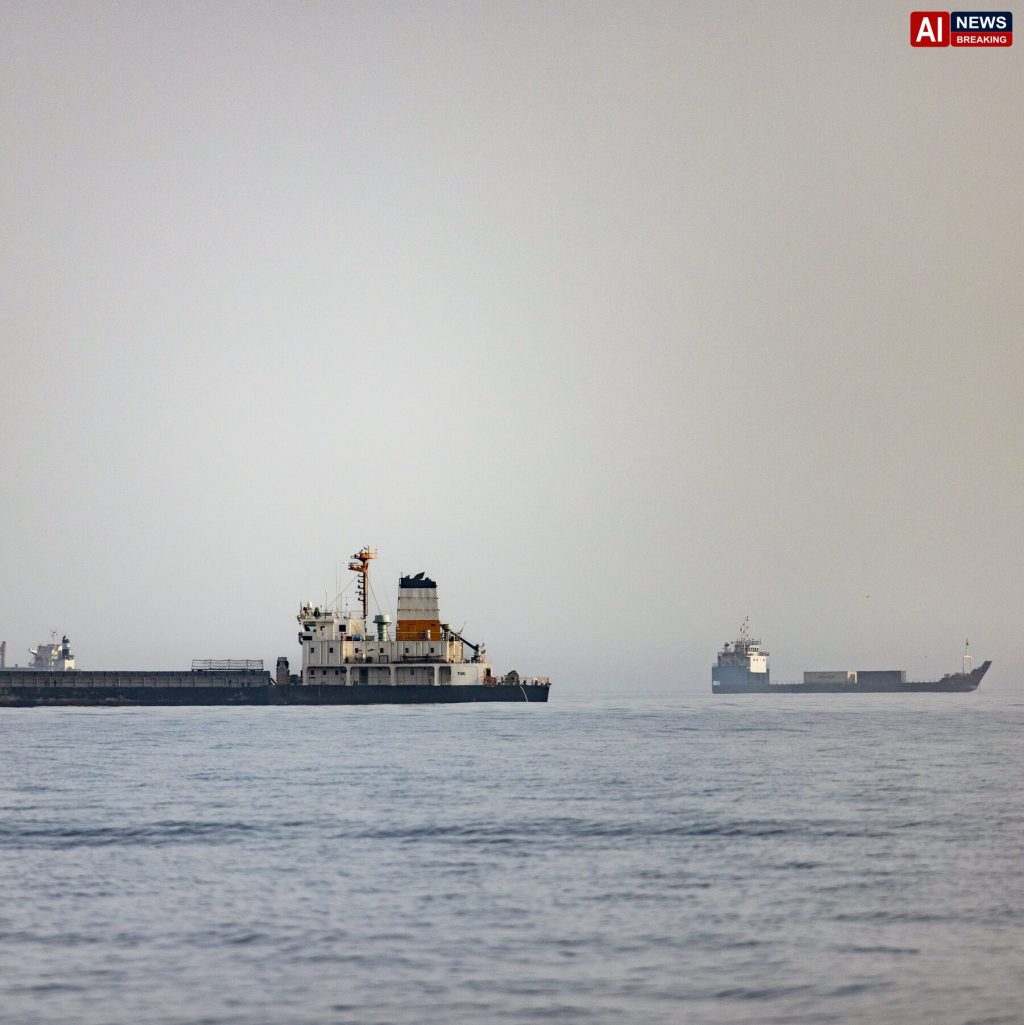
Ukraine's Strike on Iranian Vessel in the Caspian Sea Raises Fears of a Wider Conflict Linking Europe and the Middle East - AI News Breaking
ukraines strike iranian vessel:
Ukraine’s reported strike on an Iranian-linked vessel in the Caspian Sea has dramatically expanded the geographical scope of the Russia-Ukraine war. The incident highlights the growing military partnership between Russia and Iran and raises concerns that the conflicts in Eastern Europe and the Middle East are becoming increasingly interconnected.
Highlights
- Ukraine reportedly struck an Iranian-linked vessel in the Caspian Sea.
- Iran says one sailor was killed and another injured in the attack.
- Kyiv claims the targeted ships were transporting military cargo connected to Russia.
- The incident highlights the growing convergence of the Ukraine war and Middle East tensions.
- Analysts warn that the Caspian Sea could become a new strategic flashpoint.
A Ukrainian long-range strike against an Iranian vessel in the Caspian Sea has emerged as one of the most consequential developments of 2026, blurring the lines between the war in Ukraine and the broader confrontation involving Iran, Israel, and the United States in the Middle East.
The attack—described by Tehran as a “hostile and criminal” act—marks one of the rare direct military encounters between Ukraine and Iran, two countries that have spent years on opposite sides of the conflict without openly engaging one another.
Ukrainian President Volodymyr Zelenskyy said Kyiv’s forces had achieved “very strong results” in long-range operations in the Caspian Sea, targeting vessels allegedly involved in transporting military cargo linked to Iran, as well as a Russian warship.
The strike has intensified fears among diplomats and military analysts that two of the world’s largest ongoing conflicts are no longer separate theaters of war, but increasingly part of a broader geopolitical struggle.
What Happened in the Caspian Sea?
According to Iranian officials, an explosion aboard an Iranian commercial vessel in the Caspian Sea killed one sailor and injured another. Tehran summoned Ukraine’s chargé d’affaires and warned that the incident “cannot go unanswered.”
Ukraine, meanwhile, maintains that the targeted ships were involved in transporting military supplies between Iran and Russia. Reports indicate the operation may also have included strikes against Russian maritime assets in the region.
The Caspian Sea has traditionally been viewed as a relatively secure rear area for Russian-Iranian logistics due to its landlocked geography and distance from Ukraine. That assumption is now being challenged.
Why the Caspian Sea Matters
The Caspian Sea has become a critical corridor for trade and military cooperation between Moscow and Tehran.
Since the start of Russia’s full-scale invasion of Ukraine in 2022, Iran has been accused by Western governments of supplying drones and other military equipment used by Russian forces. While Tehran has repeatedly denied direct involvement in the conflict, its strategic relationship with Moscow has deepened considerably in recent years.
Analysts say the Caspian route is important because it:
- Connects Iranian and Russian ports.
- Facilitates commercial and military shipments.
- Offers a relatively protected transportation corridor.
- Supports broader Russia-Iran economic cooperation.
- Reduces dependence on more vulnerable maritime routes.
By striking assets in the Caspian Sea, Ukraine appears to be signaling that no supply route supporting Russia’s war effort is beyond its reach.
Two Wars Are Increasingly Converging
The incident comes at a time when geopolitical tensions are already running high.
Ukraine has accused Russia of sharing intelligence with Iran, including satellite imagery related to military infrastructure in the Middle East. Zelenskyy has argued that the security of Europe and the Middle East is becoming increasingly interconnected.
Meanwhile, Iran has faced growing pressure from the United States and Israel in recent months, creating a situation in which Russia, Iran, and Ukraine are increasingly entangled in overlapping security crises.
Experts warn that the convergence of these conflicts could lead to:
- Expanded military retaliation.
- Increased maritime insecurity.
- Greater involvement by external powers.
- Additional sanctions and diplomatic fallout.
- A more volatile global security environment.
Iran Responds With Strong Warnings
Iran’s Foreign Minister Abbas Araghchi condemned the strike and stated publicly that Ukraine’s actions would have consequences.
Tehran has framed the incident as a violation of international law and accused Kyiv of attempting to broaden the conflict. Iranian officials have also reached out to Russia and other international partners regarding the attack.
At the same time, Ukraine has defended its actions by arguing that Iran’s military support for Russia has made Tehran an active participant in the war.
This exchange of accusations further illustrates how diplomatic relations between the two countries have deteriorated.
A Strategic Victory for Ukraine?
From Kyiv’s perspective, the operation demonstrates a significant expansion of its long-range strike capabilities.
Over the past year, Ukraine has repeatedly shown an ability to strike targets far from the front lines, including:
- Oil infrastructure.
- Military depots.
- Naval facilities.
- Logistics hubs.
- Strategic transportation networks.
The Caspian operation may prove especially significant because it undermines assumptions about the security of Russia’s rear logistics network.
Military experts note that disrupting supply chains can be just as strategically important as battlefield victories.
Implications for Global Security
The broader concern is not simply the loss of a ship or disruption of a logistics route. Rather, it is the possibility that previously separate conflicts are beginning to merge.
If tensions continue to escalate, the world could see:
- Greater Russian-Iranian military coordination.
- Expanded Ukrainian operations beyond traditional theaters.
- Increased Western involvement.
- Heightened instability across Eurasia.
- New pressure on international shipping and energy markets.
The incident also underscores the growing role of drones and long-range precision strikes in modern warfare, where geography is becoming less of a barrier than in previous generations of conflict.
What Happens Next?
At present, neither Ukraine nor Iran appears interested in de-escalating rhetorically.
Iran has promised to defend its national interests, while Ukraine continues to target infrastructure and supply chains supporting Russia’s war effort. With the Caspian Sea now emerging as a potential flashpoint, analysts are watching closely for signs of retaliation or additional military activity.
The incident serves as a reminder that in an increasingly interconnected world, regional wars rarely remain regional for long.
The Caspian Sea strike may ultimately be remembered less for its immediate military impact and more for what it symbolizes: the erosion of boundaries between regional conflicts. Russia’s partnership with Iran and Ukraine’s expanding long-range capabilities are creating a geopolitical environment in which actions in one theater can rapidly influence another. As alliances deepen and military technologies evolve, policymakers will increasingly face a world where conflicts are interconnected rather than isolated. The challenge for the international community is preventing these overlapping crises from evolving into a broader and more dangerous confrontation.