Tao Tokyo Spring 2027
 Karnataka SIR: Teaching on the back burner
 Trump administration offers mixed messages on limits to Ukraine’s Starshield access
 US Treasury proposes a rule to crack down on high-tech investments in China, other adversaries
 Calley Means, a key MAHA advocate, resigns as a top RFK Jr. adviser
UN human rights body expresses concern over Delhi detentions, urges immediate release
**
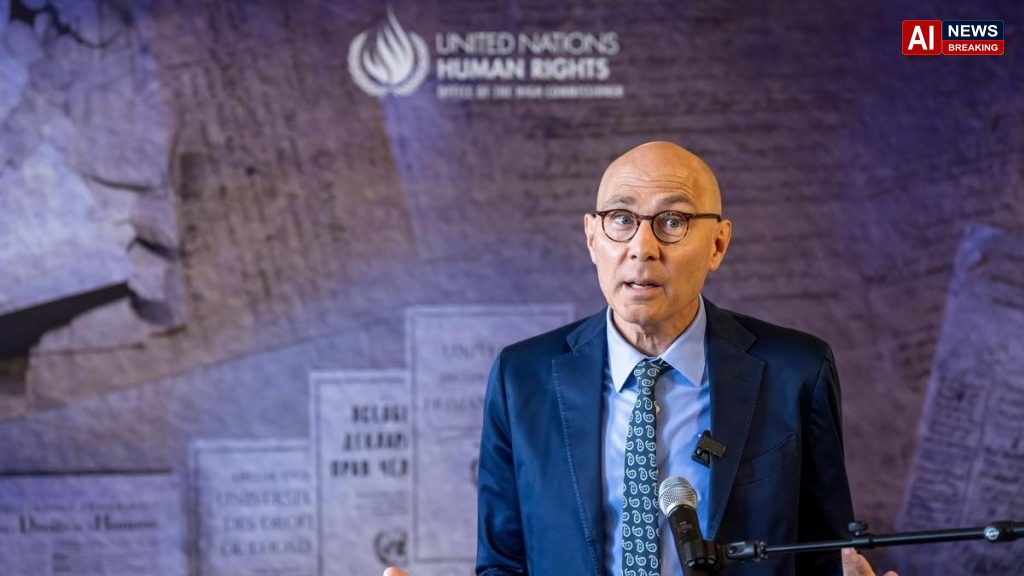
UN human rights body expresses concern over Delhi detentions, urges immediate release - AI News Breaking
UN human rights body expresses concern over Delhi detentions, urges immediate release The United Nations Office of the High Commissioner for Human Rights (OHCHR) issued a pointed statement on Tuesday, expressing deep alarm over the recent wave of detentions of protesters in Delhi. The body highlighted that the police response to the demonstrations appeared to breach international standards governing the right to peaceful assembly. In its communiqué, the OHCHR urged the Indian government to halt all further arrests linked to the protests and to secure the immediate release of those already held, warning that continued crackdowns could erode India’s standing on the global human‑rights stage..
The protests in question erupted last week after a controversial amendment to the National Security Act was announced, prompting students, civil‑society groups and opposition parties to gather in several parts of the capital. While authorities justified the police intervention on grounds of maintaining public order, human‑rights observers argue that the force used was disproportionate to the largely peaceful nature of the gatherings. The OHCHR’s statement underscores that any restriction on assembly must satisfy the twin tests of “necessity and proportionality” under international law..
According to the UN body, more than 250 individuals have been detained since the demonstrations began, including journalists, lawyers and a number of women activists. Several of those arrested have reportedly been denied access to legal counsel and are being held without formal charges. The OHCHR called this “a worrying pattern” that risks contravening Article 21 of the International Covenant on Civil and Political Rights, to which India is a party, and which guarantees the right to peaceful protest..
In its assessment, the OHCHR stressed that the right to protest is not absolute, but any limitation must be narrowly tailored to address a genuine, imminent threat. “Broad, vague security concerns cannot justify sweeping arrests,” the statement read. It further noted that the Indian police had deployed tear‑gas, batons and water‑cannon units in densely populated neighborhoods, actions that appeared to exceed the threshold of what is deemed necessary to preserve public safety..
The UN office also raised concerns about the alleged use of “preventive detention” orders, a measure that allows authorities to hold individuals without presenting evidence for up to 30 days. While Indian law permits such orders under specific circumstances, the OHCHR warned that their application in the context of peaceful protest could amount to an arbitrary deprivation of liberty. The agency called for a transparent review of each case, insisting that detainees be afforded the right to challenge their detention before an independent judicial body..
Delhi’s police chief, Anil Sharma, defended the operation, stating that “the primary objective was to prevent violence and protect the lives of citizens.” He claimed that intelligence reports indicated a small faction within the protestors was planning to incite unrest, justifying the pre‑emptive arrests. However, the OHCHR noted that the lack of publicly disclosed evidence makes it difficult to assess whether the security rationale truly met the necessity test required under international standards. Human‑rights NGOs operating in India have echoed the UN’s concerns..
The Centre for Law and Justice released a report documenting instances of alleged police brutality, including claims of excessive force and illegal searches of personal belongings. The report also highlighted that many of those detained have been denied the ability to communicate with their families, a violation of both domestic law and the UN Convention on the Rights of the Child where minors are involved. The Indian Ministry of Home Affairs responded to the OHCHR’s statement with a brief press release, asserting that the government remains committed to upholding democratic freedoms while also safeguarding national security..
The ministry emphasized that “law‑enforcement actions were taken in accordance with existing statutes and were proportionate to the threat posed.” It invited the UN office to engage in a dialogue, but stopped short of agreeing to any immediate release of detainees. International reactions have been swift. The United States Department of State issued a note of concern, urging India to ensure that any restrictions on assembly are “transparent, non‑discriminatory and fully compliant with its international obligations.” The European Union’s delegation in New Delhi also called for the prompt release of all individuals detained solely for exercising their right to peaceful protest, warning that persistent violations could impact bilateral relations..
Political analysts suggest that the episode could have broader implications for India’s diplomatic engagements. “India has long positioned itself as a champion of democratic values in the Global South,” said Dr. Priya Menon, a senior fellow at the Institute for Strategic Studies..
“If the UN’s concerns are not addressed, we may see a recalibration of partnerships, especially with nations that prioritize human‑rights credentials in trade and security agreements.” The OHCHR concluded its statement by reiterating its willingness to work with Indian authorities to ensure compliance with international norms. It called for an independent, impartial inquiry into the detentions and urged the government to adopt clear guidelines that align police powers with the principles of necessity and proportionality. The UN office also offered technical assistance to help India develop training programs for law‑enforcement officials on the proper handling of peaceful assemblies..
As the situation unfolds, civil‑society groups have organized a new round of peaceful rallies scheduled for next week, demanding the unconditional release of all detainees. Organisers assert that they will adhere to legal protocols while insisting that the right to be heard cannot be curtailed by fear of arrest. The upcoming protests will likely test the government’s willingness to balance security concerns with the fundamental freedoms enshrined in both domestic law and international covenants..
In the meantime, families of the detained continue to campaign for information about the whereabouts and health conditions of their.
Updated: October 10, 2026
Summary: The UN human‑rights office warned that Delhi’s mass arrests of protesters breach international standards on peaceful assembly and called for their immediate release. India’s government defended the crackdown as a security measure, while foreign partners cautioned that continued violations could damage diplomatic ties.
If India does not quickly reverse its sweeping arrests, it risks turning a regional democratic beacon into a cautionary example for emerging markets that prize human‑rights credentials in trade deals. The government’s current posture—justifying pre‑emptive detention on opaque intelligence—may satisfy short‑term security rhetoric but ultimately erodes its credibility on the world stage and invites diplomatic recalibration.