Indonesia denies foreign claim to rescued orangutans
 Turkey hosts COP31 climate talks in Antalya.
 Pope meets Argentine bishops.
 APOD: 2026 November 8 – Major Fireball Meteor
 Indonesian Horror Hit ‘Pabrik Gula’ Gets 2028 Sequel as MD Entertainment Lines Up Three Imax Films
United States removes South Africa from AGOA.
**
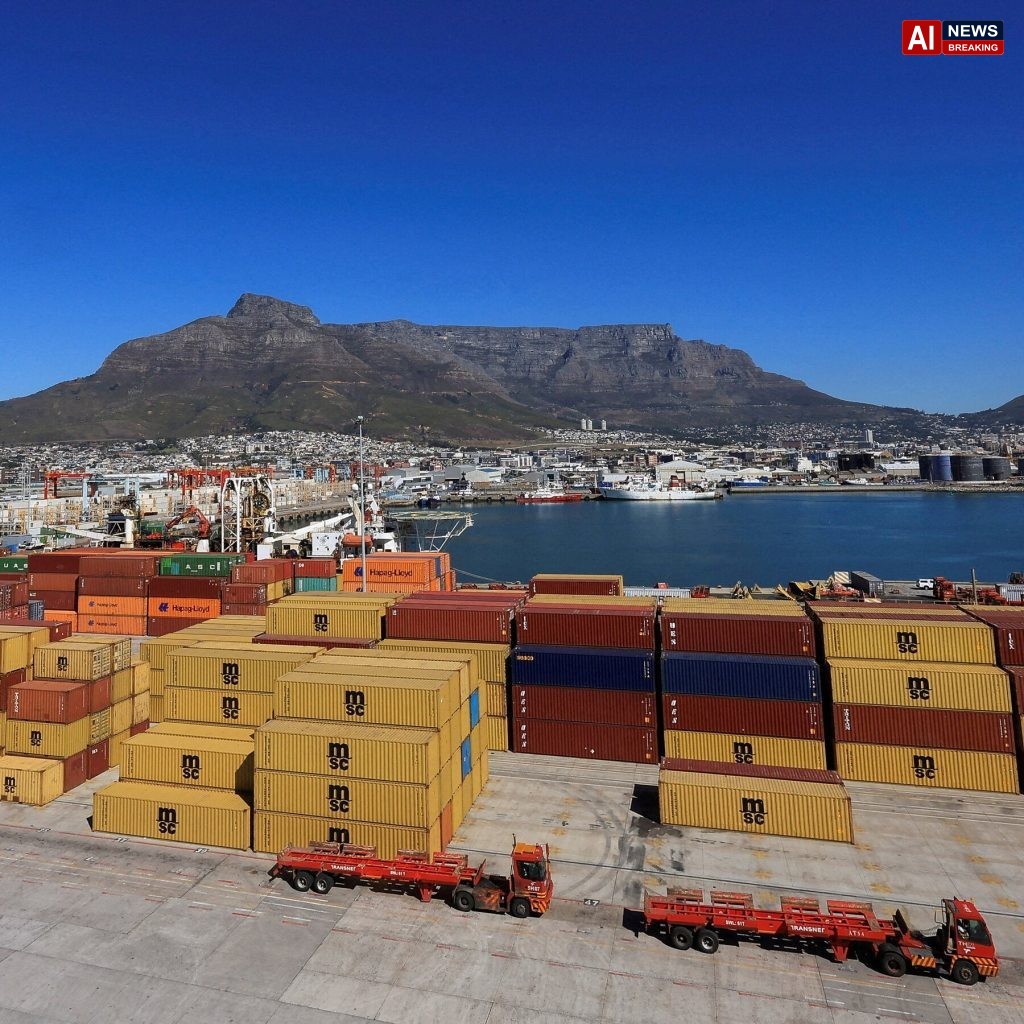
Trump Removes South Africa From the African Growth and Opportunity Act Trade Program - AI News Breaking
The United States has announced the removal of South Africa from the African Growth and Opportunity Act (AGOA), a trade preference programme that for two decades has granted the southern African nation duty‑free access to the American market for a wide range of products. The decision, unveiled by the White House on Thursday, marks the latest escalation in a diplomatic dispute that began last year when the Trump administration accused South Africa of discriminatory practices against white citizens. Officials said the move reflects a failure by the South African government to meet the eligibility criteria set out in the legislation, which require adherence to standards on market‑based economy, the rule of law and protection of minority rights.President Donald Trump, speaking at the White House press briefing, framed the action as a necessary step to “stand up for fairness and equality”..
He noted that the United States had repeatedly raised concerns with Pretoria about policies that, in his view, “unduly target white South Africans in areas such as land reform, employment and education”. The president added that the decision would be reviewed annually and could be reversed if South Africa undertakes “concrete reforms that demonstrate respect for all its citizens”.The administration’s claim that South Africa discriminates against white people centres on the nation’s ongoing land‑reform programme, which seeks to redistribute land currently owned by a small, predominantly white minority to historically disenfranchised black families. Critics in Washington argue that the process, which has accelerated under President Cyril Ramaphosa’s African National Congress (ANC) government, has been implemented without adequate compensation and with criteria that disadvantage white applicants..
Supporters of the policy, however, contend that it is a corrective measure for centuries of colonial dispossession and that the reforms comply with South Africa’s own constitution, which prioritises redress for past injustices.South Africa’s response was swift and defiant. In a statement issued by the Department of International Relations and Cooperation, Foreign Minister Naledi Pandor described the United States’ action as “unwarranted and deeply misguided”. She warned that the withdrawal would have “serious repercussions for both economies”, noting that South African exporters of textiles, agricultural goods and automotive parts have relied on AGOA’s preferential tariffs to remain competitive in the United States..
The statement also reaffirmed South Africa’s commitment to its land‑reform agenda, adding that the government “will not be pressured into abandoning policies that address historical inequities”.The economic impact of the decision is expected to be significant. According to data from the United States International Trade Commission, South Africa exported approximately $2.2 billion worth of goods to the United States under AGOA in 2022, with the bulk of shipments consisting of automobiles, machinery, and apparel. Analysts at the Johannesburg Stock Exchange warned that the loss of tariff‑free access could lead to a decline in export volumes of up to 15 per cent in the first year, pressuring manufacturers that have invested heavily in meeting American standards..
Small‑scale farmers, who have benefited from duty‑free entry for fresh produce such as grapes and citrus, may also face higher costs that could make their products less attractive to U.S. buyers.In Washington, congressional leaders from both parties expressed concern over the broader implications for U.S. Representative Doris Matsui, chair of the House Committee on International Trade, urged the administration to “re‑evaluate whether punitive measures are the most effective way to promote human rights”..
She highlighted that AGOA has historically been a tool for fostering economic development and deepening diplomatic ties across the continent. Meanwhile, a handful of senators, led by the chairman of the Senate Foreign Relations Committee, defended the move as consistent with the administration’s “America First” approach, arguing that preferential trade benefits should be contingent on strict adherence to democratic norms.The decision arrives at a time when the United States is reassessing its strategic engagement with Africa amid rising competition from China, which has expanded its Belt and Road investments across the continent. Critics argue that alienating a key regional player like South Africa could cede influence to Beijing, which has recently signed several infrastructure and loan agreements with Pretoria..
South African officials have already hinted at the possibility of deepening economic ties with China, the European Union and other partners as a hedge against the loss of U.S. Such a shift could reshape trade patterns and affect the broader geopolitical balance in the Southern African Development Community.Legal scholars note that the removal of a country from AGOA is not unprecedented, but it is relatively rare. The programme, enacted in 2000, has a built‑in review mechanism that allows the President to withdraw a nation if it is deemed non‑compliant with the eligibility criteria..
Previous withdrawals have included countries such as Mauritius and Rwanda, each of which later regained eligibility after meeting the stipulated conditions. In South Africa’s case, the administration has cited “failure to address discriminatory practices” as the primary breach, a charge that South Africa disputes as a mischaracterisation of its constitutional mandates.Human rights organisations have voiced mixed reactions. The International Commission of Jurists welcomed the United States’ willingness to hold a government accountable for policies that they interpret as discriminatory..
However, Amnesty International warned that the focus on racial discrimination should not obscure the broader context of economic inequality and that punitive trade measures might inadvertently harm the very communities the land‑reform programme seeks to uplift. The group called for a “constructive dialogue” that balances the rights of minorities with the imperative of redressing historic injustices.Within South Africa, opposition parties have seized upon the development to rally support ahead of the upcoming general election slated for 2027. The Democratic Alliance, the main opposition, argued that the ANC’s land‑reform policies have alienated both domestic and international investors, jeopardising economic growth..
In contrast, the Economic Freedom Fighters, a more radical left‑leaning party, portrayed the U.S. move as evidence of Western interference, urging a “complete break from neo‑colonial trade structures”. The political debate reflects the deep divisions within South African society over the pace and scope of redistribution measures.The United States trade office in Pretoria is slated to meet with senior South African officials later this month to discuss the possibility of reinstating AGOA benefits..
Sources close to the negotiations say that the administration is seeking concrete assurances that the land‑reform programme will be revised to include transparent criteria, compensation mechanisms and safeguards for all racial groups. Whether Pretoria is willing to alter a policy it frames as a cornerstone of social justice remains uncertain.As the two nations grapple with the fallout, businesses on both sides are already adjusting. importers are exploring alternative suppliers in other African countries, while South African firms are accelerating efforts to diversify their export markets, including expanding into the Middle East and Southeast Asia.
The United States has suspended South Africa’s duty‑free access under AGOA, citing the country’s failure to meet rules on market‑based economics and minority‑rights protections amid controversy over its land‑reform program. Pretoria decried the move as unjustified, warning of sharp export losses while hinting at deeper ties with China and other partners to offset the trade hit.
By slashing South Africa’s AGOA status, the U.S. is betting that punitive trade will pressure Pretoria into a more “inclusive” land‑reform policy—yet this gamble risks pushing the country toward China and other partners, reshaping the continent’s trade map. The move underscores how Washington’s