Europe warns of Russia’s hybrid attacks but struggles to counter them
  Former chief election commissioner calls SIR scheme illegal.
  A Corruption Scandal Is Reshaping Brazil’s Presidential Election
  US citizen injured in Illinois after ICE agents mistook him for fugitive, tried to arrest him
  At 10 years old, Smithsonian’s Black museum is undaunted amid pressure from Trump administration
 US Congressman Riley Moore Warns India’s FCRA Bill Could Hurt India-US Ties, Raises Christian Rights Concerns
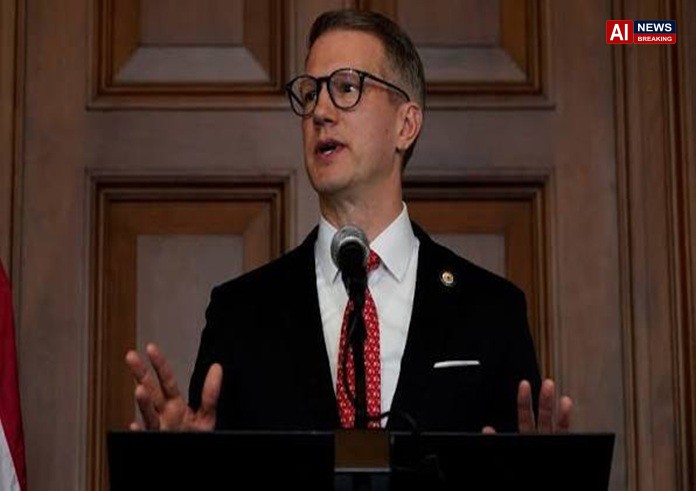
US Congressman Riley Moore Warns India's FCRA Bill Could Hurt India-US Ties, Raises Christian Rights Concerns - AI News Breaking
New Delhi/Washington: A fresh political controversy has emerged between India and the United States after US Congressman Riley Moore criticised proposed changes to India’s Foreign Contribution Regulation Act, or FCRA, arguing that the legislation could have consequences for religious freedom and potentially affect the broader India-US relationship.
Moore, a Republican representing West Virginia’s 2nd Congressional District, has emerged as a vocal advocate for religious freedom issues in US politics. His comments on India’s proposed FCRA changes have therefore attracted attention in Washington and New Delhi, particularly because they come at a time when India and the United States are attempting to deepen their strategic, economic and security partnership.
The controversy centres on the role of foreign contributions in India and the government’s regulatory framework governing organisations that receive funding from abroad. While Indian authorities have repeatedly maintained that foreign funding must comply with national laws and that tighter regulation is necessary to prevent misuse of overseas contributions, critics argue that restrictions on foreign funding can disproportionately affect civil society organisations, religious groups and humanitarian institutions.
Moore’s intervention has brought that debate into the US political arena.
Who is Riley Moore?
Riley Moore is a Republican member of the US House of Representatives from West Virginia. His political work has included a strong focus on religious freedom and the protection of persecuted Christian communities overseas.
His official congressional record shows that Moore has repeatedly raised concerns about religious persecution and has worked on legislation relating to the protection of Christians abroad. In February 2026, he introduced the Nigeria Religious Freedom and Accountability Act alongside other lawmakers, seeking greater US scrutiny of religious persecution and violence in Nigeria.
That background is relevant to his criticism of India’s FCRA framework.
Moore’s comments do not represent an official determination by the entire US government that India’s FCRA policy violates American law. Rather, they represent the position of an individual US lawmaker who has made religious freedom a prominent part of his congressional agenda.
Nevertheless, statements from members of Congress can influence political discussions surrounding bilateral relations, particularly when they concern human rights or religious freedom.
What is the FCRA?
The Foreign Contribution Regulation Act is India’s principal legal framework governing the receipt and use of foreign contributions by individuals, associations, NGOs and other organisations.
The basic objective of the law is to ensure that foreign funding does not undermine India’s sovereignty, national interests or public order.
Organisations receiving foreign contributions are subject to regulatory requirements concerning registration, reporting, bank accounts, utilisation of funds and compliance with government rules.
Over the years, successive Indian governments have strengthened oversight of foreign-funded organisations.
The government has argued that these measures are necessary because foreign contributions can be used for purposes beyond the stated objectives of recipient organisations.
Critics, however, have repeatedly raised concerns that stringent regulation can make it difficult for legitimate NGOs and civil society organisations to operate.
The disagreement therefore reflects a broader policy tension between national security and regulatory oversight on one side and civil-society freedom and institutional independence on the other.
Why has the FCRA become controversial?
The FCRA has long been politically sensitive.
India receives foreign contributions for a wide range of activities, including humanitarian assistance, education, healthcare, social welfare, religious activities and development programmes.
The government has the responsibility to ensure that such funds are legally received and properly used.
At the same time, NGOs argue that complicated compliance requirements and restrictions can disrupt legitimate activities.
The debate becomes particularly sensitive when religious organisations are involved.
Foreign-funded religious institutions can become part of wider arguments about religious conversion, charitable activity, minority rights and foreign influence.
Supporters of tighter regulation argue that the government must be able to identify organisations that use foreign funding for activities inconsistent with Indian law.
Opponents contend that excessive restrictions can create an environment in which legitimate humanitarian and religious organisations struggle to operate.
Moore’s intervention places this domestic Indian debate within a broader international discussion about religious freedom.
Moore’s Christian-rights concerns
The US congressman’s criticism is particularly significant because religious freedom has become a recurring theme in his congressional work.
Moore has previously campaigned for stronger US action in response to the persecution of Christians in Nigeria.
His congressional office has described religious freedom as one of his major policy concerns. In July 2026, Moore welcomed provisions in a US appropriations bill aimed at addressing persecution of Christians and advancing what he described as the administration’s foreign-policy priorities.
His record demonstrates that his intervention concerning India fits into a broader political position rather than being an isolated statement.
The India-related criticism therefore needs to be understood in the context of his wider advocacy for religious minorities and Christian communities abroad.
The India-US relationship enters the debate
The most politically significant aspect of Moore’s remarks is the warning that India’s FCRA policy could affect bilateral relations.
India and the United States have developed a wide-ranging strategic partnership covering defence, technology, trade, investment, intelligence cooperation, critical minerals, space, energy and the Indo-Pacific.
The two countries also share concerns about China’s growing influence in the Indo-Pacific and have expanded cooperation through mechanisms such as the Quad.
That makes bilateral stability particularly important.
However, strategic partnerships rarely eliminate disagreements.
Washington and New Delhi have periodically differed over issues including trade policy, human rights, religious freedom, democracy and civil society.
The FCRA debate could become another point of friction if US lawmakers increasingly connect foreign-funding restrictions with religious-freedom concerns.
A delicate diplomatic balancing act
For New Delhi, the issue involves a sensitive balance.
India is likely to argue that its laws governing foreign contributions are domestic regulatory measures and that all organisations operating within the country must comply with national legislation.
From this perspective, the FCRA should not be interpreted as a measure directed at a particular religion or community.
The government’s broader argument has been that foreign contributions require oversight because overseas funding can potentially affect national security, public order and political processes.
From the perspective of critics such as Moore, however, the question is whether such regulations are being implemented in a manner that unnecessarily restricts religious or civil-society organisations.
These competing arguments are unlikely to disappear quickly.
Why Washington is watching
Religious freedom has an established place in US foreign-policy debates.
Members of Congress regularly raise religious-freedom concerns in discussions about countries around the world.
Such interventions can eventually influence hearings, reports, diplomatic conversations and congressional legislation.
The issue can become more consequential when lawmakers argue that restrictions on religious groups could affect US interests or bilateral relationships.
Moore’s comments therefore have significance even if they do not immediately translate into official US policy.
The US Congress has considerable influence over foreign-policy debates, particularly through appropriations, oversight and legislation.
A sustained congressional campaign on India’s treatment of religious or civil-society organisations could create additional diplomatic pressure on New Delhi.
India may push back against external criticism
India has historically been sensitive to foreign criticism of its domestic laws.
New Delhi’s position has generally been that India’s constitutional and legal institutions are capable of addressing domestic questions without external intervention.
Indian officials and supporters of the FCRA framework are likely to emphasise that foreign-funded organisations must comply with the same legal framework regardless of their religious identity.
This argument is central to the government’s position.
If the FCRA is applied according to clearly defined legal criteria, New Delhi can argue that the law concerns financial transparency and national security rather than religious affiliation.
The challenge for the government, however, is one of perception.
International criticism can intensify if regulatory actions are perceived as disproportionately affecting particular communities or organisations.
The role of NGOs and civil society
Non-governmental organisations occupy an important position in the FCRA debate.
India has a large and diverse civil-society sector working in healthcare, education, poverty alleviation, disaster relief, environmental protection and social development.
Many organisations depend partly or substantially on foreign contributions.
When their FCRA registration is suspended, cancelled or denied, their ability to continue programmes can be affected.
The government argues that organisations receiving foreign money must demonstrate financial transparency and legal compliance.
Civil-society groups counter that compliance requirements should not become a mechanism for restricting legitimate activities.
The balance between these positions will determine whether the FCRA is viewed internationally primarily as a financial-regulation law or as a broader instrument of state control over civil society.
Religious organisations at the centre of the controversy
The religious dimension makes the issue particularly sensitive.
Christian organisations operating in India have sometimes relied on international networks for funding humanitarian, educational and charitable programmes.
If foreign funding restrictions make it harder for such organisations to operate, advocates of religious freedom may interpret the consequences as evidence of discrimination.
The Indian government’s counterargument is that religious organisations are not exempt from financial and regulatory laws.
This creates a fundamental policy disagreement.
One side prioritises equal application of national regulations.
The other focuses on whether the practical consequences of those regulations disproportionately affect minority communities.
Resolving that disagreement requires credible evidence, transparency and institutional dialogue rather than political rhetoric alone.
Could this actually damage India-US ties?
The immediate impact of one congressman’s comments is likely to be limited.
India-US relations are considerably broader than any single disagreement over a domestic law.
Defence cooperation, technology partnerships, trade, supply-chain resilience and strategic coordination in the Indo-Pacific remain major pillars of the relationship.
However, repeated congressional criticism can accumulate.
If multiple US lawmakers begin raising FCRA-related concerns, the issue could become part of broader congressional discussions about India’s democratic institutions and religious freedom.
That could complicate diplomacy.
The risk is therefore less about an immediate breakdown in relations and more about the gradual expansion of a contentious issue into other areas of bilateral engagement.
Strategic interests may keep the relationship resilient
Despite disagreements, India and the United States have powerful strategic reasons to maintain close relations.
The Indo-Pacific remains a central area of cooperation.
Both countries are interested in maintaining resilient supply chains, expanding advanced technology partnerships and reducing strategic vulnerabilities.
Defence cooperation has also expanded significantly over the past decade.
India’s growing role in the Indo-Pacific makes it an important US partner.
For Washington, maintaining strategic engagement with New Delhi remains valuable.
For India, stronger ties with the United States provide access to technology, investment, defence cooperation and a broader diplomatic partnership.
These interests create incentives for both governments to prevent disputes over individual domestic policies from damaging the wider relationship.
But human rights can become a strategic vulnerability
Strategic interests do not completely eliminate values-based disagreements.
The United States has historically raised human-rights and religious-freedom concerns with many of its partners.
India, meanwhile, has increasingly sought to emphasise its status as a sovereign democracy capable of independently determining its domestic policies.
The tension between these approaches is likely to continue.
The FCRA controversy illustrates how domestic legislation can acquire international consequences.
A law designed primarily to regulate financial contributions can become part of a larger diplomatic discussion about civil liberties, religious freedom and the role of civil society.
What happens next?
The next stage will depend on how the FCRA debate develops in India and whether additional US lawmakers take up the issue.
If the controversy remains limited to individual statements, its impact on bilateral relations may remain relatively modest.
If, however, the issue enters congressional hearings, official reports or proposed legislation, it could become more significant.
India would then face pressure to explain the objectives and implementation of its foreign-funding regulations more clearly to international audiences.
Greater transparency could help reduce misunderstanding.
The government could also emphasise that the FCRA applies on the basis of legal and financial criteria rather than religion.
For its part, Washington would need to distinguish between legitimate concerns about religious freedom and attempts to influence India’s domestic regulatory framework.
Constructive diplomatic engagement would be more effective than public confrontation.
A broader debate about sovereignty and global scrutiny
The FCRA controversy ultimately reflects a much larger international debate.
In an interconnected world, domestic laws increasingly have consequences beyond national borders.
Foreign funding, digital platforms, international NGOs, religious networks and multinational institutions operate across jurisdictions.
Governments therefore want greater control over activities that could affect national security.
At the same time, international civil-society organisations argue that excessive government control can undermine human rights and democratic freedoms.
Neither concern can simply be dismissed.
National governments have legitimate security responsibilities.
Civil society also has a legitimate interest in operating without arbitrary restrictions.
The challenge is establishing clear rules that are transparent, proportionate and consistently enforced.
The importance of evidence
The debate would benefit from moving beyond competing political narratives.
Claims of discrimination or religious persecution should be evaluated using verifiable evidence.
Similarly, government claims concerning foreign-funding violations should be supported by transparent regulatory processes and clear documentation.
An evidence-based approach would allow policymakers to distinguish between legitimate regulatory enforcement and allegations of selective treatment.
This is particularly important because international political controversies can quickly become polarised.
The India-US relationship is too important to both countries to allow every disagreement to become a strategic confrontation.
India-US ties are bigger than one dispute
The FCRA controversy comes at a time when India and the United States have built an increasingly comprehensive partnership.
Defence, technology, trade, energy, space and geopolitical coordination provide a strong foundation for the relationship.
The two countries also share a broad interest in a stable and secure Indo-Pacific.
That strategic convergence gives both sides considerable room to manage disagreements.
However, it does not mean values-based issues will disappear.
For India, the challenge will be to demonstrate that regulatory enforcement is transparent and non-discriminatory.
For the United States, the challenge will be to raise concerns about religious freedom without allowing individual disagreements to undermine broader strategic cooperation.
The diplomatic message from Moore
Moore’s intervention sends a clear political message: at least some members of the US Congress are prepared to scrutinise India’s domestic policies through the lens of religious freedom.
His comments should therefore not be dismissed as an entirely isolated development.
At the same time, they should not be interpreted as evidence that the entire US government has adopted his position.
The distinction between congressional opinion and official executive-branch policy is important.
Foreign-policy relationships are shaped by multiple institutions, including the White House, State Department, Congress and other agencies.
A congressman’s criticism can create political pressure, but it does not automatically translate into a change in US policy.
The road ahead for New Delhi and Washington
The best way forward may be direct and sustained dialogue.
India can explain the legal basis and objectives of its FCRA framework while addressing legitimate questions about transparency and implementation.
The United States can communicate its religious-freedom concerns through established diplomatic channels while recognising India’s sovereign authority to regulate foreign contributions.
Such engagement would reduce the possibility of the issue escalating unnecessarily.
For both countries, the strategic relationship remains too important to be defined by a single disagreement.
But that does not make the disagreement irrelevant.
The FCRA controversy highlights an increasingly important reality in India-US relations: as the partnership becomes deeper, areas of disagreement will also receive greater international attention.
US Congressman Riley Moore’s warning over India’s FCRA framework has opened another potentially sensitive chapter in the India-US relationship.
His criticism, centred on concerns about Christians and religious freedom, reflects his broader congressional focus on protecting persecuted Christian communities abroad. His official congressional record shows sustained engagement with religious-freedom issues, particularly concerning Nigeria.
For India, the issue is fundamentally about maintaining control over foreign contributions while ensuring that legitimate civil-society and religious organisations can operate within the law.
For Washington, it raises questions about how India’s regulatory framework affects religious freedom and civil society.
The immediate dispute may not significantly disrupt the strategic partnership between the world’s two major democracies.
But it is a warning that domestic policy decisions can increasingly become part of international diplomacy.
India and the United States have built their relationship around shared strategic interests, but sustaining that partnership will require both countries to manage disagreements with equal seriousness.
The FCRA debate may therefore become an important test of whether New Delhi and Washington can separate legitimate policy differences from the broader strategic relationship — while ensuring that concerns over religious freedom, financial transparency and national sovereignty are addressed through evidence, dialogue and institutional engagement.
Insight: The FCRA controversy illustrates a larger shift in India-US relations: strategic convergence is growing, but values-based disagreements are becoming harder to compartmentalise. India’s priority is likely to remain regulatory sovereignty and control over foreign funding, while sections of the US political establishment increasingly view restrictions affecting religious organisations through the framework of religious freedom. The immediate risk to bilateral ties is limited because defence, technology and Indo-Pacific cooperation are much broader than the FCRA dispute. However, repeated congressional interventions could turn the issue into a sustained diplomatic pressure point. The most constructive path would be greater transparency in FCRA enforcement, evidence-based assessment of alleged violations and direct India-US dialogue, allowing both sides to protect legitimate security interests without allowing religious-freedom concerns to become a permanent source of strategic friction.
Post Content