 Ambush of Salvadoran Soldiers Escalates Haiti’s Anti-Gang Mission
  Oil prices extend rally to near six-month high amid Houthi attacks on Saudi Arabia
  Arraial’s evangelical voters back Bolsonaro
  Kerala High Court rejects petition to halt reconstitution of State Waqf Board.
 US Flight Chaos: Over 899 Flights Delayed and 126 Canceled as Storms Disrupt Travel Across America
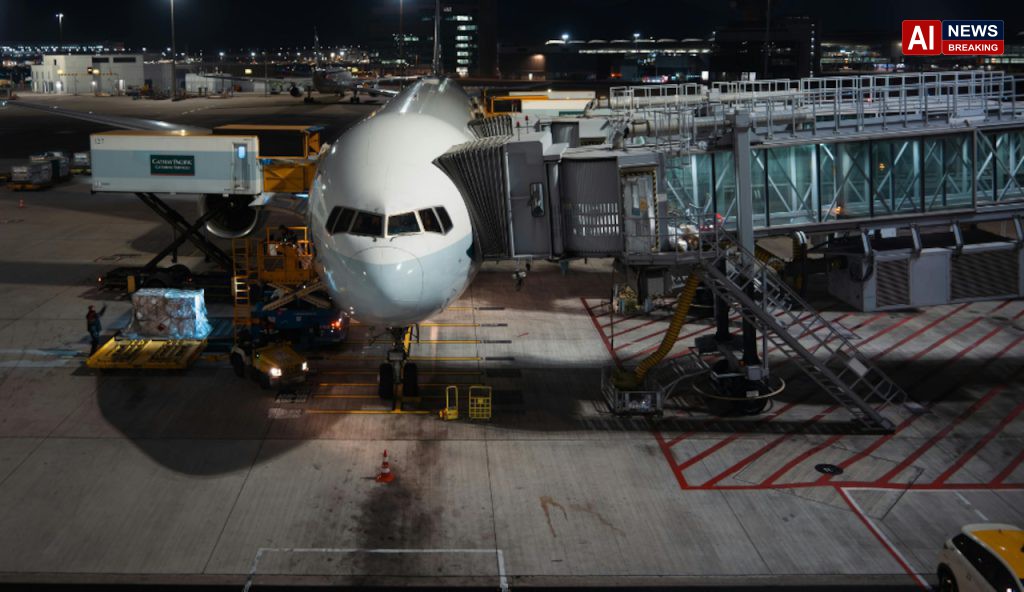
Over 899 flights delayed, 126 canceled amid widespread U.S. travel disruptions - AI News Breaking
flight chaos flights delayed:
Air travel across the United States faced another difficult day as more than 899 flights were delayed and 126 canceled amid widespread operational disruptions affecting passengers at airports across the country.
The disruptions reported on September 2 were driven largely by thunderstorms and difficult weather conditions, with the Federal Aviation Administration warning that storms could affect major airports in Philadelphia, Minneapolis-St. Paul and Houston. Low clouds were also expected to create problems around Boston, New York and Las Vegas.
The disruption was particularly significant at Newark Liberty International Airport in New Jersey, which recorded 51 delays and 20 cancellations on Tuesday, according to FlightAware data cited by NJ.com. Among airlines, JetBlue recorded 67 delays and 32 cancellations, the highest figures reported among US carriers in the same data set.
The problems have not completely disappeared. FAA traffic information on September 3 continued to show weather-related restrictions at major New York-area airports, including LaGuardia and Newark, demonstrating how weather problems can continue to affect schedules even after the initial storms have moved through.
For passengers, the latest disruption is another reminder of how quickly America’s highly interconnected aviation network can be affected by severe weather.
What caused the latest US flight disruptions?
The immediate trigger was weather.
Thunderstorms can create some of the most difficult operating conditions for commercial aviation. Airlines and air-traffic controllers must consider lightning, heavy rain, strong winds, turbulence and rapidly changing visibility when deciding whether aircraft can safely take off, land or move through particular areas of airspace.
When storms develop near a major airport, the FAA can reduce the number of aircraft permitted to arrive or depart.
That may be necessary for safety, but it creates a chain reaction.
An aircraft delayed at one airport may subsequently arrive late at another airport. The same aircraft may then be scheduled for another flight, which also becomes delayed.
Crew members can become displaced from their planned rotations.
Passengers can miss connecting flights.
Aircraft can end up in the wrong locations.
Gates can remain occupied longer than scheduled.
Eventually, a relatively small weather disruption can become a nationwide scheduling problem.
The September 2 disruption demonstrates precisely this vulnerability.
Although 899 delays and 126 cancellations are not necessarily unprecedented for the US aviation system, the figures represent hundreds of individual disruptions that can affect thousands of passengers once missed connections and subsequent schedule changes are taken into account.
Newark emerges as the hardest-hit airport
Newark Liberty International Airport was the most disrupted US airport identified in the September 2 data.
The New Jersey airport recorded 51 delays and 20 cancellations, according to FlightAware figures cited by NJ.com.
Newark is one of the busiest airports serving the New York metropolitan region.
Its importance means that problems there can spread beyond New Jersey.
Flights departing Newark serve destinations across the United States and around the world. An aircraft that is delayed leaving Newark can arrive late at its destination, potentially disrupting another scheduled flight.
Similarly, passengers arriving at Newark may be connecting to other airports.
This creates a cascading effect.
The problem is particularly acute during busy travel periods, when airlines have limited spare aircraft and crews.
A delay of 30 or 40 minutes can therefore become several hours by the time a passenger reaches the final destination.
New York’s aviation system remains vulnerable
Newark is part of a broader aviation network serving the New York region.
John F. Kennedy International Airport, LaGuardia Airport and Newark Liberty International Airport operate within a highly congested airspace environment.
Weather affecting one airport can therefore have consequences for the others.
The FAA’s current information for LaGuardia shows a traffic-management programme related to thunderstorms and other operational factors. At the time of the latest update, arriving flights were experiencing average delays of about 19 minutes, while departure traffic was subject to significantly longer gate-hold and taxi delays.
Newark has also remained subject to weather-related traffic-management measures.
The FAA’s latest Newark status information indicates that the airport has experienced weather-related restrictions and traffic-management initiatives, although conditions have varied during the day.
These restrictions demonstrate that the September 2 disruptions should not necessarily be viewed as an isolated event.
The underlying weather and air-traffic conditions can continue to affect operations into the following day.
Why thunderstorms cause so many flight delays
Thunderstorms are particularly disruptive to aviation because they can affect both aircraft operations and air-traffic capacity.
A severe storm can make an airport temporarily unsuitable for departures or arrivals.
Even when an airport remains technically open, controllers may need to increase the separation between aircraft.
That reduces the number of planes that can safely move through the airport.
Airlines may then have to hold aircraft on the ground.
Some flights may be diverted.
Others may be delayed until storms pass.
The effects can continue long after the rain stops.
This is because aviation schedules operate as interconnected networks rather than as isolated flights.
Consider a simple example.
An aircraft scheduled to fly from Newark to Chicago may be delayed by a storm.
That same aircraft is then scheduled to fly from Chicago to Denver.
If the Newark departure is delayed by two hours, the Chicago-Denver flight may also be delayed.
Passengers booked on the second flight may have no connection to the original weather event, yet they still experience its consequences.
The same aircraft can continue carrying the delay through several additional flights.
That is why a weather problem at one major hub can become a much larger national disruption.
JetBlue records the most airline disruptions in reported data
JetBlue recorded the highest number of delays and cancellations among US carriers in the September 2 data cited by NJ.com.
The airline had 67 delays and 32 cancellations.
JetBlue’s network is heavily connected to major East Coast airports, meaning weather affecting the Northeast can have an outsized effect on its operations.
When aircraft are delayed at one hub, the disruption can spread to other destinations.
Airline scheduling is particularly sensitive to aircraft rotations.
A plane does not simply fly from one airport to another and stop for the day.
It may operate several flights.
Likewise, flight crews work through planned sequences that can involve multiple airports.
When weather interrupts one segment, the rest of the sequence can become difficult to maintain.
Airlines may have to swap aircraft, reassign crews, delay later departures or cancel flights altogether.
Cancellations are more serious than delays
For passengers, there is an important difference between a delay and a cancellation.
A delayed flight may eventually operate, allowing passengers to continue their journeys, although they may miss connecting flights.
A cancellation means the original flight will not operate.
Passengers must then be rebooked.
During periods of widespread disruption, rebooking can be difficult because replacement seats may not be available until the following day.
This can lead to overnight stays, additional transportation costs and missed work or events.
A cancellation can also have consequences for the airline.
The carrier must find alternative ways to move passengers while simultaneously repositioning aircraft and crews.
In some cases, airlines cancel selected flights deliberately to stabilise the remainder of their schedule.
That may appear counterintuitive, but removing a flight can sometimes prevent a much larger number of subsequent delays.
The ripple effect across airports
One of the most important characteristics of modern aviation is network connectivity.
Major airports function as hubs.
Thousands of flights move through them every day.
A disruption at one major hub can therefore affect airports hundreds or thousands of miles away.
For example, if a flight from Houston to New York is delayed because of thunderstorms, the aircraft may later be scheduled for a flight from New York to another destination.
The passengers on that later flight may experience a delay even if their airport has clear skies.
This is known in airline operations as a knock-on effect.
The same applies to crews.
Pilots and flight attendants cannot simply appear at an airport when needed. They have regulated working hours and planned schedules.
If a crew is delayed, the airline may have to locate another qualified crew.
If one cannot be found, the flight may be delayed or canceled.
FAA plays a central role in managing congestion
The FAA is responsible for managing the nation’s air-traffic system.
When weather threatens to overwhelm an airport or a section of airspace, the agency can implement traffic-management measures.
These can include ground stops, ground-delay programmes, rerouting and other restrictions.
The goal is not necessarily to eliminate delays.
It is to prevent unsafe congestion and maintain an orderly flow of aircraft.
The FAA’s daily air-traffic reports specifically warn that thunderstorms can slow operations at major airports and advise travellers to check with their airlines for flight-specific information.
This distinction is important.
An airport can have a general delay warning while an individual passenger’s flight remains on schedule.
Conversely, a flight may be delayed because of a problem involving its aircraft or crew even when the airport itself is operating normally.
Therefore, passengers should not rely exclusively on general airport status.
Weather forecasts remain critical
Airlines begin planning for severe weather well before a storm reaches an airport.
Meteorological forecasts help carriers determine how many aircraft they can safely operate through an affected region.
They can also adjust flight paths to avoid severe storms.
However, forecasts cannot eliminate uncertainty.
Thunderstorms can develop rapidly.
A storm that appears likely to miss an airport can change direction or intensify.
This makes summer and early autumn weather particularly challenging for airline planners.
Aviation authorities must balance two competing objectives.
They need to keep flights moving efficiently.
But they must also maintain safety margins.
When weather conditions deteriorate, safety takes priority.
Low clouds can create another problem
Thunderstorms were not the only weather concern.
Low clouds were also forecast to affect airports in Boston, New York and Las Vegas.
Low ceilings can reduce visibility and limit the number of aircraft that can safely approach an airport at any given time.
Modern aircraft can operate in poor visibility, but air-traffic procedures still impose limits on arrival and departure rates.
When those rates fall below normal levels, queues of aircraft can develop.
Even a relatively small reduction in airport capacity can create significant delays at a busy hub.
This is especially true when flights are already operating close to full capacity.
Philadelphia and Minneapolis also face weather concerns
The FAA warned that thunderstorms could cause delays and cancellations in Philadelphia and Minneapolis-St. Paul as well as Houston.
These airports are strategically important because they connect large numbers of domestic routes.
Philadelphia is a major gateway for the northeastern United States.
Minneapolis-St. Paul serves as a significant hub for flights across the Midwest and beyond.
Houston is one of the most important aviation and transportation centres in the southern United States.
Weather disruptions at these airports can therefore affect a large number of connecting flights.
Houston presents a different operational challenge
Houston’s geography means that thunderstorms can become particularly disruptive during periods of unstable weather.
The city is served by two major commercial airports, George Bush Intercontinental Airport and William P. Hobby Airport.
Storm activity around the Houston area can affect aircraft arriving from several directions.
When weather cells move through the region, controllers may need to reroute traffic around them.
That reduces the efficiency of established flight paths.
Aircraft can spend additional time in holding patterns or be diverted around storm systems.
Those extra minutes accumulate quickly.
The aviation system is operating with little room for error
The US aviation network is enormous.
Thousands of commercial flights operate every day, linking hundreds of airports.
The system depends on precise timing.
Aircraft arrive at gates.
Passengers board.
Crews complete required procedures.
Baggage is loaded.
Fuel is supplied.
Aircraft depart.
A delay in one part of that chain can affect everything that follows.
Airlines therefore build some buffer time into their schedules.
But buffers have limits.
A prolonged thunderstorm can overwhelm those buffers.
Once delays become widespread, the system can take many hours to recover.
Why some passengers may face delays the next day
A common misconception is that once bad weather ends, flight schedules immediately return to normal.
That is rarely the case.
Suppose an airline has 100 aircraft operating across a network.
If 30 of those aircraft are delayed by weather, they may not reach their next scheduled airports on time.
Some aircraft could even end the day at airports where they were not originally scheduled to remain overnight.
The following morning, the airline begins with aircraft and crews out of position.
This is known as aircraft and crew displacement.
The airline then has to reposition them.
That can result in additional delays and cancellations even if the weather is perfectly clear the next day.
This is why disruptions reported on September 2 can continue affecting passengers on September 3.
FAA data shows ongoing New York-area pressure
The latest FAA information shows that the New York region continues to experience weather-related traffic-management restrictions.
At LaGuardia, the FAA reported that thunderstorms were affecting arriving and departing traffic, with traffic-management measures in place.
Newark’s FAA status has likewise shown weather-related traffic-management initiatives, with delays changing during the day.
The situation illustrates an important point: airport disruption is dynamic.
Conditions can improve quickly.
They can also deteriorate quickly.
Therefore, passengers planning to travel through the affected airports should check their flight status repeatedly rather than relying on information received several hours earlier.
International flights can also be affected
Although the immediate disruptions are taking place within the US aviation system, international passengers can also be affected.
Major US airports serve as connecting hubs for international routes.
A passenger flying from Europe to the United States may arrive at Newark, JFK or another East Coast airport and then connect to a domestic destination.
If the domestic connection is delayed or canceled, the international journey can be disrupted.
The same applies in reverse.
A delayed domestic aircraft may be scheduled to operate a later international flight.
If it fails to arrive on time, that international departure can also be affected.
This is another reason why hub disruptions have consequences far beyond the airport where the original weather event occurred.
Passengers face missed connections and long waits
The human impact of flight disruptions is often measured in numbers, but each delay can represent a significant problem for individual travellers.
A passenger may be travelling for a wedding.
Another may be heading to an important business meeting.
Someone else may be returning home after a long trip.
A missed connection can turn a short journey into an overnight ordeal.
Families travelling with children can face particular difficulties.
Passengers requiring special assistance may also find rebooking more complicated during periods of high demand.
The financial consequences can be significant as well.
Travellers may need hotel accommodation, meals or alternative transportation.
Whether airlines reimburse those expenses depends on the circumstances and applicable airline policies.
What passengers should do during widespread disruptions
Travellers facing a delayed or canceled flight should first check their airline’s app, website or airport notification system.
If a flight is canceled, passengers should contact the airline as soon as possible to seek rebooking.
In some cases, self-service rebooking through an airline’s app can be faster than waiting in a customer-service queue.
Passengers should also monitor their connecting flights.
A connection that appears possible on the original schedule may become impossible after a delay.
It is often better to contact the airline early rather than waiting until after missing the connection.
Travellers should also keep receipts for reasonable expenses if they are required to remain overnight because of a disruption, although reimbursement policies vary.
Why passengers should not assume a cancellation means no alternatives
Airlines sometimes have multiple ways of moving passengers after a cancellation.
A passenger may be rebooked on a later flight operated by the same carrier.
Depending on the airline and circumstances, alternative routing may also be available.
Some passengers may choose to travel to another nearby airport if that offers a faster route home.
However, changing airports introduces additional transportation considerations.
Passengers should therefore compare the total journey time rather than focusing only on the departure time of the replacement flight.
Weather remains the biggest short-term uncertainty
The most immediate question is whether weather conditions will improve quickly enough for schedules to recover.
If thunderstorms weaken and airspace capacity returns to normal, airlines can begin clearing accumulated delays.
But if storms continue affecting major hubs, disruption could persist.
The FAA’s current LaGuardia information confirms that weather remains a factor on September 3.
Newark has also experienced traffic-management restrictions associated with weather.
This suggests that travellers should continue to expect some volatility in schedules.
Air-traffic staffing can compound weather disruptions
Weather is not the only factor that can reduce aviation capacity.
Air-traffic-control staffing has also been a long-running concern in the United States.
When staffing levels are constrained, controllers may need to handle fewer aircraft simultaneously.
That can reduce capacity even before severe weather arrives.
The combination of weather and staffing is especially challenging.
A thunderstorm might normally cause a modest reduction in capacity.
If the system is already operating with limited staffing, the same storm can have a much larger effect.
The FAA has previously implemented flight restrictions around New York because of severe weather and staffing pressures. Reuters reported in July that New York’s Terminal Radar Approach Control was operating at only 57% of target staffing levels, while the FAA had extended flight limits at New York-area airports.
That background helps explain why weather disruptions can have disproportionate consequences in the Northeast.
America’s busiest aviation corridors remain vulnerable
The northeastern United States contains one of the world’s most heavily trafficked aviation corridors.
New York, Philadelphia, Washington and Boston are all connected by dense networks of domestic and international flights.
Airspace is limited.
Airports are busy.
Runways and gates operate at high utilisation.
As a result, disruptions in one location can quickly affect neighbouring airports.
A thunderstorm around New York can therefore create problems for flights operating through Philadelphia or Washington even when the storms are not directly overhead.
Controllers may have to reroute aircraft around affected airspace.
That can reduce capacity across the entire corridor.
The September 2 figures tell only part of the story
The headline numbers — 899 delays and 126 cancellations — provide a useful snapshot, but they do not fully measure the impact.
A single canceled flight can affect hundreds of passengers.
A delayed aircraft can cause several subsequent flights to become late.
Passengers may miss connections that are not counted as separate cancellations.
Airlines may also reposition aircraft and crews, creating additional operational costs.
Therefore, the total economic and human impact can be considerably larger than the raw cancellation number suggests.
Airlines must balance reliability and safety
Airlines face difficult decisions during severe weather.
Operating too many flights during unsafe or highly congested conditions can create major operational problems.
Canceling too many flights, however, strands passengers and reduces revenue.
The solution often involves carefully reducing the schedule before the worst weather arrives.
This can involve proactive cancellations.
While passengers naturally dislike having a flight canceled before departure, an early cancellation can sometimes be preferable to a flight being delayed for many hours and then canceled after passengers have already boarded.
Why proactive cancellations can help recovery
Airline schedules are built around aircraft rotations.
If an airline knows that an airport will be severely affected for several hours, it may cancel selected flights in advance.
This frees aircraft and gates.
It also allows crews to be reassigned.
The airline can then build a more manageable schedule for the following hours.
In contrast, allowing every flight to depart late can create a situation in which the entire network becomes increasingly unstable.
The goal of airline operations teams during major disruptions is therefore not simply to operate every scheduled flight.
It is to restore the overall network as efficiently and safely as possible.
Technology helps, but cannot eliminate disruption
Modern airlines use sophisticated software to monitor aircraft locations, crew schedules, passenger connections and weather forecasts.
Artificial intelligence and predictive analytics are increasingly being used to identify potential disruptions.
These systems can help airlines make decisions earlier.
For example, an airline can identify an aircraft likely to become trapped by a storm and adjust its schedule before the problem occurs.
But technology cannot eliminate physical constraints.
An aircraft cannot safely fly through a severe thunderstorm simply because a computer predicts a delay.
Safety remains the overriding consideration.
The broader lesson for US aviation
The latest disruptions highlight the delicate balance between efficiency and resilience in the American aviation system.
For decades, airlines have focused heavily on increasing aircraft utilisation and improving schedule efficiency.
That approach can reduce costs during normal operations.
But highly efficient systems can have less spare capacity when something goes wrong.
A major weather event exposes those vulnerabilities.
If airlines have few spare aircraft, limited crews and tightly packed schedules, there are fewer resources available to absorb unexpected delays.
This does not mean the system is unsafe.
It means that efficiency and resilience are competing operational priorities.
Climate and extreme-weather risks remain important
Weather-related aviation disruption is not new.
However, airlines are increasingly having to plan around a wider range of extreme weather risks.
Heat can affect aircraft performance.
Thunderstorms can disrupt airports.
Wildfires can reduce visibility.
Heavy rainfall can cause flooding.
Winter storms can close runways.
Each type of weather creates different operational challenges.
For airlines, the solution increasingly involves better forecasting, flexible scheduling and stronger contingency planning.
Travelers should expect more dynamic schedules
Passengers increasingly receive updates through airline apps, text messages and email.
That can be helpful because flight information may change several times during a disruption.
A flight initially scheduled to depart at 5 p.m. could be moved to 6 p.m., then 7 p.m., and potentially canceled.
Passengers should therefore monitor updates rather than assuming that the first delay estimate will remain accurate.
Airport information can also change quickly.
A flight may be listed as delayed while the airline continues waiting for an aircraft or crew.
Current FAA conditions remain fluid
The FAA’s airport-status pages show that conditions can vary considerably even within the same day.
For example, Newark’s reported departure delays have shifted between shorter gate and taxi delays and longer traffic-management restrictions depending on conditions.
LaGuardia has likewise experienced weather-related traffic-management measures.
That means the exact number of affected flights can change continuously.
The 899-delay and 126-cancellation figures represent a snapshot from September 2 rather than a permanent total.
As airlines continue operating on September 3, additional delays and cancellations may be recorded.
What happens if the weather clears?
If weather conditions improve, the next challenge will be clearing the accumulated backlog.
Airlines will need to move aircraft back into position.
Crews will have to reconnect with their scheduled flights.
Passengers will need to be rebooked.
Airports will have to process the additional demand.
This recovery process can take several hours.
In severe cases, disruption can continue into the next day even after the original weather problem has ended.
The importance of accurate passenger information
During widespread disruptions, accurate information becomes essential.
Passengers should rely primarily on their airline for flight-specific information and on the FAA for broader air-traffic conditions.
The FAA explicitly notes that its airport-status information is not flight-specific and advises passengers to check directly with their airline.
This distinction can prevent unnecessary confusion.
An airport may report delays while an individual flight operates normally.
Conversely, a flight may face a delay due to an airline-specific operational problem even when airport traffic is relatively smooth.
No indication that the entire US system has shut down
Despite the dramatic headline figures, the latest information does not indicate a nationwide shutdown of US air travel.
Most flights continue to operate.
The disruptions are concentrated around specific airports, weather systems and operational bottlenecks.
The aviation system is designed to continue functioning while managing temporary restrictions.
However, passengers travelling through affected hubs should prepare for longer-than-normal journeys.
What the latest numbers mean
The reported figures are significant:
- 899+ flights delayed across US airports on September 2.
- 126 flights canceled.
- Newark Liberty: 51 delays and 20 cancellations.
- JetBlue: 67 delays and 32 cancellations.
- Thunderstorm risks were reported around Philadelphia, Minneapolis-St. Paul and Houston.
- Low-cloud concerns affected Boston, New York and Las Vegas.
These numbers show that the disruption was geographically broad rather than confined to one airport.
Why Newark’s disruption matters nationally
Newark’s position in the New York metropolitan area makes its performance particularly important.
The airport handles domestic and international traffic and is closely connected with other airports in the region.
When Newark experiences significant delays, passengers can be affected far beyond New Jersey.
A flight leaving Newark late may cause a delayed arrival elsewhere.
A connecting passenger may miss another flight.
An aircraft may arrive late for its next assignment.
A crew may exceed its planned duty period.
All of these factors can increase the size of the disruption.
The road back to normal operations
The recovery process depends on several variables.
First, weather conditions must improve.
Second, air-traffic restrictions must be reduced.
Third, airlines must reposition aircraft and crews.
Fourth, passenger demand must be absorbed.
If all four conditions improve simultaneously, the system can recover relatively quickly.
If one remains constrained, delays can continue.
This is why the latest FAA information matters even after the September 2 figures were reported.
September 3 remains an important travel day
The fact that FAA traffic-management measures remain in place at major New York airports means travellers should continue monitoring conditions.
LaGuardia remains affected by weather-related traffic management, while Newark has also shown weather-related restrictions.
Passengers travelling through the Northeast should therefore allow additional time and have contingency plans for missed connections.
International travellers should be especially cautious if they have tight connection windows.
AI Insight
The latest US flight disruption demonstrates why aviation reliability cannot be measured simply by counting canceled flights. The headline figure of more than 899 delays and 126 cancellations represents only the visible portion of the disruption. The deeper impact comes from the network effect: one delayed aircraft can create delays for several subsequent flights, while a delayed crew can create additional cancellations if legal duty limits are reached.
The most important operational vulnerability is the concentration of traffic through major hubs. Newark, LaGuardia, JFK, Philadelphia, Houston and other major airports connect thousands of routes. When severe weather reduces capacity at one hub, airlines cannot simply shift every affected flight elsewhere because neighbouring airports and airspace may already be heavily congested. The FAA therefore has to balance throughput against safety, using traffic-management programmes to regulate the flow of aircraft. Current FAA information showing continuing weather-related restrictions around LaGuardia and Newark illustrates how quickly a local weather event can become a regional aviation problem.
There is also a broader lesson about system resilience. Modern airlines have become highly efficient, with aircraft and crews scheduled tightly to maximise utilisation. That efficiency works extremely well when operations are normal, but it leaves less spare capacity when severe weather strikes. The result is a system that can move enormous numbers of passengers efficiently but can take considerable time to recover from a major disruption.
For passengers, the most useful strategy is therefore not simply to look for a cancellation warning. The better approach is to monitor the entire itinerary, particularly connection airports. A flight that remains officially “on time” can still become practically unusable if a connecting flight is delayed. During major weather events, flexibility, early rebooking and frequent monitoring of airline notifications can make a significant difference.
The September 2 disruption also highlights why weather forecasting and air-traffic management are becoming increasingly important to the US economy. Air travel supports tourism, business, freight and international commerce. Repeated disruptions therefore create costs not only for passengers and airlines but also for hotels, rental-car companies, businesses and airports.
In the short term, the key question is whether the weather-related restrictions ease quickly enough for airlines to restore aircraft and crews to their scheduled positions. If conditions improve, the backlog should gradually clear. If storms continue to affect major hubs, however, the initial 899-delay and 126-cancellation figures could prove to be only the beginning of a broader period of travel disruption.