
 Trump administration offers mixed messages on limits to Ukraine’s Starshield access
 US Treasury proposes a rule to crack down on high-tech investments in China, other adversaries
 Calley Means, a key MAHA advocate, resigns as a top RFK Jr. adviser
 Spotify Tightens Family Plan Controls with QR Code Verification
 Use of Chief Minister C. Joseph Vijay’s deep fake videos to collect money: Rajasthan youth moves Madras High Court seeking bail
US halts prosecution of former CIA analyst accused of aiding South Korean intelligence
**
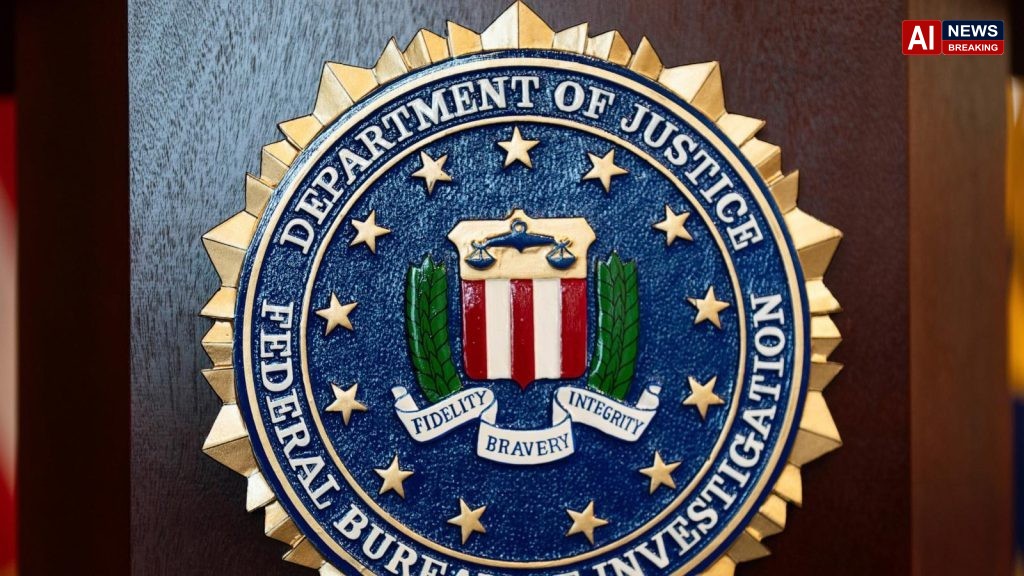
US halts prosecution of former CIA analyst accused of aiding South Korean intelligence - AI News Breaking
halts prosecution former analyst:
The United States Department of Justice announced on Tuesday that it will not pursue criminal charges against a former Central Intelligence Agency officer who had been accused of acting as an undisclosed liaison for South Korea’s National Intelligence Service. The decision effectively ends a case that had drawn attention from both intelligence circles and civil‑rights advocates, raising questions about the balance between national security imperatives and the legal standards required to secure a conviction.The individual at the centre of the controversy, identified in court filings as a former senior analyst in the CIA’s Directorate of Intelligence, was alleged to have passed classified assessments on North Korea and other regional security matters to South Korean officials between 2014 and 2019. According to the indictment, the analyst purportedly used personal contacts and a private email address to transmit the material, bypassing established channels for inter‑agency cooperation..
Prosecutors initially argued that the conduct constituted a breach of the Espionage Act and could have jeopardised U.S. intelligence operations in a volatile part of the world.During the pre‑trial phase, the defense team highlighted several procedural deficiencies in the government’s case, including disputed evidence about the nature of the communications and the analyst’s intent. They argued that the analyst’s actions fell within the scope of routine liaison work that is common among allied intelligence services, and that the alleged “ agent” label was a mischaracterisation..
The defense also raised concerns about the handling of classified documents, suggesting that the government’s own investigative methods may have compromised the integrity of the evidence.In a brief statement, the Justice Department said the decision not to prosecute was based on a “comprehensive review of the evidentiary record” and an assessment that the case did not meet the “high burden of proof” required for a successful conviction under the Espionage Act. The statement stopped short of commenting on the merits of the allegations, noting that the Department “remains committed to protecting the nation’s intelligence and security interests.” No further details about the internal review process were disclosed, and the agency declined to answer questions about whether any disciplinary action was taken within the CIA.The move has prompted mixed reactions from lawmakers and experts. Some members of Congress, particularly those on the House Intelligence Committee, expressed disappointment, suggesting that the decision may send a signal to foreign services that the United States is reluctant to hold its own officials accountable for breaches of trust..
Others, including several civil‑rights groups, welcomed the outcome as a reminder that the government must adhere to strict evidentiary standards before depriving an individual of liberty, especially in cases that hinge on classified material.Legal analysts note that prosecutions under the Espionage Act are historically rare and often fraught with complexities. The act, originally passed in 1917, has been invoked in a handful of high‑profile cases involving leaks to the media, but its application to inter‑allied intelligence sharing remains relatively untested. “The bar for proving that a government employee knowingly and willfully acted as an agent of a foreign power is extraordinarily high,” said a former federal prosecutor who asked to remain anonymous..
“Even if the conduct was ill‑advised, the government must demonstrate criminal intent beyond a reasonable doubt.”The broader context of the case reflects evolving dynamics in the U.S.–South Korea security partnership. Both nations have long collaborated on intelligence concerning North Korea’s nuclear program, missile development, and cyber activities. However, the relationship has occasionally been strained by differing policy approaches and occasional diplomatic friction..
The alleged disclosures, if proven, could have provided Seoul with insights not ordinarily shared through formal channels, potentially altering the calculus of joint operations and risk assessments.Within the CIA, an internal review is reportedly underway to determine whether the analyst’s conduct violated agency policies and to assess any necessary corrective measures. Sources close to the agency said that while the analyst’s actions may have contravened internal guidelines, the lack of criminal prosecution does not preclude administrative sanctions, including possible revocation of security clearances or termination of employment. The CIA has historically handled similar breaches through its internal disciplinary system, emphasizing the agency’s autonomy in managing personnel matters.The case also shines a light on the challenges of prosecuting alleged espionage in an era of digital communication..
Prosecutors must navigate a maze of classified information, encryption, and cross‑border data flows while safeguarding national security s from public exposure. Critics argue that the Justice Department’s decision may reflect a broader reluctance to engage in high‑stakes prosecutions that could inadvertently reveal sensitive intelligence methods. Conversely, supporters contend that the government’s restraint demonstrates a commitment to the rule of law, avoiding the pitfalls of over‑reach that have plagued past espionage prosecutions.As the story settles, attention turns to the potential policy implications..
Some observers suggest that the episode could prompt a review of protocols governing information sharing with allied nations, aiming to tighten oversight while preserving the essential flow of intelligence that underpins collective security. Others warn that excessive restrictions might hamper the agility needed to respond to rapidly evolving threats on the Korean Peninsula and beyond. The balance between transparency, accountability, and operational effectiveness remains a delicate one for both the United States and its partners.In the meantime, the former analyst has not publicly commented on the decision, and his legal counsel declined to provide further remarks..
The Justice Department’s announcement concludes a chapter that began with a sealed indictment in early 2023 and sparked a debate over the limits of loyalty, the scope of permissible collaboration, and the standards required to bring a former intelligence officer to trial. Whether the case will influence future prosecutions or shape the contours of U.S. intelligence policy remains to be seen, but it has already underscored the intricate interplay between law, secrecy, and international partnership..
Updated: October 14, 2026







