 Australia probes AI‑driven breach of My Health Record portal
  Engineering student’s ‘suicide’ turns out to be murder; two arrested
  Canada’s Capital Bids Good Riddance to Trump Avenue as Tensions With U.S. Rise
  Pentagon investigates after China obtains parts from F-35 stealth fighter jet
 US House Passes Russia Sanctions Bill: India Faces Potential 100 Tariff Threat Over Russian Oil
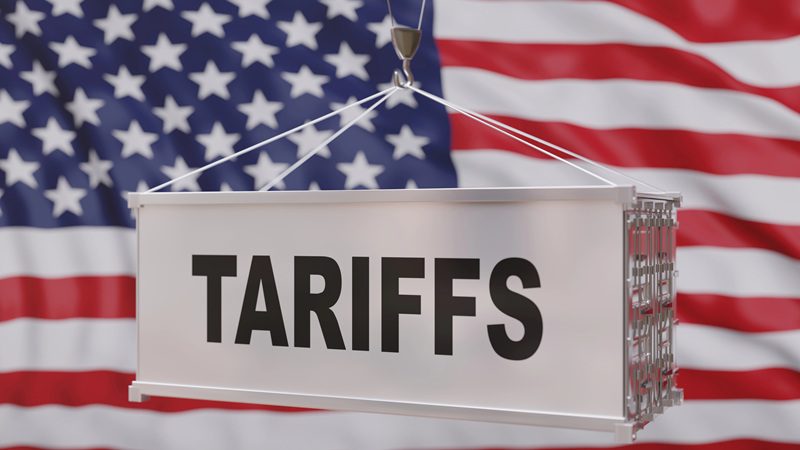
US imposes tariffs - AI News Breaking
The United States House of Representatives has passed a sweeping Russia sanctions bill that could give President Donald Trump the authority to impose tariffs of up to 100% on countries that continue to purchase Russian oil and natural gas. India and China are among the major buyers that could potentially be affected by the legislation, adding a new layer of uncertainty to already complicated US-India trade and energy relations.
The legislation, formally titled the Lindsey O. Graham Sanctioning Russia and Iran Act of 2026, passed the House on September 16 by a vote of 262-159. It had previously cleared the US Senate with an 86-11 vote on August 7. The measure now goes to President Trump for his signature.
The legislation is primarily designed to increase economic pressure on Russia over its war in Ukraine. It expands sanctions targeting Russian officials, financial institutions, the country’s energy sector and vessels associated with the so-called shadow fleet that has helped Russian energy exports continue despite Western restrictions.
For India, however, the most consequential provision is the tariff authority. The bill would allow the US president to impose additional tariffs of as much as 100% on major importers of Russian oil and natural gas. The provision is intended to pressure countries to reduce their dependence on Russian energy and, in turn, reduce the revenue available to Moscow.
Key Points
- The US House passed the Russia sanctions legislation by 262-159.
- The bill gives President Donald Trump authority to impose tariffs of up to 100% on major buyers of Russian oil and gas.
- India and China are among the major Russian crude buyers potentially exposed to the measure.
- The legislation does not automatically impose a 100% tariff on Indian goods; it creates presidential authority to impose such tariffs under specified conditions.
- The bill now goes to President Trump, who can sign it into law.
What the US House actually approved
The House vote represents a major development in Washington’s effort to increase economic pressure on Russia.
The legislation combines several policy tools. It strengthens sanctions against Russian officials and financial institutions, targets parts of Russia’s energy industry and seeks to restrict vessels involved in transporting Russian oil outside established sanctions frameworks.
At the same time, the bill introduces a powerful secondary-tariff mechanism. Instead of restricting the measure exclusively to Russian entities, the legislation gives Washington another way to pressure countries that continue purchasing Russian energy.
That distinction is particularly important for India.
India does not become subject to a 100% tariff merely because the House passed the bill. Rather, the legislation provides the president with authority to impose tariffs of up to that level against qualifying countries. Whether and when the authority is actually used would depend on subsequent presidential action and the conditions established under the legislation.
This means the immediate development is best understood as an escalation of tariff risk rather than an automatic doubling of the US tariff rate on all Indian exports.
Why India is in focus
India has become one of the world’s largest buyers of Russian crude oil since the disruption of global energy markets following Russia’s invasion of Ukraine in 2022.
Western sanctions and the restructuring of global oil trade created an opportunity for Indian refiners to purchase Russian crude at competitive prices. Russian oil subsequently became an important component of India’s energy import mix.
The US legislation now attempts to use access to the American market as leverage against countries maintaining significant purchases of Russian energy.
India’s exposure therefore goes beyond the energy sector.
If Washington were to impose extremely high tariffs on Indian goods, the consequences could potentially extend to exporters across sectors that depend heavily on access to the US market. The impact would depend on the scope, timing, duration and implementation of any tariffs.
The legislation therefore introduces uncertainty into the broader India-US commercial relationship even though it does not itself impose the maximum tariff.
India and China among the biggest Russian crude buyers
India and China have emerged as major destinations for Russian crude oil.
The shift in Russian energy trade followed the introduction of Western sanctions and restrictions after the invasion of Ukraine. As some traditional European buyers reduced purchases, Russian exporters increasingly redirected crude toward Asian markets.
The Centre for Research on Energy and Clean Air has identified China and India as major buyers of Russian crude. CBS News also reported that the two countries are among the largest purchasers of Russian oil, making them particularly relevant to the legislation’s tariff mechanism.
This creates a difficult policy equation for New Delhi.
Russian crude has played an important role in India’s energy procurement strategy, while the United States remains a major destination for Indian exports. A policy that raises the cost of maintaining one relationship could therefore affect India’s calculations across several areas simultaneously.
The bill does not automatically mean a 100% tariff on India
One of the most important points for businesses and investors is the difference between authorization and implementation.
Headlines referring to a “100% tariff on India” can create the impression that Indian exports to the United States will immediately face a 100% duty.
That is not what the legislation does.
The measure gives President Trump authority to impose tariffs of up to 100% on major purchasers of Russian oil and natural gas. Actual implementation would require executive action.
The legislation therefore creates a potential tariff ceiling rather than automatically applying a universal 100% duty to Indian products.
This distinction matters because the economic consequences would be very different depending on what Washington ultimately chooses to do.
A presidential decision could involve the maximum tariff, a lower tariff, exemptions, negotiations or other conditions. The legislation creates the legal mechanism; it does not by itself determine the final tariff imposed on Indian imports.
A new source of pressure in US-India trade relations
The legislation arrives at a sensitive moment for US-India economic relations.
India and the United States have substantial trade ties involving technology, pharmaceuticals, manufacturing, services, machinery, chemicals, textiles and other sectors.
The possibility of a major tariff increase therefore has implications beyond the petroleum industry.
For Indian exporters, the key question is whether the administration eventually uses the new authority and, if so, which products and countries are covered.
For US companies, the issue is different but related. Higher tariffs on imported Indian products could increase the cost of goods entering the US market. The eventual economic effect would depend on how importers, exporters and consumers respond.
This is one reason the legislation has generated debate within Congress.
Why some US lawmakers opposed the tariff provisions
Although the bill received substantial bipartisan support, some Democratic lawmakers objected to the breadth of the tariff powers being granted to the president.
The House vote included 58 Democrats supporting the legislation, while seven Republicans voted against it, according to Reuters and CBS News.
Opponents argued that the legislation could give the president broad authority to impose tariffs against US allies and trading partners.
Some Democrats also raised concerns about the potential effect of tariffs on American consumers and businesses.
Their argument was not necessarily opposition to sanctions against Russia. Instead, the dispute focused partly on how much discretion the president should have to impose tariffs and sanctions.
That disagreement illustrates the dual nature of the legislation: it is simultaneously a Russia sanctions measure and a significant expansion of presidential tariff authority.
The Russia energy sector is at the center of the bill
Russia’s energy exports remain a critical source of revenue for the country.
The sanctions legislation attempts to target that revenue stream through multiple channels.
One element focuses on Russian companies and energy infrastructure. Another targets financial institutions. The bill also seeks to penalize vessels associated with Russia’s shadow fleet.
The shadow fleet refers broadly to networks of vessels and shipping arrangements used to transport Russian oil while attempting to avoid or circumvent sanctions and restrictions.
By targeting those networks, Washington is attempting to make Russian energy exports more difficult and expensive.
The secondary-tariff provision adds another dimension by attempting to discourage foreign buyers from maintaining large-scale purchases of Russian energy.
Why the United States is using tariffs as leverage
Traditional sanctions primarily restrict transactions involving sanctioned entities.
Tariffs work differently.
A tariff raises the cost of imported goods entering the country imposing the duty. If sufficiently high, tariffs can make continued trade commercially unattractive.
The legislation therefore attempts to turn the size of the US consumer market into a pressure mechanism.
Countries that continue purchasing Russian oil could face the possibility of higher tariffs on their exports to the United States.
This creates a choice for affected governments: maintain existing energy relationships with Russia while accepting greater exposure to US trade restrictions, or reduce Russian energy purchases to lower the risk of sanctions and tariffs.
For India, that calculation is particularly complicated because energy security, refinery economics, foreign policy and trade policy are interconnected.
India’s energy security equation
India imports a large share of the crude oil required by its economy.
For a country with a rapidly growing economy and substantial transportation and industrial fuel requirements, crude procurement is a strategic issue.
Indian refiners have historically sourced crude from multiple suppliers. The increased availability of Russian crude after 2022 provided another major source of supply.
A sudden reduction in Russian purchases could therefore affect procurement patterns.
However, the ultimate impact would depend on global oil prices, alternative suppliers, shipping costs, refinery configurations, discounts and geopolitical developments.
If Indian refiners reduce Russian purchases, crude could potentially be sourced from producers in the Middle East, the United States, Africa or other regions.
But replacing a major supplier is not simply a matter of switching from one country to another. Pricing, transportation, crude quality and refinery compatibility all influence procurement decisions.
What could happen to Indian exporters
The potential tariff risk is especially significant for companies whose business models depend heavily on the US market.
A very high tariff could reduce the competitiveness of Indian products relative to goods produced domestically or imported from countries facing lower duties.
The effects would not necessarily be uniform.
Some Indian exporters may have greater pricing power, while others operate on thin margins and could be more sensitive to changes in import costs.
Companies could respond by absorbing part of the tariff, increasing prices, shifting production, changing supply chains or seeking alternative markets.
The actual effect would therefore depend heavily on the structure of any eventual tariff policy.
Pharmaceutical and technology sectors could be closely watched
India’s pharmaceutical and technology sectors have extensive connections with the US market.
Indian pharmaceutical companies supply generic medicines and other products to American consumers and healthcare providers. Indian technology and business-services companies also have significant US exposure, although services are treated differently from physical merchandise under tariff policy.
The tariff mechanism in the Russia sanctions legislation is therefore particularly relevant to goods entering the US market.
Investors will likely monitor whether any future US action applies broadly across Indian merchandise or is structured around particular categories.
The distinction could materially affect individual industries.
The broader diplomatic dimension
The legislation also highlights the difficulty India faces in balancing relationships with major powers.
New Delhi maintains strategic ties with Washington while continuing significant defense and energy relationships with Moscow.
India has repeatedly emphasized its need to protect its national interests and energy security.
Washington, meanwhile, has increasingly used trade restrictions and tariffs as instruments of foreign policy.
The new legislation could therefore add another pressure point to an already complicated diplomatic relationship.
The question is not simply whether India buys Russian oil. It is also how the United States defines acceptable levels of energy trade with Russia and how much flexibility the Trump administration chooses to exercise.
Trump now has a decision to make
With House approval secured, the legislation moves to President Trump.
The Senate had already passed the measure 86-11 in August, meaning the principal congressional hurdle has now been cleared.
If Trump signs the bill, the new authorities would become available to his administration.
The key uncertainty would then shift from Congress to the executive branch.
The president could decide whether to use the tariff authority and how aggressively to deploy it.
The legislation also includes provisions allowing sanctions to be waived under specified circumstances, including where the administration determines that doing so is in the US national interest.
That means the final outcome for India will depend not only on the text of the legislation but also on subsequent executive decisions.
Ukraine remains the central geopolitical objective
The broader purpose of the sanctions package is to increase pressure on Russia over the war in Ukraine.
Supporters argue that reducing Russia’s energy revenues could constrain Moscow’s ability to finance the conflict.
Ukrainian President Volodymyr Zelenskyy has supported congressional approval of the legislation and urged lawmakers to move forward.
The bill therefore forms part of the continuing debate in Washington over how the United States should respond to the war and what economic pressure can be used to influence Russian policy.
The legislation is significant because it combines direct sanctions against Russia with secondary pressure on countries that continue buying Russian energy.
Russia’s shadow fleet targeted
Another important component of the bill involves Russia’s so-called shadow fleet.
Western governments have increasingly focused on ships and shipping networks that transport Russian oil while seeking to avoid sanctions or restrictions.
The legislation expands the potential consequences for these vessels and associated networks.
The objective is to make it more difficult for Russia to maintain energy export revenues through alternative shipping structures.
If implemented aggressively, such measures could have consequences for the global oil market, particularly if significant volumes of Russian crude are disrupted.
That creates another reason for energy markets to monitor the legislation closely.
Possible impact on global oil markets
Any policy that materially restricts Russian oil exports could influence global crude prices.
Russia remains one of the world’s major energy producers. Reducing its ability to sell crude internationally could tighten global supply depending on the size and duration of the disruption.
Higher global crude prices could create a different challenge for India.
If Russian oil purchases decline while global prices rise, India’s import bill could increase even if the country finds alternative suppliers.
That could affect the current account, inflation, transport costs and government policy.
However, the actual market effect would depend on the degree to which Russian exports are reduced and whether other producers increase supply.
What Indian policymakers may watch next
Indian policymakers and businesses are likely to monitor several developments following the House vote.
The first is whether President Trump signs the legislation.
The second is how the administration interprets the provisions concerning major Russian energy buyers.
The third is whether Washington begins negotiations with India or other affected countries before imposing additional tariffs.
The fourth is whether exemptions or waivers are used.
The fifth is how crude prices and Russian export flows respond to the new sanctions regime.
These factors will determine whether the legislation remains primarily a negotiating instrument or develops into a significant trade restriction.
What it means for Indian consumers
The effect on ordinary Indian consumers would not necessarily be immediate.
A US tariff on Indian exports would primarily affect trade flows between India and the United States.
The more direct domestic concern could arise through the energy market.
If restrictions on Russian oil reduce India’s access to discounted crude or increase global oil prices, the consequences could eventually appear through fuel prices, transportation costs and inflation.
But such an outcome is not automatic.
India has multiple crude suppliers, and global oil prices depend on many factors, including OPEC+ production, Middle Eastern geopolitics, global demand and supply disruptions.
Therefore, the legislation should not be interpreted as evidence that Indian fuel prices will automatically rise.
A potential challenge for Indian exporters
Indian exporters face a different risk.
If the US ultimately imposes substantial tariffs under the new authority, products entering the American market could become more expensive.
US importers may then negotiate lower prices with Indian suppliers to offset part of the tariff.
Alternatively, businesses may pass the additional cost to American consumers.
In some industries, companies could move parts of their supply chains to countries that are not subject to equivalent restrictions.
The magnitude of these effects would depend on the eventual tariff structure.
The distinction between legislation and implementation
For businesses following the story, the most important distinction is between three separate stages.
First, Congress has passed the legislation.
Second, the president must sign it for it to become law.
Third, the administration would need to decide whether and how to exercise the tariff authority.
The House vote therefore represents a major escalation in the potential pressure on India, but it is not itself a 100% tariff order.
This distinction should remain central to coverage of the story because financial markets can react strongly to headlines that simplify the underlying legal position.
Why markets may remain sensitive
Currency, equity and commodity markets can respond to changes in expectations even before a policy is formally implemented.
For India, investors may monitor companies with substantial US export exposure as well as firms dependent on imported crude.
A future tariff could create different effects across sectors.
Export-oriented companies could face margin pressure, while companies with limited US exposure might be less directly affected.
Energy companies could also be influenced by changes in crude sourcing and international prices.
The broader Indian rupee outlook could depend on the combined effects of trade flows, crude prices and capital movements.
US consumers could also face consequences
The legislation’s impact is not necessarily one-sided.
If tariffs are imposed on imports from India or other major trading partners, US companies importing those goods would face higher costs.
Depending on market conditions, those costs could be absorbed by businesses or passed to consumers.
This concern was raised by lawmakers who opposed the bill’s broad tariff authority.
Reuters reported that Democratic opponents argued that the legislation could give Trump extensive tariff powers and potentially increase costs for Americans.
Supporters, by contrast, argue that economic pressure on countries buying Russian energy is necessary to increase pressure on Moscow.
The disagreement reflects a broader debate about the economic costs and strategic benefits of using tariffs as a foreign-policy tool.
India faces a difficult balancing act
The legislation places India’s energy policy and trade policy in closer proximity.
India’s purchases of Russian crude are primarily driven by economic and energy considerations, while the United States views Russian energy revenues through the lens of the Ukraine war.
The result is a clash between two policy objectives.
India seeks reliable and competitively priced energy supplies.
Washington seeks to reduce Russia’s ability to generate revenue from energy exports.
The new US legislation attempts to bridge that gap by placing the cost of continued Russian energy purchases partly on the countries buying that energy.
Whether that strategy changes India’s purchasing decisions remains an open question.
What happens next
The immediate next step is President Trump’s decision on whether to sign the bill.
If enacted, attention will then turn to the administration’s implementation strategy.
For India, the most important questions will include whether Washington identifies it as a target for additional tariffs, whether exemptions are available, whether negotiations take place and whether the United States actually imposes duties approaching the 100% ceiling.
For oil markets, traders will watch Russian export volumes, refinery demand and the response of alternative suppliers.
For Indian companies, the focus will be on potential changes to US market access and the cost of exporting goods to America.
For policymakers, the challenge will be balancing energy security with the risks created by escalating trade restrictions.
Conclusion
The US House’s passage of the Lindsey O. Graham Sanctioning Russia and Iran Act of 2026 marks a significant development in Washington’s economic pressure campaign against Russia.
The bill passed 262-159 and now moves to President Trump. Its provisions target Russian officials, banks, energy interests and the shadow fleet, while also giving the president authority to impose tariffs of up to 100% on major purchasers of Russian oil and natural gas.
India is particularly exposed because it has become one of the largest buyers of Russian crude. But it is important to distinguish between a potential tariff authority and an actual tariff order.
The House vote does not automatically impose a 100% tariff on Indian imports. Instead, it creates a legal mechanism that could allow the Trump administration to impose tariffs of up to that level under specified circumstances.
The next stage will therefore be crucial.
President Trump’s decision on the legislation, followed by any administrative action concerning Russian energy buyers, will determine how serious the threat becomes for India.
For New Delhi, the issue is ultimately about balancing affordable and secure energy supplies with access to the US market and the broader strategic relationship with Washington.
For global markets, the legislation is another indication that energy trade, sanctions and tariffs are becoming increasingly interconnected instruments of geopolitical policy.
AI Insight
The passage of the US Russia sanctions bill creates a new layer of uncertainty rather than an immediate 100% tariff shock for India. The most important distinction is between authorization and implementation: Congress has approved a framework that could give President Trump substantial tariff powers, but the actual economic impact will depend on whether those powers are exercised, against which countries and at what rate. For India, the issue is especially significant because Russian crude has become an important component of its energy sourcing while the United States remains a major export market. If Washington ultimately uses the tariff mechanism aggressively, India could face pressure to rebalance its Russian energy purchases, while Indian exporters could confront higher barriers in the US market. The outcome will therefore depend on the interaction between US executive policy, India’s energy strategy, global crude prices and the wider direction of India-US trade negotiations. For readers and investors, the key signal to monitor is not simply the headline figure of 100%, but the specific implementation decision that follows the legislation.