Trump administration offers mixed messages on limits to Ukraine’s Starshield access
 US Treasury proposes a rule to crack down on high-tech investments in China, other adversaries
 Calley Means, a key MAHA advocate, resigns as a top RFK Jr. adviser
 Spotify Tightens Family Plan Controls with QR Code Verification
 Use of Chief Minister C. Joseph Vijay’s deep fake videos to collect money: Rajasthan youth moves Madras High Court seeking bail
US reviving shuttered nuclear plants to meet growing demand, power data centers
**
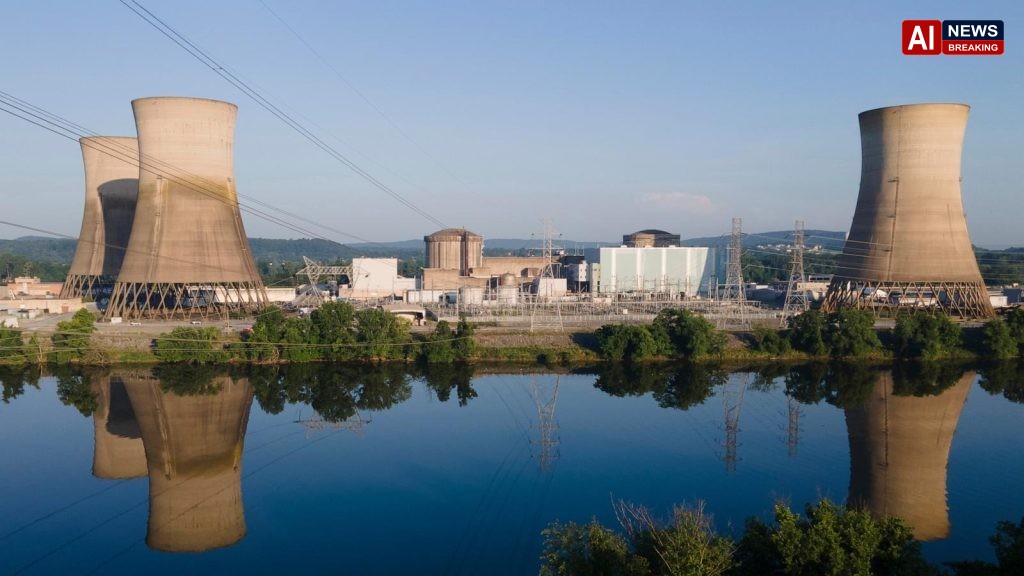
US reviving shuttered nuclear plants to meet growing demand, power data centers - AI News Breaking
The United States is embarking on an unprecedented campaign to bring three dormant nuclear power stations back into service, a move driven by surging electricity demand and the rapid expansion of data‑centre workloads. Officials from the Department of Energy and the Nuclear Regulatory Commission say the plants – located in Illinois, South Carolina and Pennsylvania – have been identified as “low‑hanging fruit” that can be re‑commissioned faster and cheaper than building new generation capacity from scratch. If successful, the effort could add roughly 3.5 gigawatts of clean baseload power to the grid, a figure that would help offset the steep rise in consumption caused by the digital economy and the growing reliance on high‑performance computing.The revival plan emerged after a series of studies highlighted the vulnerability of the nation’s power system to seasonal peaks and extreme weather events..
In 2023, the Electric Power Research Institute reported that data‑centre operators alone accounted for an estimated 10 percent of new electricity demand in the United States, a share projected to climb to 15 percent by 2030. The concentration of these facilities in “data‑centre clusters” such as Northern Virginia, Dallas and the Pacific Northwest has strained regional transmission networks, prompting utilities to seek additional, reliable supply sources that can operate around the clock without the intermittency of wind or solar.Proponents argue that nuclear power is uniquely suited to meet the constant, high‑intensity load profiles of data centres. Unlike renewable installations that depend on weather conditions, a nuclear reactor can deliver a steady output of electricity 24 hours a day, 365 days a year, with a capacity factor often exceeding 90 percent..
This reliability reduces the need for costly backup generators or battery storage, both of which add to operational expenses for data‑centre owners. Moreover, nuclear generation produces virtually no direct carbon emissions, aligning with corporate sustainability pledges that many technology firms have adopted in recent years.The three facilities targeted for revival are the Byron Unit 2 plant in Illinois, the Virgil C. Summer plant in South Carolina and the Beaver Valley Unit 1 plant in Pennsylvania..
All three were mothballed in the early 2010s after market conditions, including low natural‑gas prices and the rise of cheap renewables, rendered them economically unviable. Since then, they have remained largely intact, with major components such as reactor vessels and steam generators preserved under long‑term storage protocols. Engineers from the respective utility owners report that the core infrastructure is still in good condition, and that the primary cost to restart each plant will involve replacing aging control systems, upgrading safety instrumentation, and meeting the latest NRC licensing standards.Financial backing for the revival effort is being assembled from a mix of public and private sources..
The Department of Energy has pledged up to $1.2 billion in loan guarantees and research grants aimed at modernising the plants’ digital control architectures and enhancing resilience against cyber threats. Simultaneously, a consortium of data‑centre operators, including major cloud providers, has expressed willingness to enter long‑term power purchase agreements (PPAs) that would secure a stable revenue stream for the re‑commissioned reactors. Such PPAs are designed to lock in price terms for 20 to 30 years, mitigating market volatility and providing utilities with the financial certainty needed to justify the upfront capital outlay, which analysts estimate to be between $3 billion and $4 billion per plant.Regulatory hurdles remain a significant obstacle..
The NRC must issue renewed operating licenses, a process that typically takes several years and involves extensive safety reviews, public hearings and environmental impact assessments. Critics of the revival plan point to the agency’s backlog of licensing work and the heightened scrutiny following recent nuclear incidents abroad. In response, the NRC has announced a “fast‑track” pathway for reactors that have previously been licensed and subsequently shut down, arguing that the existing safety record and documented design specifications reduce the need for a full re‑evaluation..
Nonetheless, environmental groups have filed lawsuits alleging that the fast‑track approach could compromise thorough analysis of potential impacts on local water resources and wildlife.Community sentiment is mixed. In regions surrounding the plants, some residents welcome the prospect of new jobs and increased tax revenue that a re‑opened facility would generate. The Byron plant, for instance, once employed more than 1,000 workers, many of whom left the area after its closure..
Local officials have highlighted the potential for workforce retraining programs and partnerships with technical colleges to prepare a new generation of nuclear technicians. Conversely, other community members remain wary of resurrecting a technology they associate with historic accidents and radioactive waste. Public meetings held in the past month have featured vocal opposition from anti‑nuclear activists, who argue that investment should instead focus on expanding renewable energy capacity and modernising the grid to better accommodate distributed generation.The broader energy policy context adds another layer of complexity..
The Biden administration’s climate agenda has set a target of achieving a carbon‑free power sector by 2035, a goal that many analysts say cannot be met without a substantial nuclear contribution. A recent report from the National Renewable Energy Laboratory estimated that, even with aggressive deployment of solar, wind and storage, the United States would still need at least 150 gigawatts of firm, low‑carbon generation by 2030 – a shortfall that could be filled by the kind of nuclear refurbishments now being pursued. Yet the same report cautioned that without clear policy signals, such as tax incentives or carbon pricing, utilities may struggle to allocate capital toward projects with long pay‑back periods.If the revival program proceeds on schedule, the first of the three plants could be back online by late 2027, with the remaining two following in 2029 or 2030..
Their combined output would be enough to power roughly two million homes, or to supply the energy needs of an estimated 500,000 data‑centre servers operating at full capacity. The success or failure of this initiative is likely to shape the future trajectory of the nation’s energy mix, influencing not only how the United States meets its climate commitments but also how it supports the digital infrastructure that underpins modern commerce, research and national security..
Updated: October 16, 2026
The U.S. Department of Energy and NRC are targeting three mothballed reactors in Illinois, South Carolina and Pennsylvania for fast‑track re‑commissioning, aiming to add about 3.5 GW of steady, low‑carbon power to meet rising data‑centre demand. Backed by up to $1.2 billion in federal support and long‑term power‑purchase deals from tech firms, the plan faces licensing hurdles, environmental lawsuits and mixed local sentiment.