 Plaintiffs in Trump arch project seek injunction to stop administration from beginning work Nov. 5
  Trump says he ‘heard something about’ Justice Department probe into longtime ally Corey Lewandowski
  Trump administration stopped sharing evidence in Good and Pretti killings, Minnesota officials say
  Tamil Nadu CM orders Chennai flood‑prevention review.
  India and Bangladesh work
 US Treasury designates UK group Palestine Action as global terrorist
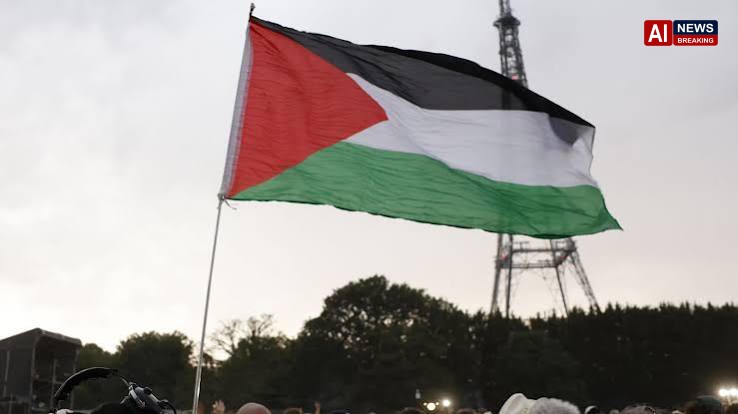
US Treasury designates UK group Palestine Action as global terrorist - AI News Breaking
treasury designates group palestine:
The United States Department of the Treasury has officially designated the United Kingdom-based direct action group Palestine Action as a Specially Designated Global Terrorist, marking a significant escalation in the diplomatic and legal tensions surrounding the organization’s campaign against Israeli interests. This designation, announced on Wednesday, aligns the American government’s stance with existing British legal measures that classify the group as a proscribed terrorist entity, a status that has been the subject of intense legal and political debate within the UK. The move effectively subjects the group to severe international financial restrictions, including the freezing of assets belonging to associated individuals and entities under US jurisdiction, thereby isolating the organization from global banking systems and limiting its operational capabilities on an international scale.The timing of this American intervention is particularly notable, arriving just as Palestine Action prepares for a pivotal appeal at the UK Supreme Court regarding its proscription under British law..
The group argues that its designation as a terrorist organization violates its rights to freedom of expression and protest, contending that its acts of direct action, primarily involving property damage and sabotage, do not meet the threshold of terrorism as defined by international standards. However, the US State Department and Treasury have maintained a firm position, asserting that the group’s actions constitute violent extremism that threatens global stability and security, thereby justifying the application of the toughest sanctions available under American anti-terrorism legislation.Palestine Action, which emerged to prominence in the wake of the intensifying conflict in Gaza, has conducted a series of high-profile operations targeting Israeli agricultural exports, cultural institutions, and business interests across the United Kingdom. Members of the group have historically employed tactics such as slashing tires, smashing windows, and destroying produce in supermarkets, framing these acts as non-violent civil disobedience intended to impose economic costs on Israel until it ceases military operations in the Palestinian territories..
By labeling the group a transnational terror entity, the US government seeks to delegitimize these actions not merely as criminal vandalism or political protest, but as part of a broader pattern of international terrorism that warrants coordinated global suppression.The Treasury’s announcement detailed the specific criteria that led to this classification, citing the group’s alleged use of violence and intimidation to further political aims, including the disruption of commerce and the creation of public disorder. The sanctions package prohibits US persons from engaging in any transactions with the group and blocks any property and interests in property in which the group has an interest. This measure is designed to cut off potential funding streams that might support the group’s activities, although advocates for the group argue that it operates primarily through grassroots donations and individual efforts rather than centralized financial structures that could be easily frozen by foreign governments.Legal representatives for Palestine Action have expressed profound concern over the implications of the US designation, warning that it underscores a dangerous trend of states using anti-terrorism laws to silencing dissent and political opposition..
The group’s lawyers contend that the Supreme Court hearing, scheduled for later this year, will be crucial in determining whether the UK’s proscription order was lawful and proportionate. They argue that labeling activists as terrorists has a chilling effect on democratic discourse and threatens the fundamental right to protest, which is a cornerstone of British and international human rights law. The involvement of the US in this domestic legal dispute adds layers of complexity, as it suggests international pressure may influence the judicial outcome or, at the very least, frames the narrative in a manner that favors the government’s position.The Israeli government has welcomed the US decision, viewing it as a necessary step in combating what it describes as a campaign of terror intended to destabilize its society and economy from abroad..
Israeli officials have long argued that groups like Palestine Action are not merely domestic protest groups but part of a larger international network dedicated to delegitimization and harm. By securing the label of a global terrorist organization from a key ally, Israel hopes to mitigate the reputational and economic damage caused by the protests and to encourage other countries to adopt similar restrictive measures against the group’s members and supporters.Conversely, human rights organizations and civil liberty groups have condemned the US sanctions, arguing that they conflate political activism with terrorism and undermine the principles of free speech. Critics point out that none of the documented actions by Palestine Action involved attacks on human life or limbs, focusing instead on property and narrative disruption..
They argue that the US designation is politically motivated and serves to silence criticism of Israeli policy rather than to address genuine threats to national security. This perspective is shared by many academics and legal scholars who warn that the broadening definition of terrorism risks eroding the legal protections that safeguard democratic protest in liberal societies.The operational impact of these sanctions on Palestine Action remains to be seen, particularly given the group’s decentralized structure and reliance on individual volunteers. Unlike hierarchical organizations with formal accounts and executive leadership, Palestine Action operates as a distributed network, which may render traditional financial sanctions less effective in halting its activities..
However, the symbolic weight of the designation could have profound psychological and strategic effects, potentially discouraging potential supporters from affiliating with the group due to fear of legal repercussions or social stigma. The threat of being associated with a designated terrorist entity may lead to increased self-censorship and a reluctance to participate in public demonstrations linked to the cause.Furthermore, the US move sets a precedent for how Western democracies might respond to extraterritorial campaigning by activist groups. If other nations follow the American lead, Palestine Action could find itself increasingly isolated on the global stage, facing difficulties in traveling, communicating, and organizing across borders..
This international coordinated approach reflects a broader strategy among allied nations to combat transnational activism that challenges state interests, particularly in the context of the ongoing conflict between Israel and Hamas. The intersection of domestic protest rights and international security concerns creates a complex legal landscape where the boundaries of acceptable political action are continually being tested and redefined.As the Supreme Court hearing approaches, the legal arguments will likely focus on the interpretation of the Terrorism Act 2000 and the compatibility of the proscription order with the European Convention on Human Rights. The judges will have to weigh the state’s interest in maintaining public order and preventing violence against the individual’s right to freedom of expression and assembly..
The US sanctions add a new dimension to this legal battle, providing evidence that the international community views the group’s actions as terrorist in nature. This external validation may strengthen the argument that the proscription was a reasonable and necessary measure to protect public safety and economic interests.The political ramifications of this dispute extend beyond the courtroom, influencing public opinion and parliamentary debate in both the US and the UK. Lawmakers are divided on the issue, with some supporting the tough stance against groups they perceive as violent extremists, while others criticize the government for overreach and suppression of legitimate political dissent..
The controversy highlights the deep polarization surrounding the Israeli-Palestinian conflict and the difficulty of distinguishing between peaceful protest and violent extremism in a highly charged political environment. As the case proceeds, it will serve as a barometer.
Updated: August 27, 2026
Insight: By elevating property-based activism to global terrorism, Washington risks politicizing the definition of dissent, thereby chilling legitimate protest protections in allied democracies.
This alignment with British proscription sets a precarious precedent where transnational advocacy is increasingly criminalized through financial isolation rather than legal adjudication of intent.