Trump administration offers mixed messages on limits to Ukraine’s Starshield access
 US Treasury proposes a rule to crack down on high-tech investments in China, other adversaries
 Calley Means, a key MAHA advocate, resigns as a top RFK Jr. adviser
 Spotify Tightens Family Plan Controls with QR Code Verification
 Use of Chief Minister C. Joseph Vijay’s deep fake videos to collect money: Rajasthan youth moves Madras High Court seeking bail
Vance faces tough questions on Iran war, immigration and more in CBS town hall
**
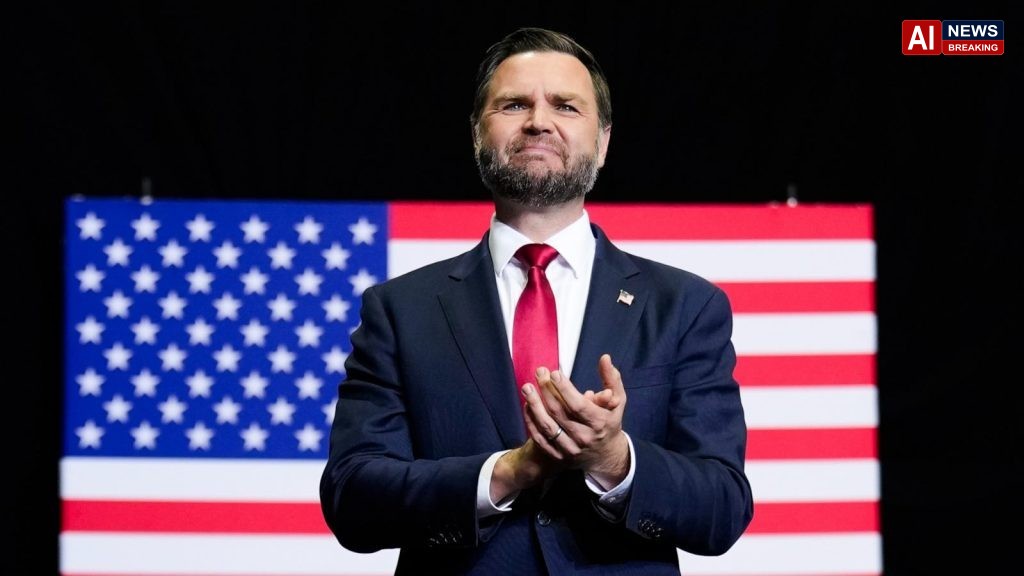
Vance faces tough questions on Iran war, immigration and more in CBS town hall - AI News Breaking
Vance faces tough questions on Iran war, immigration and more in CBS town hall Vice President‑designate JD Vance took centre stage in a live CBS News town hall on Saturday night, confronting a packed audience of voters in Dayton, Ohio. The event, billed as a “listening session” on the administration’s agenda, quickly turned into a litany of pointed inquiries about the United States’ involvement in the ongoing conflict in Iran, soaring data‑centre costs, immigration policy and the rhetoric that has come to define his campaign. As the camera cut between the podium and the audience, the tone was unmistakably confrontational, with many participants demanding concrete answers rather than political platitudes..
The first question of the evening came from a small business owner who asked how the administration intended to protect American firms from the “unprecedented” price hikes in data‑centre services, a sector that Vance has repeatedly championed as a growth engine. Vance answered that his team would pursue tax incentives and streamline permitting for new facilities, but critics in the crowd pressed him on whether such measures would offset the “hidden” costs of security upgrades and energy consumption. The exchange highlighted a broader anxiety among constituents that the promised economic boom may be offset by rising operational expenses..
When the floor opened for questions on foreign policy, a veteran of the Iraq war raised concerns about the United States’ stance toward Iran, noting the recent escalation of missile exchanges in the Persian Gulf. Vance, who has positioned himself as a hawk on national security, asserted that the administration would maintain a “firm but measured” approach, emphasizing diplomatic channels while keeping military options on standby. He warned that a premature withdrawal could embolden Tehran, yet he offered little detail on specific strategies, leaving many in the audience unconvinced..
The issue of immigration provoked an even louder response. A young mother, clutching a flyer for her daughter’s school, asked why the administration continued to promote “hard‑line” policies that separate families at the border. Vance replied that “our borders must be secure” and that “a responsible immigration system protects American jobs.” He promised to review the “catch‑and‑release” program but declined to specify any timeline for legislative action, prompting a chorus of boos from those who felt the response was insufficiently compassionate..
A second‑generation immigrant, whose family fled political turmoil in Central America, pressed Vance on the proposed merit‑based visa system. He argued that the model would “favor the privileged” and ignore the contributions of low‑skill workers who keep essential industries running. Vance countered that the system would “modernise” immigration, ensuring that newcomers possess the skills needed for the 21st‑century economy..
The debate underscored a deep divide between the administration’s economic priorities and the lived realities of many Americans who rely on a more inclusive immigration framework. Data‑centre expansion also raised environmental questions. An environmental activist asked how the administration would reconcile the push for massive server farms with the country’s climate commitments..
Vance responded that new facilities would be required to meet “strict green‑energy standards” and that federal grants would be earmarked for renewable‑energy integration. Skeptics noted that recent reports show many data‑centres still depend heavily on fossil‑fuel power, and they demanded concrete metrics for compliance, a request Vance acknowledged but did not elaborate upon. The conversation shifted to the cost of living, with a senior citizen questioning why grocery prices continue to outpace wage growth despite promises of economic revitalisation..
Vance cited “supply‑chain efficiencies” and “reduced regulatory burdens” as mechanisms that would eventually bring down prices. He suggested that the administration’s fiscal policies would stimulate competition, thereby benefiting consumers. However, he admitted that the benefits might not be immediately visible, a point that resonated with several audience members who voiced frustration over stagnant incomes..
A local teacher raised the issue of federal funding for schools, linking it to the broader debate on immigration and workforce development. Vance emphasized that his administration would “invest in American talent,” promising to increase funding for STEM programmes and vocational training. He argued that a stronger emphasis on technical education would prepare students for jobs in the burgeoning data‑centre sector..
While some applauded the focus on future‑ready skills, others warned that neglecting humanities and arts could erode critical thinking abilities essential for a healthy democracy. When the floor opened for a question on the administration’s handling of the Iran conflict, a former diplomat asked whether Vance supported the recent sanctions that have crippled Iran’s economy but also heightened civilian hardship. Vance defended the sanctions, stating they were “targeted” and designed to pressure Tehran’s leadership without harming ordinary Iranians..
He added that the United States would continue to work with allies to deliver humanitarian aid, a reassurance that fell short for several audience members who demanded a clearer distinction between strategic objectives and humanitarian outcomes. A small business owner in the tech sector raised concerns about the proposed “data‑localisation” rules, which would require companies to store American user data on U.S. Vance argued that such regulations protect national security and consumer privacy, asserting that “American data belongs in America.” He warned that failure to adopt these measures could expose the country to foreign espionage..
Critics in the room warned that the rules could drive startups abroad, stifling innovation and harming the very economy the administration claims to champion. The town hall’s final segment focused on Vance’s own rhetoric, a subject that had been simmering throughout the evening..
Updated: October 18, 2026
Vice‑president‑designate JD Vance faced a barrage of voter questions in a Dayton town hall, defending his hawkish Iran stance, hard‑line immigration proposals and plans to boost data‑centre growth amid concerns over costs, climate impact and worker equity. He promised tax incentives, green‑energy standards and a merit‑based visa system but offered few specifics, prompting sharp pushback from the audience.
Insight: Vance’s “firm but measured” stance on Iran feels more like a safety‑net for the status quo than a genuine deterrent—he keeps the option open while avoiding concrete action, placating hawks without reassuring those fearing civilian fallout. At home, his promise of tech‑driven economic growth clashes with the