
 Trump administration offers mixed messages on limits to Ukraine’s Starshield access
 US Treasury proposes a rule to crack down on high-tech investments in China, other adversaries
 Calley Means, a key MAHA advocate, resigns as a top RFK Jr. adviser
 Spotify Tightens Family Plan Controls with QR Code Verification
 Use of Chief Minister C. Joseph Vijay’s deep fake videos to collect money: Rajasthan youth moves Madras High Court seeking bail
Winston Lee, Accused in Cornell Sexual Assault Case, Is Related to Former South Korean Prime Minister
**
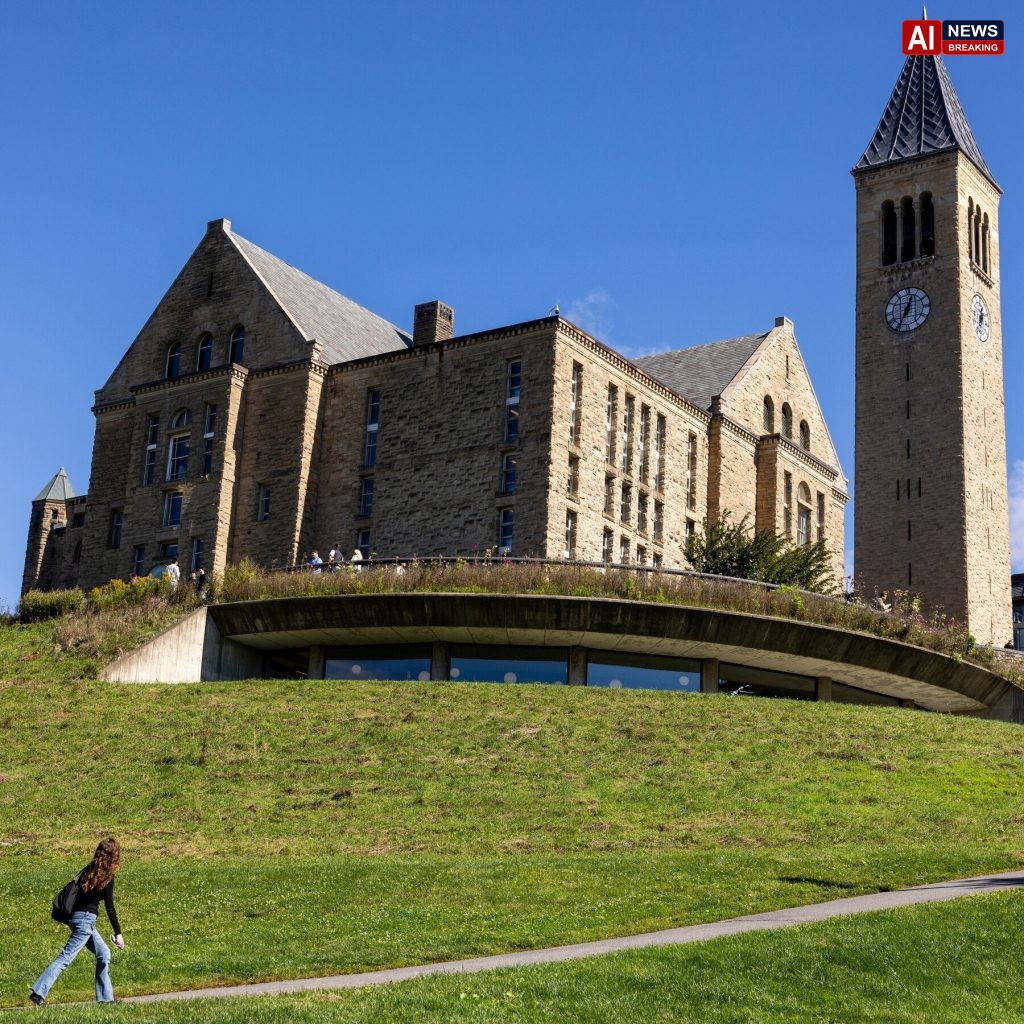
Winston Lee, Accused in Cornell Sexual Assault Case, Is Related to Former South Korean Prime Minister - AI News Breaking
winston accused cornell sexual:
Lawyers for Winston Lee, a graduate student at Cornell University who has been charged with sexual assault, told a New York court on Tuesday that remarks made by the state’s attorney general have created a “dangerous prejudice” against their client. The comments, delivered during a press conference last month, linked Lee’s alleged conduct to a broader “culture of impunity” on college campuses and referenced the high‑profile nature of the case. Lee’s defense team argues that the prosecutor’s statements have tainted the jury pool and jeopardised the fairness of the trial, which is scheduled to begin later this year.Lee, 26, is the grandson of Lee Hae‑chan, who served as prime minister of South Korea from 2004 to 2006 and later held senior posts in the ruling Democratic Party..
The family connection has drawn intense scrutiny, not only because of the political stature of Lee Hae‑chan but also because of the diplomatic sensitivities that arise when a prominent foreign figure’s relative faces criminal charges in the United States. The South Korean embassy in Washington issued a brief statement saying it was “monitoring the proceedings closely” and would “respect the judicial process in the United States.” No official comment was made by the former prime minister himself.The case stems from an incident that allegedly took place in December 2022 in a dormitory room on Cornell’s campus in Ithaca, New York. According to the indictment, Lee is accused of forcibly engaging in sexual activity with a fellow student, a 21‑year‑old woman who reported the assault to campus authorities two weeks after the alleged event..
The university’s Office of Title IX conducted its own investigation, which concluded that Lee had violated the institution’s sexual misconduct policy. In response, Cornell placed Lee on a ten‑day suspension and referred the matter to local law enforcement, leading to the current criminal charges.New York Attorney General Letitia James, who has made tackling sexual violence a cornerstone of her tenure, held a press briefing on 5 May in which she described the case as emblematic of “the systemic failures that allow perpetrators to evade accountability.” She added that “when individuals with influence or powerful connections attempt to leverage their status to escape justice, the public’s confidence in our legal system erodes.” While James did not name Lee directly, the timing and details of her remarks left little doubt as to the subject. Lee’s attorneys contend that the attorney general’s comments, broadcast on multiple news outlets, have already reached potential jurors, making it difficult to assemble an impartial panel.Judge Emily G..
Cohn, who presides over the case in the New York Supreme Court, Criminal Term, was asked by Lee’s counsel to issue a protective order limiting further public statements by the prosecution. In a brief ruling on Tuesday, Cohn denied the request but warned that any additional remarks could be subject to a contempt finding if they “unduly influence the jury pool.” She also instructed the court clerk to monitor media coverage and to consider a change of venue if evidence emerges that the local community’s views have been significantly swayed.Legal analysts say the situation underscores a growing tension between prosecutors’ public outreach and defendants’ right to a fair trial. “Prosecutors have a legitimate interest in informing the public about serious crimes, especially those that reflect broader societal issues,” said Professor Amelia Torres of Columbia Law School..
“But when the commentary veers into commentary about a defendant’s character or the alleged impact of their family’s status, it risks crossing the line into prejudicial territory.”The defense team, led by veteran criminal attorney Mark R. Simmons, has filed a motion to dismiss the indictment on the grounds that the prosecutor’s statements constitute a violation of Lee’s Sixth Amendment right to an impartial jury. Simmons argues that the attorney general’s remarks, disseminated across national television and social media, have created “a cloud of suspicion” that cannot be cleared by standard voir dire..
He also points to the fact that the alleged victim’s identity was protected under a court order, yet the attorney general’s description of the case’s “high‑profile nature” effectively identified her to the public.The prosecutor’s office, represented by Assistant District Attorney Rachel Huang, maintains that the statements were “general observations” about systemic issues and not an attempt to comment on the specifics of Lee’s case. Huang cited a precedent from the 2019 New York v. Ransom decision, in which the court upheld the attorney general’s right to discuss “policy concerns” provided the language does not reference individual defendants..
“Our office is committed to upholding the law while also ensuring that the public remains informed about the seriousness of sexual assault,” Huang told reporters after the hearing.The case has also sparked a diplomatic ripple through the Korean American community in the United States. The Korean American Coalition for Justice, a civil‑rights organization, issued a statement urging both the prosecution and defense to respect the legal process and warning against “any political or ethnic bias that could inflame tensions.” The group’s president, Sun‑mi Park, emphasized that “justice must be blind to nationality, but also mindful of the very real pressures faced by immigrants and their families in the U.S. legal system.”Meanwhile, Cornell University’s administration has faced criticism for its handling of the incident..
Student groups on campus have organized vigils and petitioned the university to adopt stricter policies on campus safety. In a recent town‑hall meeting, Cornell President Martha E. Pollack acknowledged that “the university must do more to support survivors and to ensure that our investigative processes are transparent and fair.” She also reiterated the institution’s commitment to cooperating fully with law‑enforcement authorities, noting that “the university’s internal disciplinary process is separate from any criminal proceedings.”Public opinion on the case appears divided..
A recent poll conducted by the New York Times surveyed 1,500 adults across the state; 54 percent said the attorney general’s comments were appropriate given the seriousness of the allegations, while 31 percent believed the remarks could compromise the defendant’s right to a fair trial. Among respondents who identified as Korean American, 62 percent expressed concern that Lee’s family background might influence how the case is perceived, either positively or negatively.If convicted, Lee faces a maximum sentence of 15 years in prison, along with mandatory registration as a sex offender. The potential outcome carries implications beyond the individual’s fate, touching on broader debates about campus sexual assault, the role of political dynasties in the legal system, and the balance between public accountability and due process..
As the trial date approaches, both the prosecution and defense are expected to sharpen their arguments, with the possibility that the case could be moved to a different county if the judge determines that local bias is too entrenched..
Updated: October 10, 2026
Cornell graduate student Winston Lee faces a New York trial amid claims that Attorney General Letitia James’s press‑conference comments have tainted the jury pool, prompting a motion to dismiss. The case, intertwined with Lee’s Korean‑American heritage and a high‑profile university investigation, has sparked debate over prosecutorial publicity versus defendants’ right to an impartial trial.
The attorney general’s sweeping comments risk turning a single defendant into a symbol of systemic failure, muddying the line between public accountability and individual due process. If the jury pool is already biased, the trial may become a pre‑written verdict rather than a fair adjudication.







