 Yemen Tilts Toward Full-Scale War as Saudi-Houthi Clashes Escalate
  Syrian weapons depot explosion kills 14 in Idlib
  Video Shows Grocery Store Manager Saving Toddler From Oncoming Traffic
  Congress alleges ₹10,000 crore tax evasion through unregistered political parties, seeks JPC
 Yemen Tilts Toward Full-Scale War as Saudi-Houthi Clashes Escalate
The once‑sporadic Saudi‑Houthi skirmishes have erupted into a broader military confrontation, raising alarms over a potential full‑scale regional war. With Saudi oil exports and the vital Bab el‑Mandeb shipping lane under threat, the escalation could spike global energy prices and deepen Yemen’s humanitarian crisis.
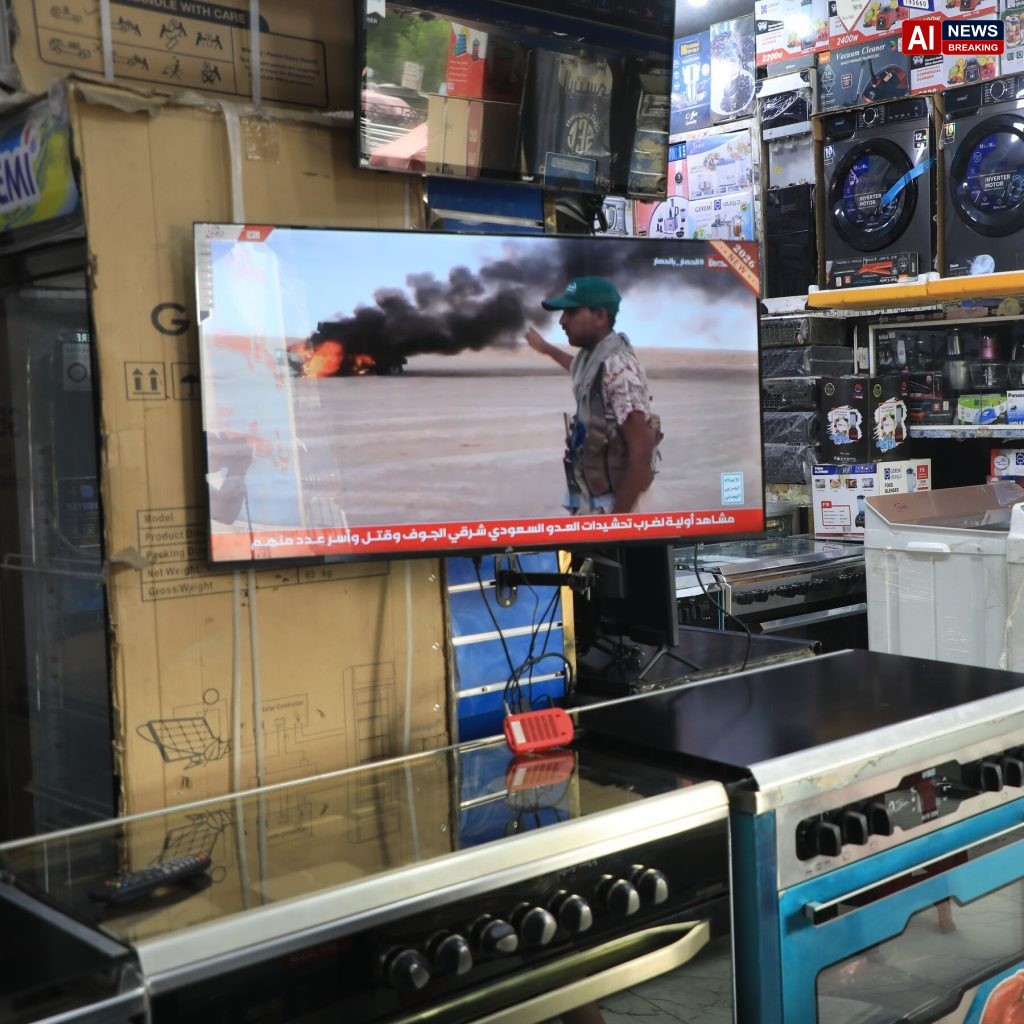
Yemen Tilts Toward Full-Scale War as Saudi-Houthi Clashes Escalate - AI News Breaking
yemen tilts toward fullscale:
The skies over central Yemen have once again become a battleground, marking a significant deterioration in the volatile conflict between Saudi Arabia and the Houthi militant group. What began as sporadic cross-border skirmishes has rapidly escalated into a broader military confrontation, raising serious concerns among international observers about the potential for a full-scale regional war. The escalation comes at a precarious moment for the global energy market, as Saudi Arabia, the world’s largest oil exporter, finds its critical maritime shipping lanes under renewed threat..
This development has forced the Kingdom to recalibrate its strategic posture, moving from a stance of cautious de-escalation to one of aggressive military intervention aimed at securing its borders and stabilizing its economic lifelines.For weeks, tensions had been simmering along the porous border between the two nations, fueled by ideological disputes and competing regional ambitions. The Houthis, a Zaydi Shia movement that controls the capital, Sanaa, and much of northern Yemen, have long received ideological and material support from Iran, Saudi Arabia’s primary regional rival. In recent months, Houthi forces have increased their rhetoric against Riyadh, accusing the Saudi-led coalition of violating a fragile truce mediated by the United Nations..
These accusations were met with denials from Riyadh, which maintains that it has strictly adhered to the ceasefire terms, although sporadic clashes continued to plague the border region. The situation reached a breaking point last week when Houthi drones targeted key infrastructure in Saudi Arabia’s northern provinces, marking the first such attack in over a year.In response to these provocations, Saudi Arabia has launched a sustained aerial campaign against Houthi positions in Yemen. The Saudi-led coalition, which includes air support from several Arab nations, has struck radar stations, drone launch sites, and munitions depots..
Military analysts suggest that this surge in activity represents a fundamental shift in Saudi strategy. Previously, Riyadh had focused on a diplomatic track to resolve the eight-year civil war, prioritizing the facilitation of humanitarian aid and the rarefaction of military pressure. However, the failure of these diplomatic efforts, coupled with the persistent threat to its energy exports, has compelled the Kingdom to重回 the battlefield..
The Kingdom views the Houthis not merely as a domestic Yemeni faction, but as an Iranian proxy seeking to destabilize the Gulf cooperation Council and undermine Saudi sovereignty.The implications of this escalation extend far beyond the immediate geopolitical theater in the Arabian Peninsula. Saudi Arabia controls a significant portion of the world’s oil supply, and any disruption to its export facilities or maritime routes could trigger a sharp increase in global energy prices. The Bab el-Mandeb Strait, a chokepoint through which approximately 12% of global seaborne trade passes, lies within Yemeni waters..
While Houthi rhetoric has primarily focused on targeting shipping associated with Israel, there are growing fears that their operations could expand to include vessels linked to Western nations or regional rivals. This uncertainty has already led to increased insurance premiums for shipping companies passing through the region, adding cost pressures to supply chains that remain fragile in the wake of previous global disruptions.International reactions to the renewed hostilities have been swift and varied. The United States has urged both parties to exercise restraint, emphasizing the importance of de-escalation to protect global energy security..
Washington has reiterated its opposition to the use of chemical weapons, a concern that has been repeatedly raised by Houthi leaders in recent statements. European Union officials have expressed deep concern, calling for an immediate return to diplomatic negotiations. Meanwhile, Iran has accused Saudi Arabia of aggression and vowed to support its allies in Yemen, though Tehran has stopped short of direct military intervention..
The international community is now facing the difficult task of balancing the need to support Saudi security with the imperative to prevent a wider regional conflict that could engulf neighboring countries and destabilize the Middle East.On the ground in Yemen, the impact of the escalating violence is already being felt by a population that has endured years of war and humanitarian crisis. The United Nations has warned that the renewed fighting could exacerbate the already dire food security situation, with millions of Yemenis on the brink of starvation. Humanitarian organizations are struggling to deliver aid as access routes are disrupted and security conditions deteriorate..
The conflict has also led to a fresh wave of displacement, with families fleeing border regions to seek safety in more stable areas. Critics of the Saudi offensive argue that military strikes will only deepen the suffering of civilians and undermine the prospects for a lasting political solution. They contend that the root causes of the conflict, including political marginalization and economic despair, cannot be resolved through military force alone.Despite these criticisms, Saudi officials maintain that military action is necessary to deter Houthi attacks and protect national security..
Riyadh argues that the Houthis have repeatedly violated the spirit and letter of the ceasefire by continuing to send drones and missiles across the border. The Saudi leadership views the current campaign as a defensive measure aimed at neutralizing immediate threats and creating the conditions for a more durable peace. Diplomats close to the Saudi court suggest that the Kingdom is seeking a negotiated settlement that includes guarantees for the security of its borders and the dismantling of Houthi military capabilities..
However, trust between the two sides remains at an historic low, making the prospect of a diplomatic breakthrough increasingly remote.The role of Iran in the conflict remains a central point of contention. Saudi Arabia has long accused Tehran of arming and directing the Houthis, effectively using them as a proxy to exert pressure on Riyadh. Iran denies these accusations, framing the Houthis as an independent resistance movement..
However, satellite imagery and intercepted communications have frequently provided evidence of Iranian support for the group. The escalation in Yemen thus serves as a proxy battleground for the broader rivalry between Saudi Arabia and Iran, two regional powers with competing visions for the future of the Middle East. The outcome of this conflict could have significant implications for the balance of power in the region, potentially influencing the trajectories of other ongoing conflicts in Syria, Lebanon, and Iraq.Military experts note that the advanced weaponry employed by both sides has transformed the nature of the conflict..
The Houthis have demonstrated an increasing capability to deploy sophisticated drones and ballistic missiles, some of which are believed to be of Iranian origin. These weapons have allowed the group to strike targets deep inside Saudi territory, challenging the Kingdom’s air defense systems. In response, Saudi Arabia has relied on its superior air power and coalition support to conduct precision strikes against Houthi infrastructure..
While these strikes have degraded Houthi capabilities to some extent, they have not eliminated the threat. The asymmetrical nature of the conflict means that the Houthis can often survive attacks and regroup, making it difficult for Saudi forces to achieve a decisive military victory.The economic consequences of the prolonged conflict are already beginning to weigh heavily on Saudi Arabia’s ambitious Vision 2030 reform program. The Kingdom aims to diversify its economy away from oil dependence, but instability in.
Saudi Arabia has shifted from diplomatic overtures to an aggressive air campaign against Houthi forces in Yemen after drone strikes threatened its northern provinces, heightening fears of a broader regional war and disrupting vital oil‑shipping routes. The escalation deepens the Saudi‑Iran rivalry, risks global energy prices, and worsens an already dire humanitarian crisis for millions of Yemenis.
Saudi’s return to kinetic warfare signals that protecting oil‑flow corridors now outweighs its Vision 2030 gamble, foreshadowing a prolonged security‑driven fiscal strain.
If the Houthis can keep the Red Sea contested, even limited disruptions could shove global oil prices higher, turning a regional flare