 U.S. and Allies Agree to Release Diesel Reserves as Prices Soar
  Mother’s scream stops armed passenger from reaching cockpit
  American University of Afghanistan at Risk of Closure Amid Funding Cuts
  As Gas Prices Rose, Sales of Larger Vehicles Slid
  Airlines Set to Bring Israelis Back From U.A.E. After FlyDubai Cockpit Attack
 Your Driverless Cab Is Spying on You
**
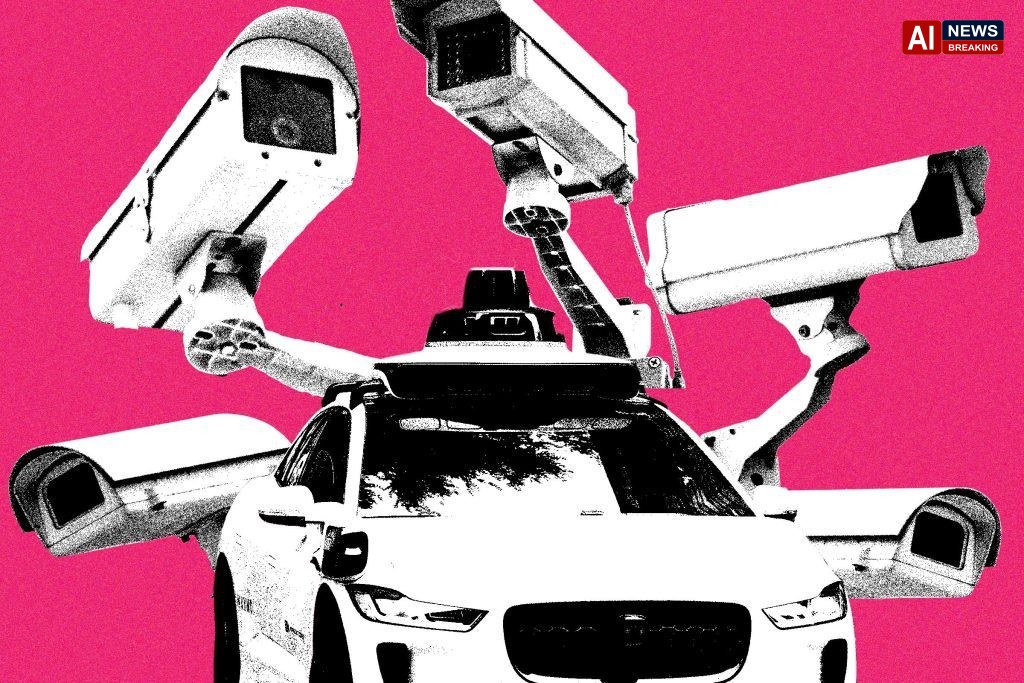
Your Driverless Cab Is Spying on You - AI News Breaking
your driverless spying:
Self‑driving vehicles have moved from laboratory test tracks to city streets, promising a future where commuters can sit back while algorithms handle the wheel. Yet as manufacturers such as Waymo, Zoox and Tesla race to perfect the technology, a growing body of evidence suggests that the very sensors meant to navigate traffic are also capable of monitoring the occupants inside the cabin. The presence of interior‑facing cameras, infrared scanners and microphones has sparked a debate over privacy, data security and the extent to which passengers are being watched without their explicit consent.Waymo, the Alphabet subsidiary that pioneered large‑scale autonomous ride‑hailing, equips its Jaguar I‑Pace and Chrysler Pacifica models with a suite of sensors that includes a forward‑facing lidar array, radar and multiple high‑resolution cameras..
In addition to the external hardware, the company installed an interior camera in the passenger area of its early test vehicles to monitor seat‑belt usage and detect rider behaviour that could interfere with the vehicle’s operation. Waymo’s safety‑protocol documentation states that the footage is retained for a limited period and is only accessed in the event of an incident, but the fact that a camera can capture a rider’s face and movements has raised concerns among privacy advocates.Zoox, a subsidiary of Amazon, has taken a different approach by designing a purpose‑built robotaxi that is symmetrical front‑to‑back, with no conventional driver’s seat. Its prototype features a series of sensors that sweep the vehicle’s interior, including a depth‑sensing camera positioned near the ceiling..
Zoox has defended the installation as necessary for “occupant detection,” arguing that it helps the system recognise whether a passenger is present, if a child is left unattended, or if a pet is inside the cabin. Nevertheless, the company’s privacy policy notes that interior video may be stored and analysed for “machine‑learning model improvement,” a clause that critics say is vague enough to permit broad data use.Tesla, perhaps the most visible name in the autonomous‑vehicle space, has rolled out an interior camera in its Model 3 and Model Y variants equipped with the Full Self‑Driving (FSD) package. The camera, located above the rear‑view mirror, is marketed as a “driver‑monitoring system” that can detect driver inattentiveness when the vehicle is operating in Level 2 assisted mode..
When the car is switched to full autonomy, however, the same camera can capture passengers’ faces, gestures and even spoken commands. Tesla’s data‑handling statements indicate that video is uploaded to the company’s servers for “algorithmic training” unless the owner opts out, a choice that is not presented during the vehicle purchase process but only within the vehicle’s software settings.The convergence of these interior sensing technologies has prompted regulators to examine whether existing automotive safety standards adequately address privacy concerns. In the United States, the National Highway Traffic Safety Administration (NHTSA) has historically focused on crash‑avoidance capabilities, leaving a regulatory gap when it comes to data collection inside the vehicle..
Meanwhile, the European Union’s General Data Protection Regulation (GDPR) offers a more robust framework for personal data, but its applicability to data generated by autonomous systems is still being interpreted by courts and data‑protection authorities.Consumer groups have begun to organise campaigns urging manufacturers to provide clearer information and more granular consent mechanisms. The Electronic Frontier Foundation (EFF) has released a guide outlining steps drivers can take to disable interior cameras where possible, and it has called on legislators to mandate “privacy by design” principles in autonomous‑vehicle architecture. A coalition of privacy NGOs submitted a joint comment to the European Commission, recommending that any interior monitoring be strictly limited to safety‑critical functions and that any secondary use for model training require explicit, opt‑in consent.Industry insiders argue that the data collected by interior sensors is essential for refining the algorithms that make autonomous driving safe and reliable..
“Understanding how passengers interact with the vehicle in real‑world conditions helps us reduce edge‑case failures,” said a senior engineer at Waymo, who requested anonymity. The engineer added that anonymisation techniques are applied to video streams before they are stored, stripping identifiers such as facial features. Critics counter that anonymisation is not a panacea; re‑identification attacks have shown that even heavily masked datasets can be linked back to individuals when combined with other data sources.Legal scholars note that the distinction between safety‑related data and data used for commercial purposes is increasingly blurred..
“If a company uses interior video to improve its product, that is arguably a commercial activity,” said Professor Laura Chen of the University of Cambridge’s Centre for Technology and Law. “Under GDPR, that would trigger the need for a lawful basis, typically consent, which must be freely given, specific and informed. The current practice of bundling consent with the purchase of a vehicle does not meet that standard.”The market response appears mixed..
While some customers express enthusiasm for the convenience of driverless rides, surveys conducted by independent research firms show that a majority of potential users remain uneasy about being recorded during their commute. In a recent poll, 62 % of respondents said they would be less likely to use an autonomous taxi if they knew an interior camera was active, even when assurances of data security were provided. Conversely, a smaller but vocal segment of tech‑savvy consumers view the data collection as an acceptable trade‑off for the promise of safer, more efficient transport.As the industry moves toward wider deployment, the balance between safety, innovation and privacy will likely shape public acceptance of driverless cars..
Upcoming legislative proposals in several jurisdictions aim to require transparent privacy notices at the point of sale, mandatory data‑retention limits and the ability for occupants to request deletion of recorded footage. Whether manufacturers will adapt their sensor suites to meet these expectations, or whether they will continue to rely on broad data‑use clauses, remains to be seen. What is clear is that the conversation about who is watching whom in autonomous vehicles has shifted from a technical footnote to a central issue in the debate over the future of mobility..
Updated: October 2, 2026
Insight: If passengers can’t trust the cabin to stay private, the allure of hands‑free commuting evaporates faster than any algorithm can smooth out a pothole.
Regulators will soon have to treat interior sensors not just as safety gear, but as data‑collectors that demand the same consent