Trump administration offers mixed messages on limits to Ukraine’s Starshield access
 US Treasury proposes a rule to crack down on high-tech investments in China, other adversaries
 Calley Means, a key MAHA advocate, resigns as a top RFK Jr. adviser
 Spotify Tightens Family Plan Controls with QR Code Verification
 Use of Chief Minister C. Joseph Vijay’s deep fake videos to collect money: Rajasthan youth moves Madras High Court seeking bail
Zelensky Says Ukraine Will Resume Strikes on Russian Oil Refineries
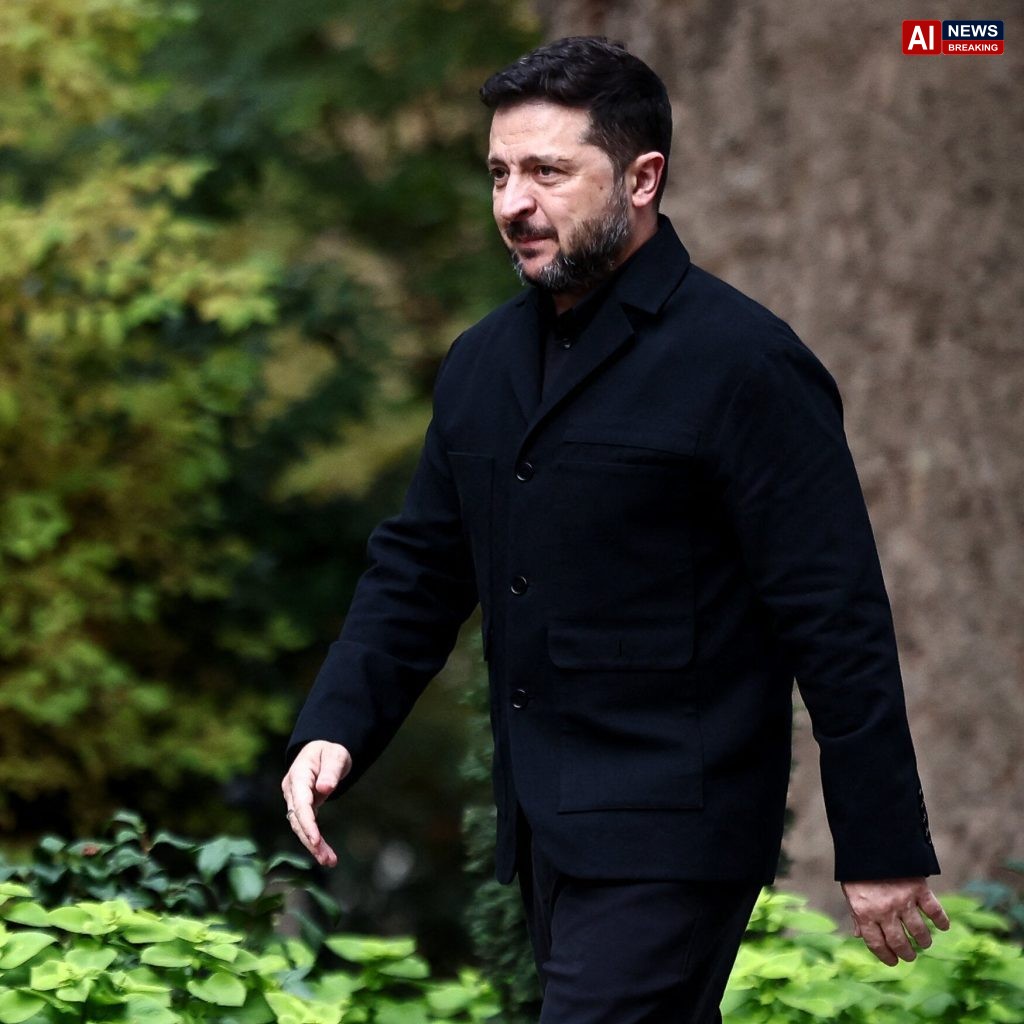
Zelensky Says Ukraine Will Resume Strikes on Russian Oil Refineries - AI News Breaking
President Volodymyr Zelensky announced on Thursday that Ukraine will once again target Russian oil refineries with drone strikes, signalling a renewed phase in Kyiv’s campaign against Moscow’s energy infrastructure. The declaration came during an interview with the Financial Times, where the Ukrainian leader explained that the pause in attacks was a direct response to a request from the United States, which had urged Kyiv to suspend operations to avoid complicating diplomatic efforts surrounding the ongoing peace talks in Switzerland.Zelensky said the decision to resume the strikes was taken after a careful assessment of the strategic landscape and after consulting with Ukraine’s Western allies. “We have respected the United States’ request, but the situation on the ground and the need to defend our country have not changed,” he told the reporter..
“Our forces will continue to strike legitimate military targets that are directly linked to Russia’s war machine.” The president underscored that the forthcoming operations would focus on facilities that process crude oil for the Russian military, rather than civilian fuel supplies, in an effort to mitigate collateral damage.The pause that began in early March had seen a noticeable reduction in the frequency of Ukrainian drone attacks on Russian refineries, many of which are situated in the southern regions of the country, including the Krasnodar and Rostov oblasts. Analysts at think‑tanks in Washington and Brussels noted that the temporary halt had eased tensions in diplomatic circles, allowing Western negotiators to maintain momentum in the Geneva‑style talks aimed at securing a ceasefire. However, they also warned that the absence of pressure on Russia’s energy sector could embolden Moscow to continue its offensive in the east, where fighting remains intense.Since the war began in February 2022, Ukraine has increasingly turned to unmanned aerial systems to strike deep‑strike targets across the Russian border..
The strategy, first publicised in late 2022, was intended to erode Russia’s ability to finance its military operations through oil exports, while also sending a political message that Kyiv could reach beyond the front lines. The attacks have reportedly caused temporary shutdowns and reduced output at several key refineries, prompting Moscow to declare the campaign “illegal” and “terrorist” in nature. In response, Russian officials have vowed to bolster air defences and have threatened retaliatory strikes against Ukrainian infrastructure.U.S..
officials have not publicly commented on Zelensky’s latest remarks, but a senior State Department official, speaking on condition of anonymity, said Washington continues to support Ukraine’s right to self‑defence while also urging restraint to avoid escalation that could jeopardise the broader diplomatic process. “We are in regular contact with Kyiv and we understand their security imperatives,” the official added. “At the same time, we are monitoring the situation closely to ensure that any actions taken are proportionate and do not undermine ongoing negotiations.”European allies appear divided on the issue..
German Foreign Minister Annalena Baerbock, speaking at a press conference in Berlin, reiterated Germany’s commitment to a peaceful resolution and urged Kyiv to consider the timing of its operations. “We understand the pressure Ukraine faces, but we must also keep the door open for dialogue,” she said. By contrast, the Polish foreign ministry released a statement supporting Ukraine’s decision, describing the strikes as a legitimate response to Russia’s aggression and a necessary tool to weaken the Kremlin’s war‑funding capabilities.In Moscow, the Kremlin condemned the announcement as “another act of aggression” and warned that any further attacks on its energy facilities would be met with “swift and decisive retaliation.” A spokesperson for the Russian Defence Ministry said that the Russian armed forces would increase the deployment of air‑defence systems along the southern border and that Moscow would consider targeting Ukrainian sites involved in the production of drones..
The statement also highlighted the potential impact on global oil markets, warning that continued strikes could contribute to higher fuel prices worldwide.Energy analysts caution that renewed attacks on Russian refineries could have broader implications for the global oil market, which has already been volatile due to supply disruptions caused by the war. The International Energy Agency warned that any significant reduction in Russian refining capacity could tighten global supply, leading to price spikes that would affect consumers in Europe and beyond. However, some market observers argue that the impact may be limited, noting that Russia has been able to reroute crude to alternative processing facilities and that global oil inventories remain relatively robust.The resurgence of Ukrainian drone strikes comes at a moment when the conflict’s front lines have largely stabilised, yet both sides continue to seek leverage..
For Kyiv, striking Russian oil infrastructure serves both a military and symbolic purpose, demonstrating an ability to project power beyond its borders and to punish a regime that it holds responsible for the war’s devastation. For Moscow, the attacks present a propaganda challenge, forcing the Kremlin to balance its narrative of resilience with the reality of damaged facilities and the need to protect its energy exports, which remain a critical source of revenue.As the interview concluded, Zelensky emphasised that Ukraine’s strategy would remain flexible, adapting to the evolving security environment and the needs of its partners. “Our objective is clear: to defend our sovereignty and to bring an end to the war,” he said..
“We will continue to act in ways that protect our people, while also keeping the broader goal of peace in sight.” The president’s remarks leave the international community watching closely, as the next wave of strikes could test the durability of diplomatic efforts and the resolve of Ukraine’s Western supporters..
Updated: October 15, 2026
Zelensky has announced a return to drone strikes on Russian oil refineries, saying the pause was a U.S.‑requested courtesy that will end once Ukraine’s strategic assessment justifies it. The move aims to hit military‑linked facilities while sparking fresh debate over how the renewed attacks may affect both the war’s dynamics and global oil markets.
Insight: Zelensky’s return to refinery strikes signals that Kyiv has run out of “nice‑talk” options; the war’s survival now hinges on crippling Russia’s war‑financing more than on diplomatic breakthroughs.
By targeting the enemy’s oil lifelines, Ukraine shifts the battlefield to