 Australia probes AI‑driven breach of My Health Record portal
  Engineering student’s ‘suicide’ turns out to be murder; two arrested
  Canada’s Capital Bids Good Riddance to Trump Avenue as Tensions With U.S. Rise
  Pentagon investigates after China obtains parts from F-35 stealth fighter jet
 10 Years Since Burhan Wani’s Death: How Kashmir’s Militancy Has Changed Over a Decade
It’s been 10 years since the death of Hizbul Mujahideen commander Burhan Wani, which marked a watershed moment in the Kashmir conflict, triggering months of unrest and reshaping both militancy and counter-insurgency in the region, with significant changes in the security landscape, militancy, and political realities.
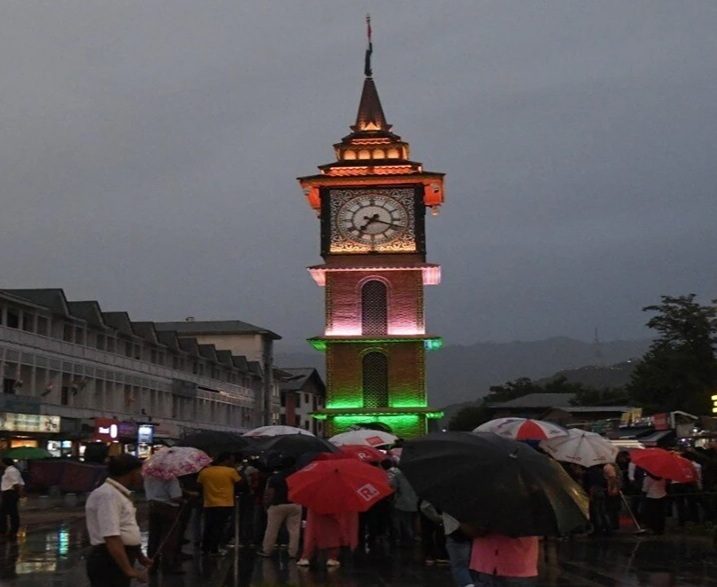
years since burhan wanis:
A decade after the killing of Hizbul Mujahideen commander Burhan Wani on July 8, 2016, Kashmir’s security landscape has undergone profound changes. Militancy has declined in numbers, counter-insurgency strategies have evolved, and political realities have shifted, yet the region continues to grapple with sporadic violence, cross-border infiltration, radicalisation concerns, and unresolved political aspirations.
Ten years have passed since the death of Burhan Muzaffar Wani, one of the most influential militant figures in the modern history of Jammu and Kashmir. Killed in an encounter with Indian security forces on July 8, 2016, Wani’s death marked a watershed moment in the Kashmir conflict, triggering months of unrest and reshaping both militancy and counter-insurgency in the region.
His killing led to one of the largest civilian uprisings witnessed in Kashmir in decades. The Valley remained under prolonged curfew, widespread protests erupted across districts, and hundreds of civilians and security personnel were injured during clashes. International attention returned sharply to Kashmir, while Indian security agencies began reassessing their counter-insurgency strategy.
A decade later, the picture is dramatically different. Militant recruitment has declined significantly compared to the years immediately following Wani’s death. Security forces have expanded intelligence-based operations, technological surveillance has improved considerably, and infiltration routes across the Line of Control (LoC) have become increasingly difficult to use. Yet militancy has not disappeared entirely. Instead, it has transformed in structure, tactics, leadership, and operational objectives.
This decade tells the story not only of changing security dynamics but also of political developments, social changes, technological evolution, and the continuing challenges facing one of India’s most sensitive regions.
Who Was Burhan Wani?
Burhan Wani was born in 1994 in Tral, located in South Kashmir’s Pulwama district. Unlike earlier militant commanders who largely remained hidden from public view, Wani emerged as a social media-era militant.
Using Facebook, WhatsApp, and other digital platforms, he frequently released photographs and videos showing himself alongside armed associates. These images projected an image of youthful defiance that resonated with sections of Kashmiri youth during a period marked by political uncertainty and growing alienation.
His online presence fundamentally changed militant propaganda.
Instead of relying solely on underground networks, recruitment increasingly occurred through digital messaging and symbolic narratives. Wani became a recognizable face, something uncommon among previous generations of militant leaders.
When security forces killed him in Kokernag in July 2016, thousands attended his funeral, reflecting both his symbolic status and the wider political discontent prevailing at the time.
Why His Death Became a Turning Point
Although many militant commanders had been killed before Wani, the aftermath of his death proved unprecedented.
The Valley witnessed months of protests.
Educational institutions remained closed for extended periods.
Business activity suffered major disruptions.
Curfews became routine.
Communication restrictions were imposed across multiple districts.
Pellet guns used during crowd-control operations became the subject of widespread debate because many civilians suffered eye injuries.
For security agencies, the events demonstrated that eliminating a militant leader did not automatically reduce unrest. Instead, the political and emotional response became an equally significant challenge.
This realization influenced future counter-insurgency planning.
The Surge in Militancy After 2016
Ironically, Wani’s death initially accelerated militant recruitment.
Between 2016 and 2019, local recruitment witnessed a noticeable rise, particularly in South Kashmir districts such as Pulwama, Shopian, Kulgam, and Anantnag.
Several factors contributed:
- Increased local symbolism surrounding Wani.
- Expansion of online propaganda.
- Political dissatisfaction.
- Cross-border support networks.
- Localised recruitment by established militant organisations.
Groups such as Hizbul Mujahideen, Lashkar-e-Taiba (LeT), and Jaish-e-Mohammed (JeM) remained active during this period.
However, security agencies simultaneously intensified operations, leading to frequent encounters and a higher rate of militant casualties.
Counter-Insurgency Strategy Underwent Major Changes
One of the biggest transformations during the past decade has been the evolution of India’s counter-insurgency approach.
Rather than relying primarily on large-scale search operations, security agencies shifted toward intelligence-driven missions.
Today’s operations increasingly depend on:
- Human intelligence networks.
- Drone surveillance.
- Electronic interception.
- Mobile phone tracking.
- Financial intelligence.
- Artificial intelligence-assisted monitoring.
- Real-time satellite imagery.
- Inter-agency coordination.
Joint operations involving the Indian Army, Jammu and Kashmir Police, Central Reserve Police Force (CRPF), and intelligence agencies have become far more integrated.
The emphasis has shifted toward identifying militant networks before attacks occur rather than responding after incidents.
Decline in Local Recruitment: One of the clearest changes over the past decade has been the reduction in local militant recruitment. Several factors appear to have contributed:
Stronger Surveillance: Digital monitoring has made it harder for recruitment networks to operate openly.
Faster Intelligence Response: Potential recruits are often identified much earlier through community intelligence and technological surveillance.
Family Outreach: Police have increasingly contacted families when young individuals are suspected of joining militant groups, attempting intervention before recruitment is completed.
Development Initiatives: Government investment in roads, tourism, education, sports infrastructure, and employment programmes has expanded in several districts. While economic development alone cannot resolve political grievances, officials argue that improved opportunities reduce recruitment incentives.
Article 370 and the Political Shift
Another defining moment came on August 5, 2019.
The Government of India revoked Jammu and Kashmir’s special constitutional status under Article 370 and reorganised the former state into two Union Territories.
Supporters argued the move would improve governance, promote investment, strengthen national integration, and enhance security.
Critics contended that the decision was implemented without local political consent and led to prolonged communication restrictions, detentions of political leaders, and reduced democratic participation during the transition period.
Regardless of differing political perspectives, the constitutional change fundamentally altered Kashmir’s political landscape and continues to shape debates about governance, identity, representation, and security.
Militancy Has Changed Rather Than Disappeared: Although overall militant numbers have reduced, today’s militancy differs significantly from the movement witnessed in 2016.
Smaller Groups: Instead of larger organised formations, many attacks involve small, mobile cells.
Hybrid Militants: Security agencies have frequently referred to “hybrid militants”—individuals who reportedly maintain civilian identities while participating in limited militant activities.
Foreign Fighters: Some militant organisations continue attempting infiltration from across the Line of Control despite tighter border management.
Better Operational Security: Militant groups increasingly avoid extensive online publicity compared with the Burhan Wani era.
Technology Has Become Central to the Conflict
Technology now shapes nearly every aspect of Kashmir’s security environment.
Security Forces Use:
- Drones
- Night-vision systems
- Facial recognition
- Digital mapping
- AI-supported surveillance
- Signal intelligence
- CCTV integration
Militants Have Also Adapted:
- Encrypted communication platforms.
- Smaller communication footprints.
- Limited digital exposure.
- Better operational secrecy.
The technological contest has become one of the defining features of modern counter-insurgency.
Cross-Border Dynamics Continue
Pakistan and India continue to hold sharply differing positions regarding Kashmir.
India has consistently alleged that militant groups receive cross-border support and logistical assistance.
Pakistan rejects these allegations, maintaining that it offers diplomatic and political support to the Kashmiri cause while denying direct involvement in militant activities.
Ceasefire understandings along the Line of Control have helped reduce cross-border firing compared to earlier periods, though infiltration attempts remain a security concern according to Indian officials.
Civilian Security Remains a Major Priority
One important trend during recent years has been efforts to reduce civilian casualties while maintaining operational effectiveness.
Security agencies increasingly seek to:
- Isolate encounter sites.
- Evacuate nearby civilians.
- Conduct intelligence-led raids.
- Limit collateral damage.
Nevertheless, civilians continue to face risks whenever militant attacks or security operations occur.
Tourism Has Returned—but Security Vigilance Continues
One of the most visible indicators of relative stability has been the revival of tourism.
Domestic tourist arrivals have reached record levels in recent years, with destinations such as Gulmarg, Pahalgam, Sonamarg, Srinagar, and the Tulip Garden attracting millions of visitors.
Hotels, transport operators, handicraft businesses, and hospitality sectors have benefited from improved visitor numbers.
However, authorities continue maintaining heightened security during major tourist seasons, recognising that isolated attacks can quickly affect public confidence.
The Information Battlefield
Unlike 2016, when social media significantly amplified Burhan Wani’s image, today’s information environment is heavily contested.
Authorities monitor online extremist content more closely.
Internet restrictions have occasionally been imposed in response to security concerns.
Digital platforms have become both security tools and information battlegrounds.
Narratives, misinformation, propaganda, and psychological influence now form an important dimension of the broader conflict.
The Human Cost of a Long Conflict
Beyond security statistics lies a profound human story.
Over several decades, the conflict has affected thousands of families across Jammu and Kashmir.
Victims have included civilians, members of security forces, political workers, and militants. Many families continue to live with the consequences of loss, displacement, injury, or prolonged uncertainty.
Mental health challenges, interrupted education, economic disruption, and social trauma have left lasting effects on communities. Human rights organisations have repeatedly called for accountability, transparency, and measures that prioritise civilian protection, while governments have emphasised security imperatives and efforts to restore normalcy.
Political Engagement and Democratic Processes: In recent years, electoral exercises, local governance institutions, and administrative reforms have been presented by the government as signs of political normalisation. At the same time, many regional political parties and civil society voices continue to advocate for greater political dialogue, restoration of statehood, and broader public participation in decision-making.
The long-term stability of Kashmir is widely viewed by analysts as depending not only on security gains but also on sustained political engagement, economic development, and trust-building across communities.
What the Next Decade Could Look Like
Security experts believe the coming years are likely to be shaped by several key trends:
- Greater reliance on intelligence-led operations rather than large military deployments.
- Continued use of artificial intelligence, drones, and advanced surveillance in counter-insurgency.
- Persistent efforts to prevent cross-border infiltration.
- Ongoing monitoring of online radicalisation and extremist propaganda.
- Expansion of infrastructure, tourism, and employment initiatives aimed at improving economic opportunities.
- Continued debate over constitutional, political, and governance issues that influence public sentiment in the region.
The trajectory of militancy will depend on a complex interplay of local politics, regional geopolitics, socioeconomic conditions, and the evolving security environment.
Ten years after Burhan Wani’s death, Kashmir presents a markedly different landscape from the one that erupted into unrest in 2016. Organised militancy has weakened in terms of numbers, local recruitment has declined, and India’s counter-insurgency apparatus has become more technology-driven and intelligence-focused. Yet the underlying challenges that have shaped the conflict for decades—including political aspirations, security concerns, cross-border dynamics, and the need to protect civilian lives—remain part of the region’s reality.
The decade since Wani’s killing illustrates that while military strategies can alter the operational environment, durable peace requires a combination of effective security, inclusive governance, economic opportunity, and sustained dialogue. The future of Kashmir will likely be determined not by any single event, but by the collective ability of institutions, communities, and political stakeholders to reduce violence, build trust, and create conditions in which stability can endure.
AI Insight: The legacy of Burhan Wani demonstrates how modern conflicts increasingly extend beyond the battlefield into the digital sphere, where narratives, symbolism, and online influence can shape recruitment and public perception as much as conventional military actions. Over the past decade, Kashmir has witnessed significant improvements in security capabilities and a reduction in militant activity, but lasting peace depends on addressing both security challenges and broader political and socioeconomic issues. As technology continues to transform conflict, successful long-term strategies will require balancing robust counter-terrorism measures with democratic engagement, economic development, protection of civilian rights, and sustained efforts to prevent future generations from being drawn toward violence.