 CSD urges govt to drop Gram Sabha consent rule for projects
  NATS glitch causes major Heathrow flight delays and cancellations
  Yemen Tilts Toward Full-Scale War as Saudi-Houthi Clashes Escalate
  Syrian weapons depot explosion kills 14 in Idlib
 NATS glitch causes major Heathrow flight delays and cancellations
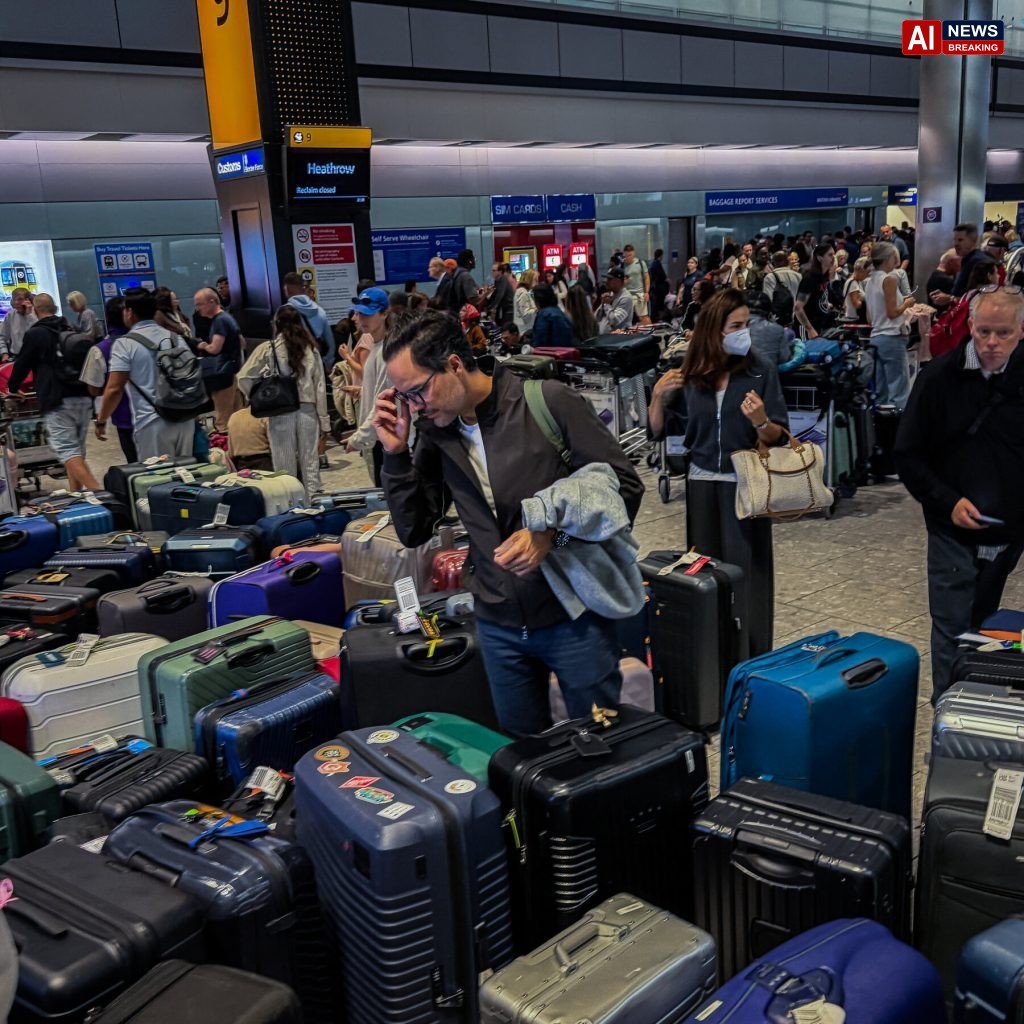
Misery at Heathrow: ‘Never Seen Chaos Like That’ - AI News Breaking
Misery at Heathrow: ‘Never Seen Chaos Like That’ The nation’s busiest airport has been brought to a standstill after an unprecedented air‑traffic control failure that has left more than 2,000 flights delayed or cancelled over the past 48 hours. Passengers streamed through terminals clutching boarding passes, while staff struggled to re‑route aircraft amid a growing backlog. Heathrow’s iconic terminals, normally humming with efficiency, resembled a war‑zone of stranded travellers, exhausted families and exhausted staff..
The disruption, officials say, is the worst the airport has experienced since the 2008 snowstorm, and it is testing the resilience of the UK’s aviation infrastructure. The root of the crisis lies in a technical malfunction at the National Air Traffic Services (NATS) centre in Swanwick, where a critical radar upgrade was rolled out without sufficient redundancy checks. The glitch caused the system to lose real‑time tracking of aircraft entering the London Flight Information Region, prompting controllers to impose a blanket “hold” on all inbound and outbound movements..
NATS has confirmed that the issue was not a cyber‑attack, but a software error that triggered an automatic shutdown of several key surveillance modules. Airlines have been forced to suspend departures and, where possible, park aircraft on remote stands, leaving passengers stranded in terminals for hours. British Airways, the largest carrier at Heathrow, announced that it would halt all departures from Terminal 5 until further notice, while easyJet and Ryanair have issued similar warnings for their operations..
In total, more than 1,300 flights have been cancelled, with an additional 700 delayed beyond their scheduled departure times, according to data from FlightStats. The human cost of the outage is stark. Families travelling to reunite for holidays have been torn apart, business travellers have missed crucial meetings, and some passengers have been forced to spend the night in airport lounges that are not equipped for overnight accommodation..
“I’ve never seen anything like this,” said a mother of two who was trying to catch a flight to Edinburgh. “We’re stuck in a line that stretches past security, and there’s no food, no water, just endless announcements that never give a clear answer.” Airport authorities have deployed additional staff to provide information and assistance, but the sheer scale of the disruption has overwhelmed even the most robust contingency plans. Heathrow’s “Passenger Recovery Team,” normally activated for weather‑related incidents, has been working around the clock to re‑book passengers on alternative routes, arrange hotel accommodations and distribute vouchers..
Yet critics argue that the response has been hampered by a lack of clear communication from NATS, leaving passengers to rely on social media rumours and speculation. The economic impact of the stand‑still is already being felt across the UK. The Department for Transport (DfT) estimates that the loss of productivity could reach £150 million per day, factoring in missed business opportunities, additional staffing costs and the ripple effect on supply chains that rely on air freight..
Heathrow, which handles over 70 percent of the country’s international passenger traffic, is a vital gateway for tourism and commerce, and any prolonged disruption threatens to erode confidence in the UK’s transport reliability. In response to mounting pressure, the DfT has launched an emergency inquiry into the NATS malfunction, with a senior minister promising a “full and transparent” report within 30 days. The inquiry will examine the decision‑making process that led to the rollout of the software upgrade, the adequacy of backup systems and the coordination between NATS, airlines and airport operators during the crisis..
Meanwhile, NATS has pledged to restore full radar capability by the end of the weekend, though technical experts caution that a safe return to normal operations may take longer. Industry analysts point out that the incident highlights a broader vulnerability in the UK’s aviation network, which relies heavily on a single centralised control system. “Diversification of control points and greater investment in redundancy are essential,” said Dr Helen Parker, a senior transport consultant at Aviation Insight..
“Without robust safeguards, any failure—whether technical, human or malicious—can cascade across the entire system, as we are witnessing now.” Passengers who have been affected are being urged to keep their travel documents handy, regularly check airline websites and maintain contact with their travel insurers. Many airlines have advised travellers to consider alternative airports such as Gatwick, Stansted or even London City, where capacity remains partially available. However, the sheer volume of displaced passengers means that even secondary airports are experiencing knock‑on delays, compounding the logistical nightmare..
The chaos at Heathrow has also sparked a debate about passenger rights in the digital age. Consumer groups are calling for clearer statutory guidance on compensation for mass cancellations caused by infrastructure failures, arguing that existing EU Regulation 261/2004, now retained in UK law, does not fully address the scale of systemic disruptions. “People deserve certainty and fair treatment, not vague promises of vouchers that may never be honoured,” said a spokesperson for the UK Consumer Rights Association..
Air traffic controllers, who have been working under intense pressure to manage the fallout, have expressed concerns about fatigue and morale. A union representative warned that prolonged overtime without adequate rest could jeopardise safety, urging the government to provide additional staffing and resources. NATS has assured that all controllers are operating within regulated duty limits, but the unprecedented workload has nonetheless raised eyebrows among industry watchdogs..
As the sun set on the second day of the crisis, Heathrow’s iconic control tower continued to blink with amber warnings, a stark visual reminder of the fragility of modern air travel. Yet, amidst the turmoil, there are signs of resilience:.
Updated: September 9, 2026
Summary: A flawed software upgrade at NATS has paraly Heathrow, causing thousands of flight cancellations and sparking a government inquiry into the UK’s aviation infrastructure. While airlines rush to rebook stranded passengers, experts warn that centralized control systems remain dangerously vulnerable to similar systemic failures.
Heathrow’s blackout lays bare a systemic over‑reliance on a single radar hub, forcing policymakers to confront costly upgrades in redundancy before another software hiccup cripples the nation’s gateway.
The fallout will likely accelerate calls for stricter passenger‑rights statutes, turning a logistical nightmare into a catalyst for broader regulatory reform.