 Saudi faces Iranian attacks amid U.S. refusal to provide aid.
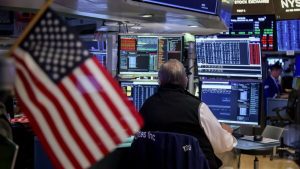
  US Stock Futures Slide as AI Safety Warnings Shake Tech Stocks and Oil Prices Rise
  Ferry sinks in Java Sea; 6 dead, over 120 missing
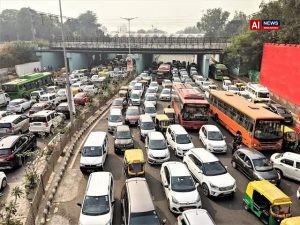
  Bengaluru faces mobility crisis as commute times average 90 minutes
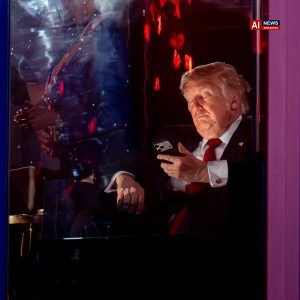
  Trump increases social media output using AI tools
 Trump increases social media output using AI tools
President Trump’s return to the White House has ushered in an unprecedented wave of AI‑assisted social media posts, with hundreds of messages issued in a single day. The relentless digital barrage is reshaping presidential communication, sparking debate over technology’s role in politics, media verification challenges, and concerns about the president’s mental stamina.
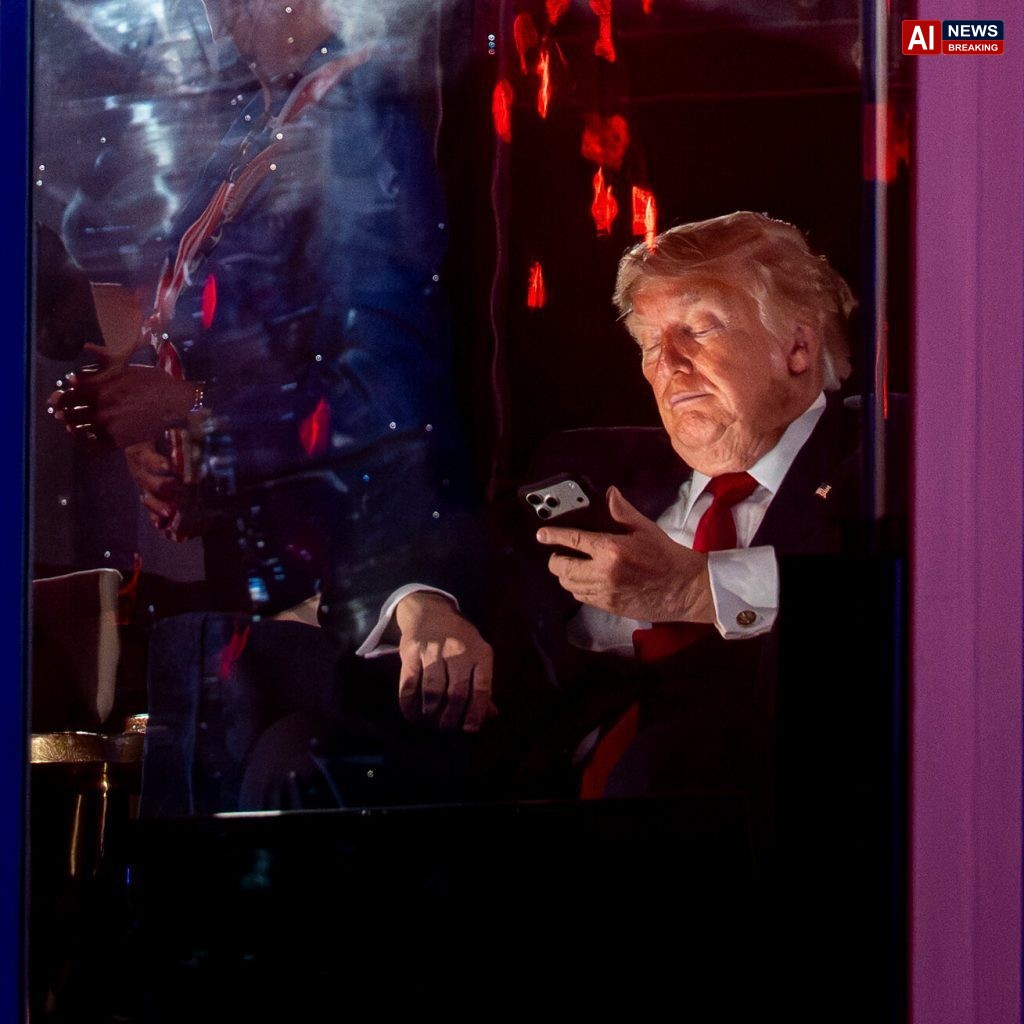
Trump’s Supercharged Social Media - AI News Breaking
The communication strategy of the current administration has undergone a seismic shift, characterized by a relentless, algorithmic intensity that dwarfs the digital footprint of the previous four years. President Donald Trump’s return to the White House has coincided with an unprecedented escalation in social media activity, moving beyond sporadic bursts of commentary to a continuous, high-volume barrage of posts. This phenomenon, often described by technology analysts as supercharged, leverages artificial intelligence tools and automated scheduling mechanisms to maintain a constant presence across multiple platforms..
The result is a redefinition of presidential communication that prioritizes speed and volume over precision, sparking a fierce debate among political observers, technologists, and mental health professionals regarding the implications for governance and the president’s psychological state.During his first term, former President Trump was known for his prolific use of Twitter, often posting dozens of times a day, particularly in the early morning hours. However, the current pace is exponentially higher. In recent weeks, the official accounts associated with the president have published hundreds of messages within a twenty-four-hour period, a feat that would have been manually impossible..
This surge is not merely a matter of increased political engagement but appears to be facilitated by sophisticated technological workflows. Analysts note that many of these posts exhibit patterns consistent with AI-assisted generation, including repetitive phrasing, rapid deployment of similar narratives, and a lack of contextual nuance that often characterizes human-written political commentary. The sheer volume creates a sense of digital omnipresence, ensuring that the president’s voice dominates the online news cycle regardless of actual policy developments.The impact of this digital bombardment is felt most acutely within the newsroom and among the political class, where the constant stream of information creates a state of perpetual crisis management..
Journalists find themselves tracking not just policy announcements, but a chaotic loop of opinions, grievances, and declarations that often contradict one another within a short timeframe. This firehose of falsehood approach, now amplified by technology, overwhelms traditional fact-checking mechanisms. The speed at which these posts are issued leaves little room for verification, forcing media outlets to operate in a reactive mode..
Consequently, the public discourse is fragmented, with various factions cherry-picking statements to suit their narratives, thereby deepening societal polarization and in institutional sources of information.Technologists have raised significant concerns about the origin of this content. While the White House has not officially confirmed the use of artificial intelligence for composing presidential statements, digital forensics experts have identified linguistic markers that suggest automated assistance. These markers include specific syntactic structures and a uniformity in tone that differs from the erratic, colloquial style seen in the president’s earlier online interactions..
The integration of AI into the highest levels of executive communication raises profound questions about accountability. If a statement is generated or significantly edited by an algorithm, who bears responsibility for its accuracy and diplomatic repercussions? The ambiguity surrounding this issue complicates diplomatic efforts, as international leaders struggle to discern genuine policy shifts from automated noise.The debate over the president’s state of mind has intensified as a direct consequence of this communication style..
Critics argue that the compulsive nature of the posting schedule suggests an inability to disconnect from the digital arena, pointing to potential issues with impulse control or mental stamina. Political opponents frequently cite the late-night posting habits and the repetitive nature of the content as evidence of instability, framing the administration’s digital strategy as a symptom of a broader decline in executive judgment. These accusations are not merely rhetorical; they are being leveraged in legislative debates and public opinion campaigns to question the president’s fitness for office..
The narrative of a president enslaved by his platform has gained traction, drawing comparisons to historical figures who struggled with the demands of modern leadership.Conversely, supporters and allies within the administration dismiss these concerns as partisan attacks designed to undermine the president’s direct connection with the electorate. They argue that the high volume of posts reflects a dedicated effort to bypass traditional media filters and speak directly to citizens. From this perspective, the use of technology is not a sign of weakness but of tactical innovation, allowing the president to set the agenda without intermediaries..
Supporters contend that the constant engagement demonstrates a work ethic and a commitment to transparency, even if the methods are unconventional. This defensive stance highlights the deep cultural divide over the role of social media in politics, with one side viewing it as a tool for empowerment and the other as a vector for destabilization.The diplomatic ramifications of this supercharged social media presence are perhaps the most dangerous aspect of the phenomenon. In an era where geopolitical tensions can flare quickly, a stray or poorly contextualized post can trigger immediate market reactions or international incidents..
There have been instances where posts regarding trade tariffs or military actions were issued with little prior coordination with the State Department or NATO allies, leading to confusion and frustration among foreign partners. Diplomats reportedly spend considerable time deciphering the intent behind these digital outbursts, often finding themselves forced to engage in damage control rather than strategic dialogue. The unpredictability introduced by this communication style undermines long-standing diplomatic norms, which rely on consistency, discretion, and controlled messaging.Furthermore, the economic markets have shown sensitivity to this digital volatility..
Investors monitor the president’s accounts closely, knowing that a single post can trigger fluctuations in currency values or stock prices. This tweeter-trading dynamic has created an environment where market stability is tethered to the whims of social media algorithms and the president’s online activity. Financial experts warn that this tethering introduces unnecessary risk into global markets, encouraging short-term speculation over long-term investment..
The lack of a formal review process for these posts exacerbates the problem, as errors or ambiguities are not corrected until after they have already influenced market behavior. This creates a feedback loop where digital noise translates directly into economic uncertainty.Mental health professionals who have remained silent on political matters have increasingly felt compelled to address the phenomenon, though they generally avoid diagnosing a public figure from a distance. Instead, they focus on the behavioral patterns exhibited, noting that the compulsion to post constantly can be indicative of broader psychological stressors..
They point out that the digital realm offers an immediate dopamine reward through likes and shares, which can reinforce addictive behaviors. For a figure of such prominence, the inability to step away from this feedback loop about work-life balance and cognitive health. While many experts caution against armchair diagnosis, the visible stress of managing such a high-volume output is undeniable, and the toll on the president’s personal well-being is a subject of quiet concern among close associates.The legacy of this period will likely be defined by its normalization of artificial intelligence in executive governance..
Whether intended or not, the administration’s approach has set a precedent for how future leaders might utilize technology to communicate with the public. If this model persists, it could lead to a presidency that is more reactive than proactive, driven by the need to maintain online visibility rather than to formulate coherent policy.
Updated: September 14, 2026
The AI‑fuelled tweet storm turns the Oval Office into a 24/7 newswire, forcing journalists and markets to chase a blur of soundbites rather than substance, which erodes the gatekeeping role once central to democratic discourse.
If presidents start delegating their voice to algorithms, accountability