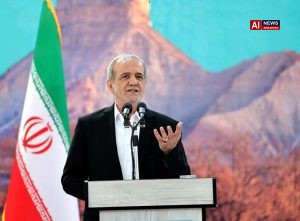
 Iran Awaits Official US Response After Trump Rejects Seven-Day Strait of Hormuz Plan
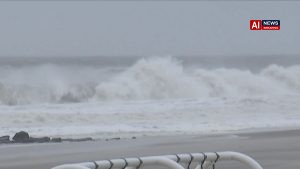
  Special report: One person dead as dangerous nor’easter slams East Coast
  Russian Foreign Minister Vows Russia Will See Ukraine War Through
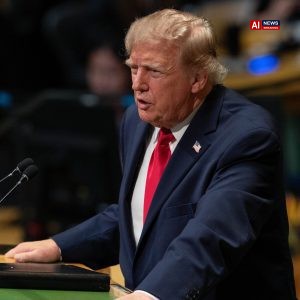
  They said it: Leaders at the UN, in their own words
  CNN says it was left off Air Force One for Trump’s Saturday trip to a college football game
 Russian Foreign Minister Vows Russia Will See Ukraine War Through
**
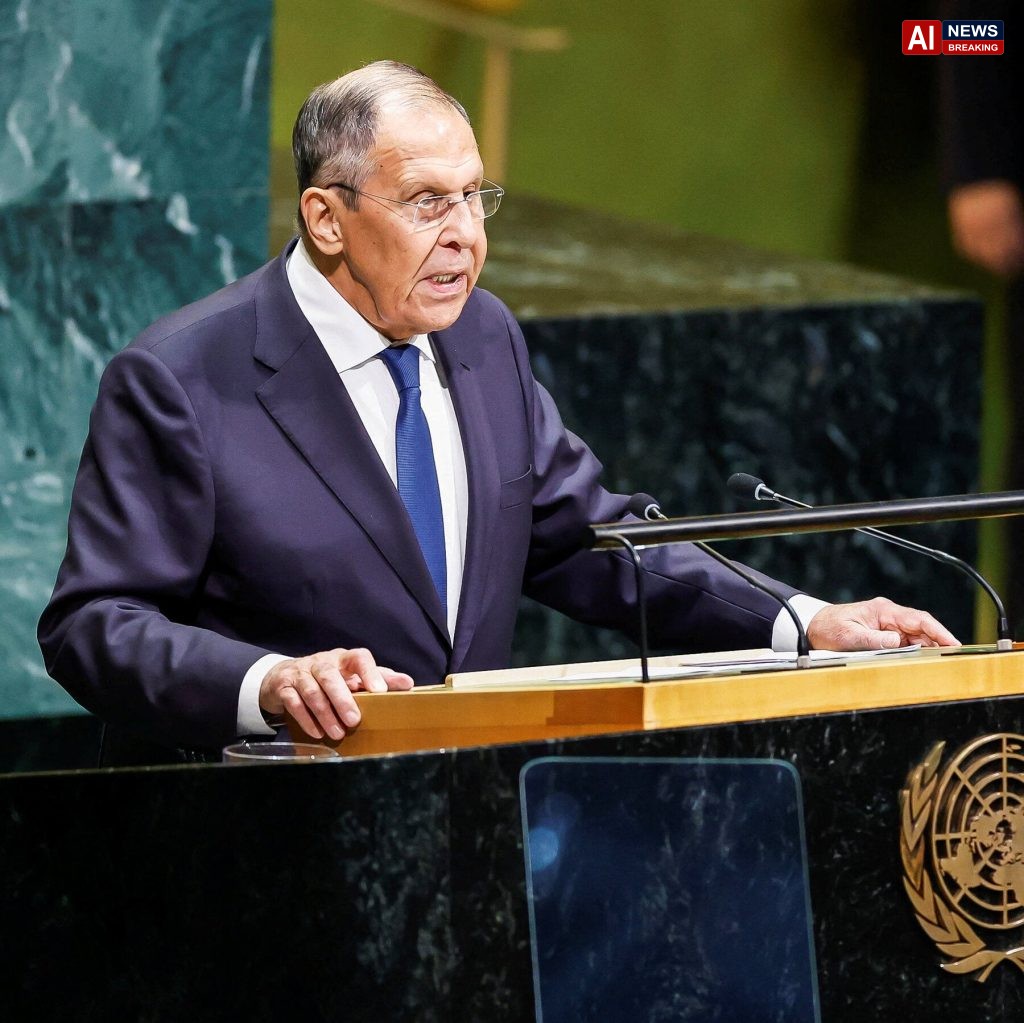
Russian Foreign Minister Vows Russia Will See Ukraine War Through - AI News Breaking
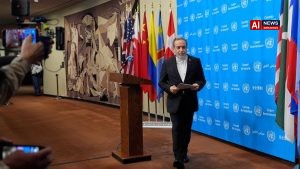
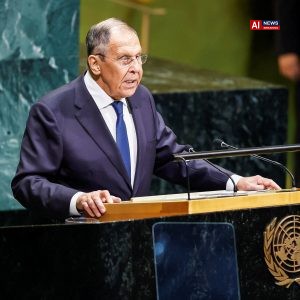
Russian Foreign Minister Sergei Lavrov’s meeting with German Foreign Minister Annalena Baerbock on the sidelines of the United Nations General Assembly in New York was marked by a stark divergence of narratives, as the Russian diplomat used the platform to reiterate Moscow’s determination to continue its military campaign in Ukraine. While Baerbock pressed for a diplomatic resolution and highlighted the humanitarian toll of the conflict, Lavrov countered with a defence of Russia’s actions, framing them as necessary to protect Russian speakers and to counter what he described as “Western aggression” in Eastern Europe. The exchange underscored the widening chasm between Moscow and much of the international community over the war that began in February 2022.Lavrov’s remarks, delivered in a brief statement to the press after the bilateral talks, emphasized that Russia would “see the war through to its conclusion,” a phrase that has become a hallmark of Moscow’s rhetoric since the onset of hostilities..
He argued that the conflict was not a conventional war of aggression but a “special military operation” aimed at “de‑Nazi‑fying” Ukraine and safeguarding Russian citizens living in the country’s eastern regions. By invoking the language of security and protection, Lavrov sought to legitise the ongoing fighting and to portray any call for a cease‑fire as an infringement on Russia’s sovereign right to act in its own interest.The Russian minister also took the opportunity to criticize the role of the United Nations, accusing the body of being “instrumentalised by a handful of powerful states” that, in his view, seek to undermine Russia’s legitimate security concerns. He warned that continued sanctions and diplomatic isolation would only harden Moscow’s resolve, adding that “the more the West pushes, the stronger our determination becomes.” Such statements mirror a broader Kremlin strategy of casting international condemnation as evidence of a hostile coalition seeking to contain Russia.Baerbock, for her part, reiterated the European Union’s stance that the war must end through a negotiated settlement based on Ukraine’s territorial integrity..
She warned that any prolongation of the conflict would exacerbate the already severe humanitarian crisis, with millions of Ukrainians displaced and critical infrastructure destroyed. The German minister called on Russia to “immediately cease hostilities” and to engage in genuine dialogue, highlighting recent reports from the United Nations Office for the Coordination of Humanitarian Affairs that document escalating civilian casualties and the looming risk of famine in several Ukrainian regions.In response, Lavrov dismissed the notion of a cease‑fire as “naïve” and “unrealistic,” insisting that Ukraine’s government had not offered a credible path to peace. He cited what he described as “numerous instances of Ukrainian provocation” and claimed that Russian forces were acting defensively to protect civilians in contested areas..
The minister’s narrative echoed a long‑standing Kremlin position that places the onus for ending the war on Kyiv and its Western backers, rather than on Russian policy decisions.Analysts observing the exchange note that Lavrov’s insistence on seeing the war through is as much a domestic political signal as it is a diplomatic one. Within Russia, the foreign minister’s statements align with President Vladimir Putin’s messaging that frames the conflict as a necessary stand against encirclement and as a test of national resolve. By publicly affirming the continuation of the military campaign, Lavrov reinforces the image of a unified leadership unwilling to capitulate to external pressure, a stance that resonates with a segment of the Russian electorate that perceives Western criticism as an existential threat.The meeting also highlighted the growing diplomatic isolation of Russia, with Baerbock’s remarks reflecting a broader consensus among NATO members that sanctions and diplomatic pressure remain the principal tools to compel Moscow to negotiate..
Yet, Lavrov’s defiant tone suggests that Russia may be preparing for a longer-term confrontation, potentially seeking to deepen ties with non‑Western partners such as China, India and several countries in the Global South. He hinted at the possibility of increased economic cooperation with these states to mitigate the impact of sanctions, a strategy that has already begun to materialise in the form of trade agreements and joint ventures in energy and infrastructure.Humanitarian organisations, meanwhile, warned that the rhetoric from both sides has tangible consequences for civilians on the ground. The International Committee of the Red Cross issued a statement after the UN assembly, urging all parties to respect the laws of armed conflict and to allow unhindered access for aid deliveries..
It noted that continued fighting in eastern Ukraine has rendered many areas “effectively inaccessible,” complicating efforts to deliver food, medical supplies and winter heating fuel to vulnerable populations.The broader geopolitical context of the UN General Assembly provided a backdrop of heightened tension, as several member states used the forum to voice support for Ukraine while others, including a handful of African and Latin American nations, called for a more balanced approach that would consider Russia’s security concerns. Lavrov’s appearance, therefore, was not merely a bilateral encounter but a calculated effort to sway opinion within a multilateral setting where Moscow’s narrative continues to find sympathetic ears, however limited.As the General Assembly concludes, the diplomatic stalemate appears unchanged. The Russian foreign minister’s unequivocal pledge to see the war through signals that Moscow is prepared to endure ongoing economic hardship and international censure in pursuit of its objectives..
For Ukraine and its allies, the challenge remains how to translate such statements into actionable pressure that can bring the conflict to a negotiated end without further endangering civilians. The coming weeks will likely see intensified diplomatic activity, but unless a substantive shift occurs in either Moscow’s strategic calculations or the willingness of the West to offer a viable security arrangement for Ukraine, the prospect of an imminent resolution seems remote..
Lavrov used his UNGA meeting with Germany’s Annalena Baerbock to reaffirm Moscow’s resolve to press on with its “special military operation” in Ukraine, dismissing calls for a cease‑fire as naïve and framing Western pressure as hostile aggression. Baerbock countered by urging an immediate end to hostilities and a negotiated settlement that respects Ukraine’s territorial integrity, warning of worsening humanitarian devastation.
Lavrov’s defiant promise to “see the war through” isn’t just diplomatic bravado—it’s a signal to Russia’s domestic audience that the Kremlin will double down, using Western isolation as a rallying‑cry for national unity.
Meanwhile, Baerbock’s push for a