Trump administration offers mixed messages on limits to Ukraine’s Starshield access
 US Treasury proposes a rule to crack down on high-tech investments in China, other adversaries
 Calley Means, a key MAHA advocate, resigns as a top RFK Jr. adviser
 Spotify Tightens Family Plan Controls with QR Code Verification
 Use of Chief Minister C. Joseph Vijay’s deep fake videos to collect money: Rajasthan youth moves Madras High Court seeking bail
Rani Abbakka Chowta: the Warrior Queen of the Seas
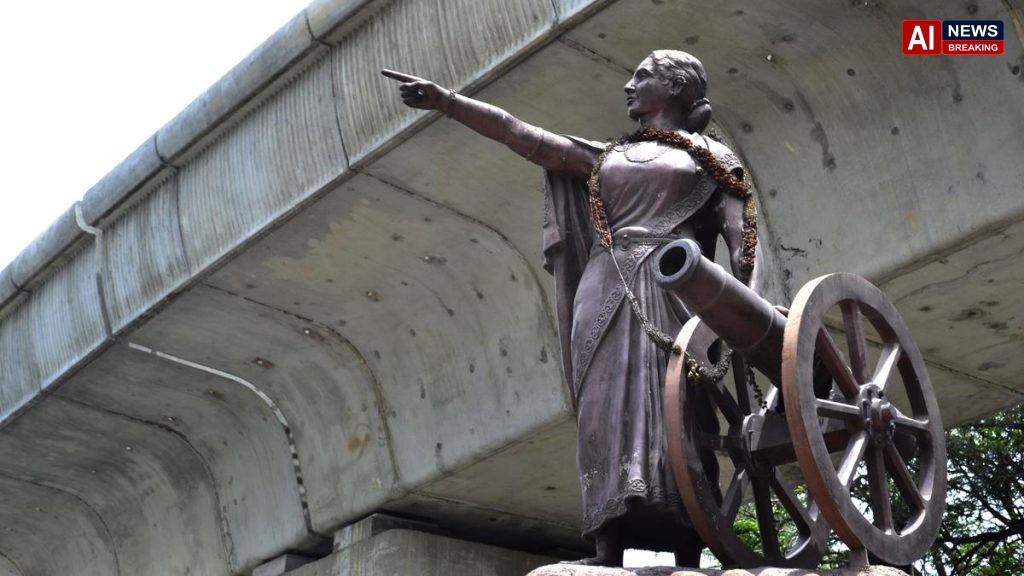
Rani Abbakka Chowta: the Warrior Queen of the Seas - AI News Breaking
rani abbakka chowta warrior:
Rani Abbakka Chowta, the 16th‑century ruler of the coastal kingdom of Ullal in present‑day Karnataka, stands out as a rare example of a female sovereign who not only commanded a navy but also waged a sustained campaign against the expansionist ambitions of the Portuguese Empire. Born into the Chowta dynasty, which traced its lineage to the Jain aristocracy of the Tulu region, Abbakka inherited the throne at a time when the western coast of India was becoming a focal point for European trade and colonisation. The strategic importance of Ullal’s natural harbour and its proximity to the bustling port of Mangalore made it a coveted prize for the Portuguese, whose fleet was already establishing footholds along the Malabar Sea.When the Portuguese first arrived in the early 1500s, they sought to secure exclusive trading rights, impose customs duties, and enforce a monopoly over the lucrative spice and pepper trade..
Their tactics often involved intimidation, the construction of forts, and the deployment of superior naval firepower. Abbakka, aware of the threat to her people’s autonomy and economic livelihood, chose confrontation over capitulation. Contemporary accounts, though sparse, suggest that she quickly organised a fleet of swift galley‑type vessels, known locally as “kettus”, manned by seasoned mariners drawn from the fishing communities that populated the coastline..
These ships, though modest in size, were equipped with cannons and were capable of rapid manoeuvre in the shallow waters of the Arabian Sea.The first major clash between Ullan and the Portuguese took place in 1545, when a squadron led by the commander Dom Pedro de Almeida attempted to enforce a tribute on the kingdom. Abbakka’s forces, employing hit‑and‑run tactics, lured the larger Portuguese ships into narrow channels where they became vulnerable to cannon fire and boarding actions. The ensuing battle resulted in the sinking of several Portuguese vessels and forced the invaders to retreat temporarily..
This early victory not only bolstered the morale of the local population but also sent a clear message to other regional powers that Ullal could defend its sovereignty.Emboldened by this success, Abbakka entered into a series of alliances with neighbouring rulers who shared her concerns about Portuguese encroachment. Notably, she forged a pact with the Sultan of Bijapur and the Zamorin of Calicut, both of whom supplied additional troops and artillery. In return, Abbakka granted them limited access to her ports for trade, creating a network of mutual defence that complicated Portuguese attempts to isolate Ullal..
These diplomatic overtures were complemented by her support for local merchants, whose trade routes extended to the Persian Gulf and the Indian Ocean, ensuring that the kingdom’s economy remained vibrant despite external pressures.The Portuguese, unwilling to accept a setback, launched a more concerted offensive in 1550 under the command of Dom João de Castro. This campaign was characterised by a combination of naval bombardment and a land siege aimed at capturing Ullal’s fortifications. Abbakka’s response demonstrated remarkable strategic foresight; she ordered the evacuation of non‑combatants to the hinterland, reinforced the fort’s walls with locally quarried stone, and mobilised a militia composed of both men and women..
The defenders also employed a network of watchtowers along the coastline to provide early warning of approaching ships, allowing them to prepare ambushes that inflicted heavy casualties on the Portuguese landing parties.After months of intense fighting, the Portuguese siege was broken when a sudden monsoon storm battered their fleet, scattering the ships and damaging their supply lines. Abbakka’s forces seized the opportunity, launching a coordinated counter‑attack that recaptured lost outposts and forced the invaders to withdraw. The episode underscored the importance of environmental factors in maritime warfare and highlighted Abbakka’s ability to adapt her tactics to the unpredictable conditions of the Indian Ocean..
It also reinforced her reputation as a resilient leader who could endure protracted conflict without sacrificing the welfare of her subjects.In the years that followed, Abbakka continued to defend her kingdom against periodic Portuguese incursions, employing a blend of naval raids, diplomatic negotiations, and fortification upgrades. Her administration instituted reforms aimed at strengthening the coastal militia, standardising weapon production, and encouraging shipbuilding among local artisans. These measures not only enhanced Ullal’s defensive capabilities but also stimulated economic growth by creating jobs and fostering technological exchange..
By the time of her death, traditionally placed around 1570, the kingdom had secured a degree of autonomy that persisted for several decades, even as Portuguese influence continued to expand elsewhere along the western seaboard.The legacy of Rani Abbakka Chowta, however, has been unevenly recorded in mainstream historical narratives. Colonial chroniclers often downplayed indigenous resistance, while later Indian historiography focused predominantly on figures associated with the 19th‑century freedom movement. Recent scholarship, drawing on regional oral traditions, temple inscriptions, and Portuguese archival material, has begun to re‑evaluate her role as a pioneering female leader in a patriarchal society..
Historians now acknowledge that her strategies combined conventional warfare with an acute awareness of maritime economics, making her a unique case study in early modern Indian naval history.In contemporary Karnataka, Abbakka’s memory is honoured through festivals, statues, and the naming of public spaces, reflecting a growing recognition of her contributions to regional identity. Educational curricula in the state have incorporated her story, and cultural productions—plays, documentaries, and literature—seek to bring her exploits to a wider audience. Such efforts align with a broader trend of revisiting marginalized figures in India’s past, thereby enriching the collective understanding of the nation’s diverse heritage.Rani Abbakka Chowta’s life illustrates how local agency could challenge the seemingly unstoppable tide of European imperial ambition..
Her adept use of diplomacy, naval ingenuity, and community mobilisation enabled a small coastal kingdom to resist a global superpower for a remarkable length of time. While the Portuguese would eventually dominate large swathes of the Indian coastline, the episode of Ullal serves as a testament to the capacity of indigenous polities to defend their sovereignty through strategic acumen and resilient leadership. As scholars continue to uncover and reinterpret archival evidence, Abbakka’s story is likely to occupy an increasingly prominent place in the annals of Indian and maritime history..
This development highlights evolving dynamics and may have broader implications in the near term.