
 Pakistan’s leaders hail first astronaut aboard Chinese craft: ‘Proud one of us has gone into space’
 British tourist travels 29 hours from Mumbai to Amritsar for ₹5,461, rates Indian Railways 10/10 | Viral video
 The Supreme Court will decide whether assault weapons bans violate the Second Amendment
 A Critic of Beijing Falls Short in Taiwan’s Key Mayoral Election
 EPA says no rise in contamination after Army detonates lead azide stockpile in Iowa
Government planning special Session to clear Delimitation Bill; Congress calls it a ‘bluster’
**
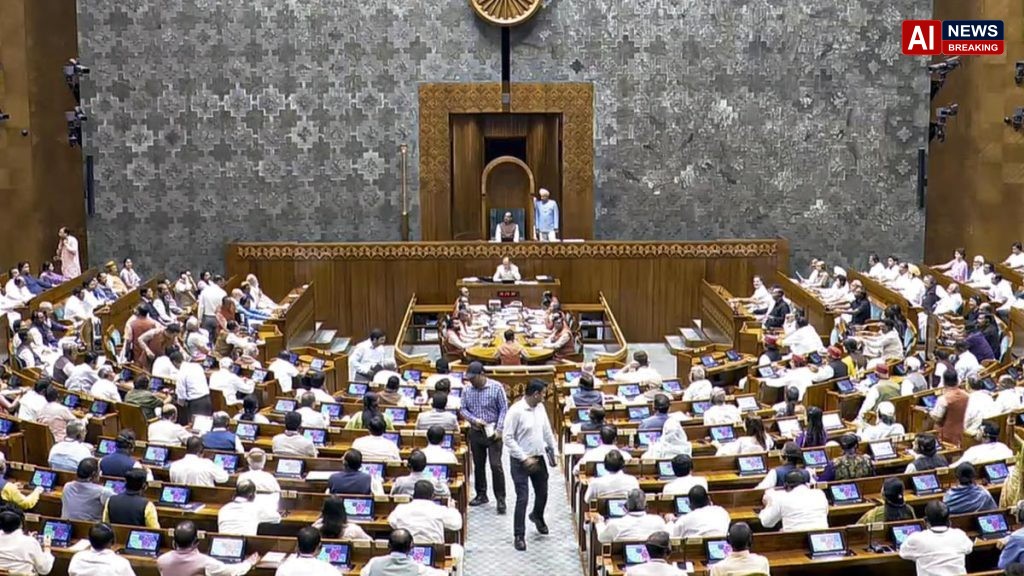
Government planning special Session to clear Delimitation Bill; Congress calls it a ‘bluster’ - AI News Breaking
The Union government is reportedly preparing to convene a special session of Parliament with the explicit aim of passing the long‑delayed Delimitation Bill, a legislative measure that would redraw the boundaries of Lok Sabha and state assembly constituencies ahead of the next general election. Sources close to the administration say that senior officials are confident the ruling party will command a comfortable majority in the upcoming vote, estimating “at least 15‑16 more votes than needed” to secure passage. No official timetable has been released, and the duration of the session remains undisclosed, leaving opposition parties and political analysts to speculate on the timing and strategic intent behind the move.The Delimitation Bill, first introduced in 2023, seeks to update constituency maps based on the 2021 census, a task that has been stalled for over a decade due to political hesitancy and legal challenges..
Proponents argue that the exercise is essential to reflect demographic shifts, ensuring that each representative serves roughly an equal number of voters and that the principle of “one person, one vote” is upheld. They contend that the delay has created disparities, particularly in rapidly growing urban areas, where population increases have outpaced the allocation of parliamentary seats.However, the opposition Indian National Congress has dismissed the government’s push as “bluster” and an attempt to secure electoral advantage before the next general election. In a statement released on Tuesday, the party accused the ruling coalition of using the special session as a “political tool” to cement its grip on power, suggesting that the timing is designed to catch opposition legislators off‑balance and limit public debate..
Congress leaders have called for a transparent, bipartisan process, urging that any delimitation exercise be conducted with broad consensus and adequate consultation with civil society.The debate over delimitation is not merely procedural; it carries significant political ramifications. Redrawing constituency boundaries can alter the electoral calculus for parties across the spectrum, potentially reshaping the balance of power in both the Lok Sabha and state assemblies. Critics of the bill argue that the ruling party could engineer maps that favor its strongholds, particularly in regions where it has seen a surge in support, while diminishing the influence of rival parties in areas where they traditionally performed well..
Such concerns have fueled accusations of gerrymandering, a charge the government denies, insisting that an independent Delimitation Commission will oversee the process in accordance with constitutional mandates.Legal experts note that the Constitution of India mandates delimitation after every census, but the exercise has been deferred multiple times, most notably after the 1971 and 2001 censuses, due to political disagreements over the implications for representation. The Supreme Court has, on several occasions, underscored the importance of timely delimitation to preserve electoral equity, but it has also left the final decision on the schedule to the Parliament. The current bill therefore represents a pivotal moment in the country’s democratic architecture, testing the interplay between legal obligations and political strategy.Within the ruling party, senior leaders appear united in their resolve to move the bill forward..
A senior minister, speaking on condition of anonymity, said that the special session would be “focused, efficient, and decisive,” emphasizing that the government does not wish to prolong a process that has lingered for years. The minister also highlighted that the bill includes provisions to protect the representation of Scheduled Castes, Scheduled Tribes and other marginalized groups, aligning with the government’s broader agenda of inclusive development. These assurances are intended to counter opposition narratives that the delimitation exercise could marginalise vulnerable communities.Opposition parties, besides the Congress, have expressed reservations..
The Aam Aadmi Party, which governs Delhi, warned that a rushed delimitation could overlook the unique demographic realities of the national capital, while regional parties in the Northeast have raised concerns about the potential impact on tribal constituencies. A coalition of state legislators from several parties submitted a memorandum to the Speaker of the Lok Sabha, requesting that the bill be debated extensively in a regular session rather than a special one, arguing that the latter would curtail parliamentary scrutiny and limit the opportunity for public input.Civil society groups have also entered the fray, organising seminars and publishing position papers on the implications of delimitation. The Centre for Election Studies, an independent research institute, released a report suggesting that a transparent delimitation process could boost voter confidence and reduce allegations of bias in future elections..
Conversely, the Reporters Without Borders India chapter cautioned that the lack of an announced timetable and the secrecy surrounding the special session could undermine media coverage and public awareness, essential components of a healthy democratic process.As the government finalises logistical details for the proposed session, the political atmosphere remains charged. Analysts from leading think tanks note that the outcome of the delimitation debate will likely influence the narrative of the next electoral cycle, shaping campaign strategies, candidate selection and coalition dynamics. They also point out that any perception of partisan manipulation could erode trust in electoral institutions, a risk the government appears keen to mitigate by emphasizing the role of the independent commission.Regardless of the eventual schedule, the Delimitation Bill stands as a test of India’s democratic resilience..
It pits constitutional imperatives against political calculations, invites scrutiny from opposition parties, civil society and the media, and underscores the ongoing challenge of aligning representation with a rapidly changing population. The forthcoming special session, though shrouded in procedural opacity, promises to be a pivotal episode in the nation’s political calendar, one that will be watched closely by stakeholders across the spectrum as they assess its impact on the fairness and credibility of future elections..
Updated: November 12, 2026
Summary: The government is gearing up for a special parliamentary session to push through the long‑awaited Delimitation Bill, which would redraw constituency boundaries based on the 2021 census. Opposition parties and civil groups warn the rushed process could be used to tilt electoral odds in the ruling party’s favour ahead of the next general election.
The timing of a rushed special session hints that the ruling party sees delimitation not just as a constitutional duty but as a pre‑election lever to lock in its expanding urban strongholds.
If the process lacks genuine bipartisan oversight, any perceived gerrymandering could erode voter trust just when the next






