
 Pakistan’s leaders hail first astronaut aboard Chinese craft: ‘Proud one of us has gone into space’
 British tourist travels 29 hours from Mumbai to Amritsar for ₹5,461, rates Indian Railways 10/10 | Viral video
 The Supreme Court will decide whether assault weapons bans violate the Second Amendment
 A Critic of Beijing Falls Short in Taiwan’s Key Mayoral Election
 EPA says no rise in contamination after Army detonates lead azide stockpile in Iowa
Former Chihuahua attorney general seeks US protection
**
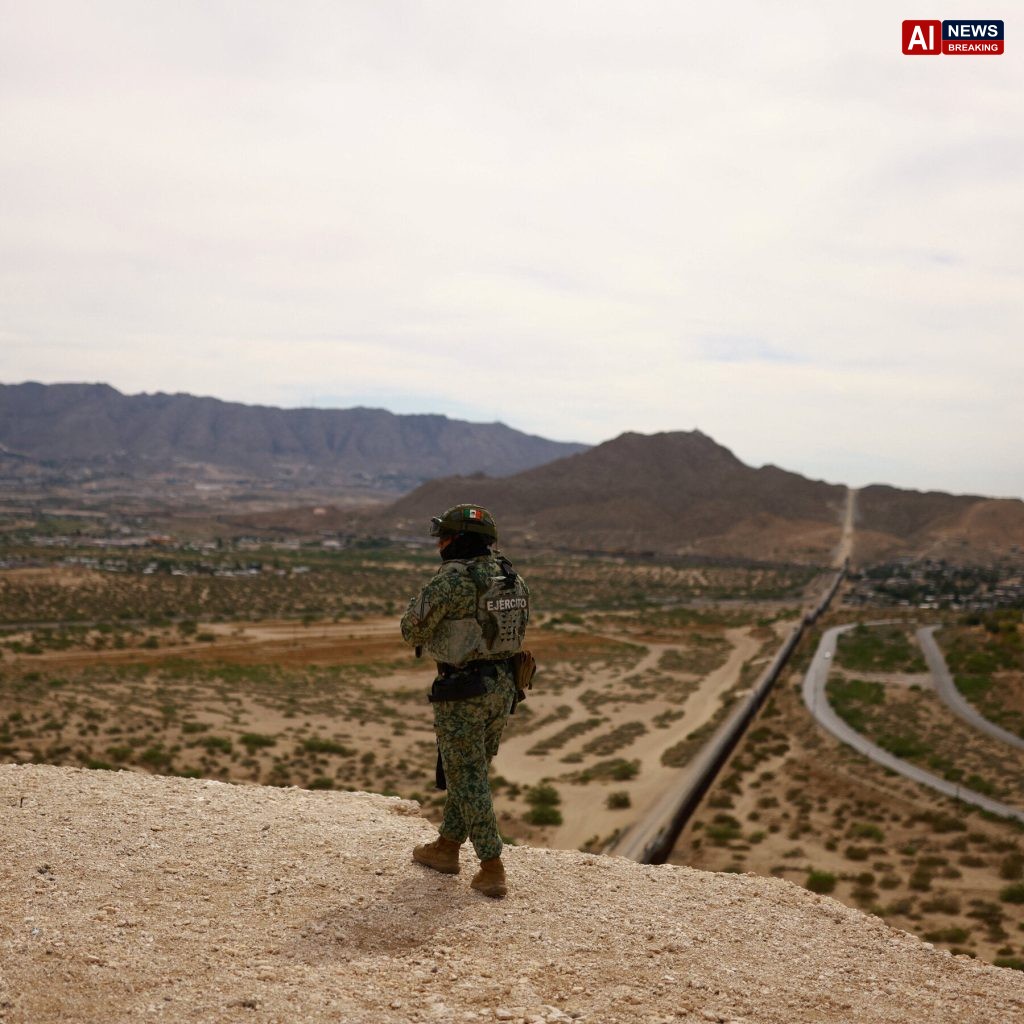
The former state attorney general of Chihuahua, Mexico, who admitted to facilitating the entry of Central Intelligence Agency operatives into his jurisdiction, has crossed the border and is now living under U.S. His flight comes after Mexican authorities announced an imminent arrest warrant for him on charges of abuse of authority, obstruction of justice and treason, accusations that have ignited a diplomatic tug‑of‑war between the two neighbours. The episode highlights the lingering shadows of Cold War‑era covert operations in Latin America and raises fresh questions about the limits of sovereign immunity, the role of the United States in safeguarding individuals accused of collaborating with its intelligence services, and the political fallout for the ruling party in Mexico.Jorge Arturo López Pérez, 48, served as the elected attorney general of Chihuahua from 2021 until his resignation in February 2024..
In a televised interview with a Mexican news channel, he confirmed that, during his tenure, he had coordinated with CIA officers who were conducting clandestine surveillance of suspected drug cartels operating along the U.S.–Mexico border. López Pérez claimed that the cooperation was intended to bolster “joint security efforts” and to “provide the United States with actionable intelligence” that could disrupt the flow of narcotics into American cities. He added that the CIA agents entered Chihuahua on “official invitations” and that the operation was conducted without the knowledge of the federal prosecutor’s office in Mexico City.The revelations sparked outrage in Mexico’s capital, where members of the opposition party and human‑rights groups accused López Pérez of betraying national sovereignty..
The federal Attorney General’s Office (FGR) opened an investigation in March, citing evidence that the CIA operatives had been granted access to police databases, wire‑tap recordings and confidential court files. The FGR’s preliminary report alleges that López Pérez not only permitted the unauthorized sharing of classified information but also helped to conceal the presence of foreign agents by falsifying internal reports and obstructing internal audits. If the charges are proven, the former prosecutor could face up to 20 years in prison, according to Mexico’s penal code.In a swift response, the United States Department of State announced that López Pérez had applied for and been granted “special immigrant status” under a classified provision that offers protection to individuals who assist American intelligence operations abroad..
A State Department spokesperson said the decision was based on “humanitarian considerations” and “the applicant’s cooperation with U.S. national security interests,” while refusing to disclose further details for security reasons. The spokesperson also noted that the United States has a “long‑standing policy” of providing refuge to persons who risk persecution for aiding its agencies, citing precedents dating back to the Cold War.Mexico’s foreign ministry, in a statement released on Thursday, condemned what it described as “a violation of international law and an affront to Mexican judicial sovereignty.” The statement demanded that the United States halt any form of protection for López Pérez and extradite him to face trial in Mexico..
“We will pursue all diplomatic channels and, if necessary, resort to the International Court of Justice to resolve this matter,” the communiqué read. The Mexican president, Andrés Manuel López Obrador, who has long positioned himself as a staunch defender of national autonomy, called the incident “another example of foreign interference” and pledged to strengthen legislative oversight of the country’s justice system.Washington, however, has signaled that it will not comply with the extradition request. In a briefing with reporters, the U.S..
Attorney General’s office cited the “sensitive nature of the information” involved and warned that forcing López Pérez to return could jeopardize ongoing intelligence operations and expose classified sources. The department also invoked the principle of “non‑refoulement,” a tenet of international refugee law that prohibits returning individuals to a country where they face a real risk of persecution for political beliefs or activities. Human‑rights advocates have argued that the principle is being stretched to shield a person accused of criminal conduct, while others contend that the prosecutor’s cooperation with a foreign intelligence service could indeed be considered a political act warranting protection.Legal scholars in both countries are divided on the applicability of the non‑refoulement doctrine in this context..
Professor María Fernanda González of the National Autonomous University of Mexico argues that “the doctrine was designed for refugees fleeing persecution on the basis of race, religion, nationality or political opinion, not for individuals who have allegedly committed crimes against the state.” By contrast, Professor Jonathan Weiss of Georgetown University points out that “U.S. law has long recognized a category of ‘informants’ or ‘assets’ who, once they have provided valuable intelligence, may be eligible for asylum or similar protections, especially if returning them would endanger ongoing operations.” The debate underscores the murky intersection of criminal law, international refugee norms and the ive world of espionage.The fallout has reverberated within Mexico’s ruling party, the National Regeneration Movement (Morena). Party insiders fear that López Pérez’s case could be weaponized by opposition forces to portray the government as either complicit in foreign espionage or as impotent in defending national interests..
In a closed‑door meeting, senior Morena officials reportedly discussed introducing legislation to tighten control over the appointment of state prosecutors, a move critics warn could undermine judicial independence. Meanwhile, some members have called for a thorough audit of all state‑level collaborations with foreign agencies, an initiative that could expose additional undisclosed partnerships and further strain diplomatic ties.In the United States, the episode has prompted a brief resurgence of congressional interest in the oversight of covert operations in the Americas. A bipartisan group of senators introduced a resolution urging the intelligence community to submit a report on “the scope and legality of U.S..
collaboration with sub‑national law‑enforcement entities in Mexico and other neighboring countries.” Although the resolution is unlikely to pass without broader support, it reflects growing concern among legislators that unchecked covert activity could backfire, leading to diplomatic crises such as the present one. The resolution also calls for a review of the legal framework governing the granting of special immigrant status to individuals involved in intelligence work abroad.For López Pérez, life in the United States will be markedly different from his previous public office. Sources close to the case say he is currently residing in a secure, undisclosed location in Texas, under the watch of the Federal Protective Service..
He is reportedly receiving a stipend funded by a classified budget line that supports “foreign assets” who have assisted U.S. While the exact amount remains unknown, former officials familiar with similar arrangements have suggested that the payments could run into several thousand dollars per month, along with benefits such as health care and limited travel allowances. No official comment has been made about whether López Pérez will be granted permanent residency or citizenship.The diplomatic tension has also sparked a wave.
Updated: November 12, 2026





