
 Pakistan’s leaders hail first astronaut aboard Chinese craft: ‘Proud one of us has gone into space’
 British tourist travels 29 hours from Mumbai to Amritsar for ₹5,461, rates Indian Railways 10/10 | Viral video
 The Supreme Court will decide whether assault weapons bans violate the Second Amendment
 A Critic of Beijing Falls Short in Taiwan’s Key Mayoral Election
 EPA says no rise in contamination after Army detonates lead azide stockpile in Iowa
The U.S.-Israel Relationship Is Broken. Here’s How Eisenkot Could Fix It.
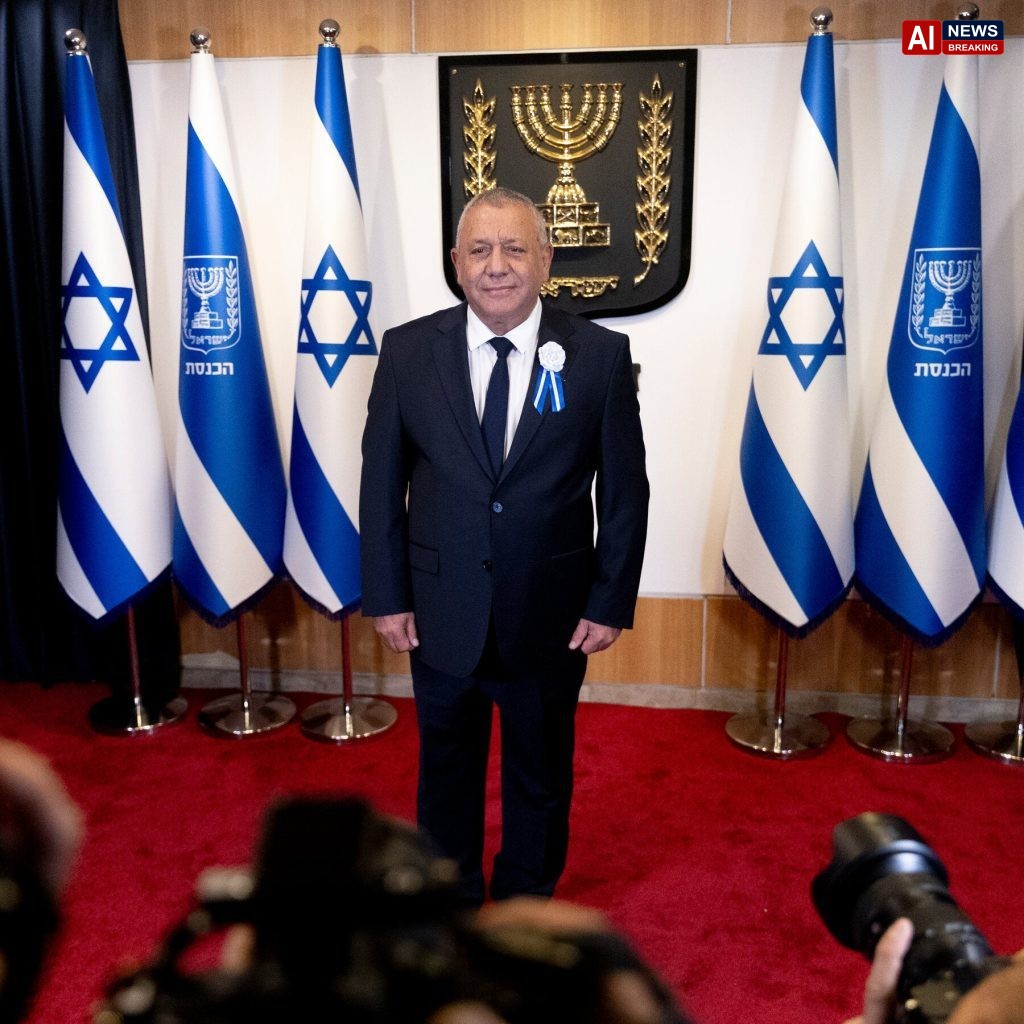
The U.S.-Israel Relationship Is Broken. Here’s How Eisenkot Could Fix It. - AI News Breaking
usisrael relationship broken heres:
The U.S.-Israel Relationship Is Broken. Here’s How Eisenkot Could Fix It. The diplomatic rift between Washington and Jerusalem has deepened over the past two years, with policy clashes on settlements, aid, and regional security spilling into the public sphere..
A new poll released last week shows only 41 % of Americans now view Israel as a “key ally”, down from 68 % in 2020. Analysts attribute the slide to a combination of Netanyahu’s hard‑line rhetoric, the fallout from the Gaza war and growing scepticism in Congress over unconditional military assistance. If Gadi Eisenkot, a former chief of staff to the Israeli defence ministry, wins the upcoming election, his first challenge will be to stop the erosion of trust that now underpins the bilateral relationship..
Eiskot’s political résumé is unusually bipartisan for a former Likud stalwart. He served as Israel’s military attaché in Washington from 2015 to 2017, during which he forged contacts across the Democratic Party and helped broker the 2016 “Iron Dome” funding package. Since leaving the army, he has spoken publicly about the need for “strategic empathy” with the United States, a phrase that resonated in think‑tank circles in Washington, D.C..
ambassador to Israel, Daniel Kurtzer, says Eisenkot “understands the language of Capitol Hill as well as the nuances of Israeli security imperatives”. That rare blend of experience could be the diplomatic oil needed to lubricate a stalled partnership. Nevertheless, the road ahead is fraught with risk..
Critics on the Israeli right argue that Eisenkot’s willingness to discuss conditional aid will be seen as capitulation, potentially emboldening Hamas and other adversaries. Meanwhile, progressive voices in the United States demand a hard line on settlement expansion, a demand that Eisenkot has signalled he may not be able to meet without alienating his own coalition. The balancing act will require him to navigate a narrow corridor where any misstep could trigger a new wave of sanctions or, conversely, a loss of Israeli public support..
One of the first steps Eisenkot could take, according to former U.S. ambassador Dan Shapiro, is to convene a joint U.S.–Israeli security council that meets quarterly in Washington rather than Jerusalem. The council would focus on intelligence sharing, cyber‑defence and the containment of Iran’s regional ambitions, issues that enjoy broad bipartisan support in the United States..
Shapiro notes that such a forum would “re‑centre the conversation on mutual existential threats rather than political squabbles”, providing a concrete venue for cooperation that could be showcased to skeptical lawmakers back home. A second, more controversial proposal involves the recalibration of U.S. Eisenkot is reportedly prepared to ask Washington for a phased reduction in the annual $3.8 billion military assistance package, replacing it with a performance‑based model tied to specific security outcomes, such as the de‑escalation of violence in the West Bank..
Former Democratic congresswoman Barbara Lee, a vocal critic of unconditional aid, praised the idea as “a responsible way to ensure taxpayer money is used efficiently while still recognising Israel’s legitimate security concerns”. Yet within Israel’s defence establishment, the notion of tying aid to political metrics is seen as a dangerous precedent. Eisenkot’s approach to the settlement question could also reshape the diplomatic landscape..
While he has not publicly called for a freeze, sources close to his inner circle say he is willing to endorse a limited, time‑bound suspension in exchange for a U.S.‑backed roadmap toward a two‑state solution. This would echo the 2020 Abraham Accords, which were lauded for linking economic incentives with diplomatic concessions. Former Israeli peace activist Tzipi Livni argues that “a calibrated pause could break the current deadlock and restore credibility to Israel’s commitment to a negotiated settlement”..
However, right‑wing parties in the Knesset have already warned they would withdraw from any coalition that entertains such a concession. A third pillar of Eisenkot’s envisaged strategy is public diplomacy. He plans to launch a joint U.S.–Israeli media initiative aimed at countering misinformation about the conflict, a move championed by former CIA officer and current Brookings fellow, Michael O’Hanlon..
The project would fund independent journalists in both countries and produce bilingual content that explains the security calculus behind controversial policies. In an era where social media narratives can sway public opinion overnight, Eisenkot believes a coordinated information campaign could “re‑humanise the partner” and mitigate the backlash that often follows military operations. Economic interdependence may also serve as a bridge..
Eisenkot has floated the idea of a new bilateral technology fund, modelled on the EU‑Israel Innovation Programme, that would channel venture‑capital into joint research on renewable energy, water desalination and artificial intelligence. By highlighting shared prosperity, the fund could appeal to centrist U.S. lawmakers who are increasingly wary of funding purely military projects..
Former Treasury ary Jack Lew, who oversaw the 2017 U.S.–Israel Strategic Economic Partnership, warned that “economic collaboration is a soft‑power lever that can weather political storms if structured correctly”. Yet the most precarious element of Eisenkot’s plan is his willingness to confront the United Nations. He has hinted at supporting a U.N..
resolution that would formalise a cease‑fire monitoring mechanism in Gaza, a move that would require Israel to accept a degree of international oversight it has historically rejected. Former UN ambassador Dan Gillerman cautions that “any perception of yielding to external pressure could be.
Updated: November 13, 2026
Summary: The U.S.-Israel partnership has fractured, with American public support for Israel slipping sharply as policy disputes over settlements and aid flare. Former defense chief Gadi Eiskot, if elected, could rebuild ties by tying U.S. aid to concrete security outcomes, convening a joint Washington‑based security council, and launching a coordinated media and tech partnership to shift public opinion and foster bipartisan backing.
This development highlights evolving dynamics and may have broader implications in the near term.





