
 Pakistan’s leaders hail first astronaut aboard Chinese craft: ‘Proud one of us has gone into space’
 British tourist travels 29 hours from Mumbai to Amritsar for ₹5,461, rates Indian Railways 10/10 | Viral video
 The Supreme Court will decide whether assault weapons bans violate the Second Amendment
 A Critic of Beijing Falls Short in Taiwan’s Key Mayoral Election
 EPA says no rise in contamination after Army detonates lead azide stockpile in Iowa
Madras High Court refuses to reject election plea against Udhayanidhi’s win from Chepauk-Thiruvallikeni
** The Madras High Court refused to throw out a petition contesting Udhayanidhi Stalin’s victory in the Chepauk‑Thiruvallikeni by‑election, sending the dispute to the evidentiary stage. The opposition alleges violations of the Representation of the People Act, excessive campaign spending, and misuse of government resources, raising fresh questions about electoral fairness in Tamil Nadu.
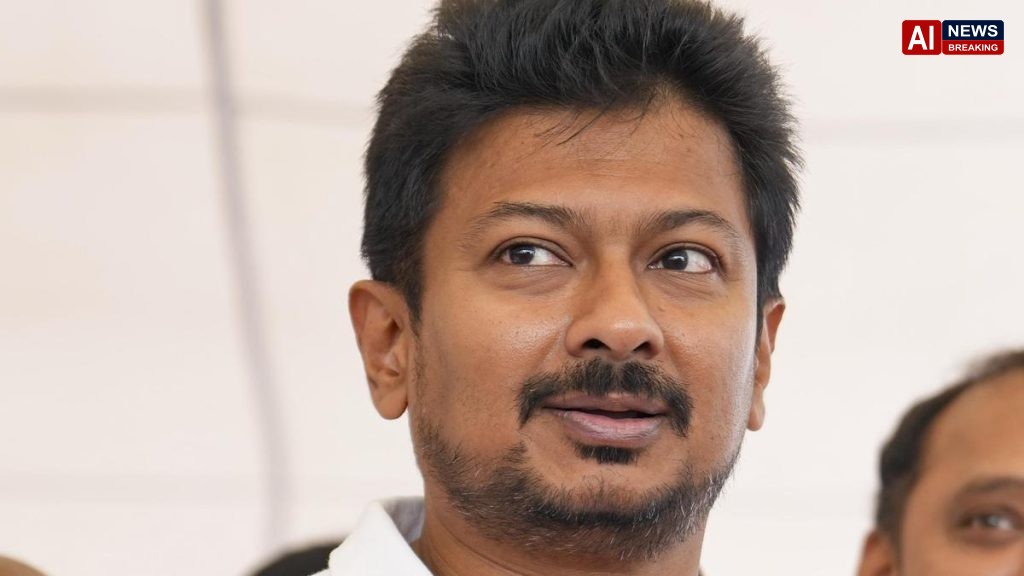
Madras High Court refuses to reject election plea against Udhayanidhi’s win from Chepauk-Thiruvallikeni - AI News Breaking
The Madras High Court on Tuesday declined to dismiss a petition challenging the election of Udhayanidhi Stalin to the Chepauk‑Thiruvallikeni assembly constituency, signalling that the matter will now proceed to trial. Arul Murugan, who presided over the hearing, dismissed two separate applications filed by the Leader of the Opposition, M. Stalin’s chief political rival, seeking to have the case thrown out on procedural grounds..
The decision marks a significant procedural development in a dispute that has already drawn considerable public and political attention since the by‑election was held in early May.The petition, filed by the opposition leader’s legal team, alleges that the election of Udhayanidhi Stalin, the son of Chief Minister M. Stalin, was marred by violations of the Representation of the People Act and the Model Code of Conduct. Specifically, the petition claims that the ruling party engaged in the use of government resources for campaign purposes, that the candidate’s campaign exceeded the legally prescribed expenditure limits, and that there were irregularities in the issuance of election symbols..
The opposition contends that these alleged breaches warrant a nullification of the result and a fresh election in the constituency, which has been a stronghold of the Dravida Munnetra Kazhagam (DMK) for decades.Justice Murugan, after hearing arguments from both sides, noted that the applications seeking to terminate the proceedings were premature. “The court cannot entertain a request for dismissal at this early stage when the substantive allegations have yet to be examined in detail,” he said. He further observed that the opposition had not provided sufficient evidence to demonstrate that the petition was frivolous or that it lacked merit..
Consequently, the court ordered that the matter move forward to the evidentiary stage, where the parties will be required to present documentary and testimonial proof supporting their respective claims.The decision to allow the case to proceed has been welcomed by several civil society groups, which have long called for greater transparency in the electoral process. “The judiciary’s willingness to scrutinise allegations of electoral malpractice is a positive sign for democratic accountability,” said Anitha Ramesh, a senior fellow at the Centre for Policy Research. “It reinforces the principle that no candidate, however politically powerful, is above the law.” Ramesh added that the outcome of the trial could set an important precedent for how future elections are contested and monitored in Tamil Nadu.Political analysts, however, caution that the proceedings may extend well beyond the current legislative term, potentially limiting their immediate impact on the composition of the state assembly..
“Given the procedural timelines of the courts, it is plausible that any final judgment could be delivered after the next general elections,” observed Dr. Narayanan, a professor of political science at Madras University. “If that occurs, the ruling party may effectively retain its seat irrespective of the legal outcome, unless the court orders an immediate re‑poll.”The opposition’s legal strategy appears to be aimed not only at securing a potential reversal of the election result but also at drawing public attention to what it describes as a pattern of misuse of state machinery during campaigns..
In a statement released after the hearing, the opposition’s spokesperson, K. Vijay, said, “We have lodged this petition not merely to challenge a single victory but to highlight systemic issues that erode the fairness of our democratic processes.” Vijay further asserted that the court’s decision to let the case proceed validates the seriousness of the allegations and reflects the judiciary’s commitment to upholding electoral integrity.The DMK, which has governed Tamil Nadu since 2021, dismissed the petition as politically motivated. In a press conference, a senior party official, S..
Murugan, characterized the legal challenge as “an attempt by the opposition to distract the electorate from the development work undertaken in the constituency.” He also warned that protracted legal battles could undermine public confidence in elected representatives, urging the opposition to focus on constructive political engagement instead of litigation.Legal experts point out that the court’s next steps will involve a detailed examination of financial disclosures submitted by the candidates, as well as an audit of campaign expenditures. “The burden of proof lies with the petitioner, who must substantiate the claims of excess spending and misuse of official resources,” explained Advocate Priya Menon, who has previously represented candidates in election‑related cases. Menon noted that the court is likely to appoint a special commissioner to oversee the collection and analysis of financial data, a common practice in high‑profile election disputes.The broader political context adds another layer of complexity to the case..
The Chepauk‑Thiruvallikeni constituency, encompassing parts of Chennai, has traditionally been a bellwether seat, reflecting broader electoral trends in the state. Udhayanidhi Stalin’s victory in the by‑election was seen as a reaffirmation of the DMK’s dominance, especially after the party’s recent successes in municipal and legislative elections. The opposition’s challenge, therefore, is not merely about a single seat but about contesting the narrative of an unassailable ruling coalition.As the trial moves forward, both parties are expected to marshal additional evidence and witness testimonies..
The opposition has indicated that it will call upon former party workers, independent election observers, and financial auditors to corroborate its claims. Meanwhile, the DMK’s legal counsel has signalled readiness to counter these allegations with documentation showing compliance with election norms and the absence of any undue advantage derived from state resources.The next hearing is scheduled for early December, when the court will likely issue directions on the scope of evidence to be produced and set timelines for the filing of written statements. Observers anticipate that the proceedings could become a focal point of political discourse in the run‑up to the state’s scheduled elections in 2026, influencing campaign strategies and voter perceptions..
For now, the Madras High Court’s refusal to dismiss the petition underscores the judiciary’s role as a key arbiter in disputes that sit at the intersection of law and politics, reminding stakeholders that electoral outcomes remain subject to legal scrutiny when allegations of impropriety surface..
Updated: November 13, 2026
The court’s refusal to toss the case signals that Tamil Nadu’s political dynasties can no longer rely on electoral victories as shields against scrutiny, nudging rivals and voters toward a courtroom battleground rather than the ballot box. Yet the protracted timeline risks turning the legal showdown into a symbolic victory for opposition rhetoric, with little chance to alter the legislature before the next election cycle.






