Pakistan’s leaders hail first astronaut aboard Chinese craft: ‘Proud one of us has gone into space’
 British tourist travels 29 hours from Mumbai to Amritsar for ₹5,461, rates Indian Railways 10/10 | Viral video
 The Supreme Court will decide whether assault weapons bans violate the Second Amendment
 A Critic of Beijing Falls Short in Taiwan’s Key Mayoral Election
 EPA says no rise in contamination after Army detonates lead azide stockpile in Iowa
US declares three Guatemalan gangs to be terrorist groups, imposes sanctions
**
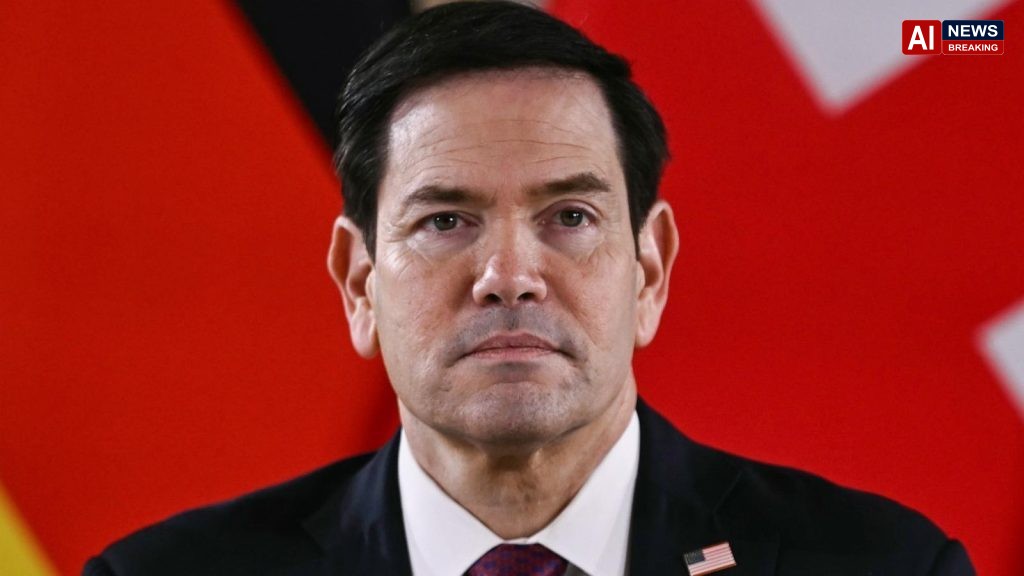
US declares three Guatemalan gangs to be terrorist groups, imposes sanctions - AI News Breaking
The United States government announced on Tuesday that it would formally designate three criminal organisations operating in Guatemala as foreign terrorist entities, a move that brings them under the same legal framework applied to groups such as al‑Qaida and ISIS. The decision, made by the State Department under the Trump administration, cites the gangs’ alleged involvement in a “significant” amount of drug trafficking and the use of those proceeds to fund violent activities across Central America. By branding the groups as terrorist, Washington intends to cut off their access to the international financial system and to impose a suite of sanctions designed to disrupt their operations.The three groups identified are the Mara Salvatrucha, commonly known as MS‑13, its rival Barrio 18, and a smaller coalition of criminal cells operating under the banner of “Los Zetas de Guatemala.” While MS‑13 and Barrio 18 have long been recognised as transnational criminal networks with a presence in the United States, the addition of the Guatemalan‑specific faction marks the first time the U.S..
has extended the foreign terrorist organization label to a Central American cartel‑style group. Officials say the decision follows a multi‑year investigation that linked the gangs to the smuggling of cocaine, heroin and synthetic opioids from South America through Guatemala and into North America.The sanctions will prohibit U.S. persons and entities from providing any form of financial, material or technological support to the designated groups..
Any assets the gangs hold in U.S. banks or under the jurisdiction of U.S. financial institutions will be frozen, and any transactions involving U.S..
dollars that can be traced to the organisations will be blocked. The Treasury Department’s Office of Foreign Assets Control will maintain a list of individuals and entities associated with the gangs, making it unlawful for American companies to conduct business with them without a specific license.Guatemala’s government welcomed the designation, with President Alejandro Giammattei calling it “a decisive step toward restoring security and the rule of law in our country.” Giammattei’s administration has been under pressure from both domestic constituencies and the international community to address the surge in homicides, extortion and forced displacement that has plagued the nation since the early 2010s. The president’s office said the U.S..
move will complement ongoing Guatemalan initiatives, including a new law that criminalises the recruitment of minors by criminal organisations and an expanded police task force focused on dismantling drug‑trafficking routes.Human‑rights organisations, however, have cautioned that the terrorist label could have unintended consequences for vulnerable communities. Amnesty International warned that broad‑scale sanctions risk penalising ordinary citizens who may be financially linked to the gangs through informal economies, potentially exacerbating poverty in already marginalized regions. The group called for a transparent mechanism that would allow individuals to contest the freezing of assets and for robust monitoring to ensure that law‑enforcement actions do not overstep legal safeguards.In Washington, lawmakers expressed bipartisan support for the designation, arguing that it represents a “hard‑line” approach to a problem that has spilled over into U.S..
Representative Tony Gonzales (R‑TX) noted that the gangs are responsible for a “significant portion of the drug supply that fuels the opioid crisis at home,” while Senator Chris Murphy (D‑CT) highlighted the cross‑border nature of the threat, stressing that “terrorism does not stop at a map’s edge.” Both cited intelligence reports indicating that the gangs have cultivated ties with Mexican drug cartels, using Guatemala as a transit hub for shipments bound for the United States.The policy shift arrives amid a broader reevaluation of how the United States categorises violent non‑state actors. In recent years, the State Department has expanded the foreign terrorist organization list to include groups previously classified solely as drug traffickers, arguing that the financial networks that sustain narcotics trade often overlap with those that fund extremist activities. Critics argue that conflating organized crime with ideological terrorism may dilute the legal precision of the designation and complicate prosecutions, especially when the underlying motive is profit rather than political doctrine.Economic analysts predict that the sanctions could have a measurable impact on the regional drug trade, though the extent remains uncertain..
By restricting access to the U.S. dollar clearing system, the measures are expected to raise the cost and risk of moving illicit funds, potentially prompting the gangs to seek alternative routes or currencies. Some experts warn, however, that the groups may simply adapt by increasing the use of cryptocurrencies or by deepening relationships with other non‑U.S..
financial centres that are less stringent in enforcing sanctions.The decision also about the capacity of Guatemalan law‑enforcement agencies to implement the measures effectively. The National Civil Police (PNC) has faced criticism for corruption and limited resources, which have hampered past efforts to dismantle gang networks. In response, the United States has pledged an additional $150 million in assistance, earmarked for training, equipment and joint investigative operations..
Officials say the funding will be allocated through the Department of State’s Office of International Narcotics and Law Enforcement and will be subject to strict oversight to ensure proper use.As the designations take legal effect, the next few weeks will be crucial for monitoring compliance and gauging the response from the gangs themselves. Historically, groups like MS‑13 have demonstrated resilience, often reorganising under new aliases when faced with heightened pressure. administration remains confident that the combined diplomatic, financial and law‑enforcement strategy will erode the gangs’ operational capabilities and, ultimately, reduce the flow of violence and drugs that have plagued both Guatemala and the United States for years..
Updated: November 13, 2026
Labeling MS‑13, Barrio 18 and Los Zetas de Guatemala as terrorists signals Washington’s willingness to treat profit‑driven crime as a national security threat, blurring the line between drug trafficking and ideological violence.
The move may pressure the gangs into a digital cash economy, but it also