
 Pakistan’s leaders hail first astronaut aboard Chinese craft: ‘Proud one of us has gone into space’
 British tourist travels 29 hours from Mumbai to Amritsar for ₹5,461, rates Indian Railways 10/10 | Viral video
 The Supreme Court will decide whether assault weapons bans violate the Second Amendment
 A Critic of Beijing Falls Short in Taiwan’s Key Mayoral Election
 EPA says no rise in contamination after Army detonates lead azide stockpile in Iowa
How Does a 74-Year-Old in Argentina Escape House Arrest on the Fifth Floor?
**
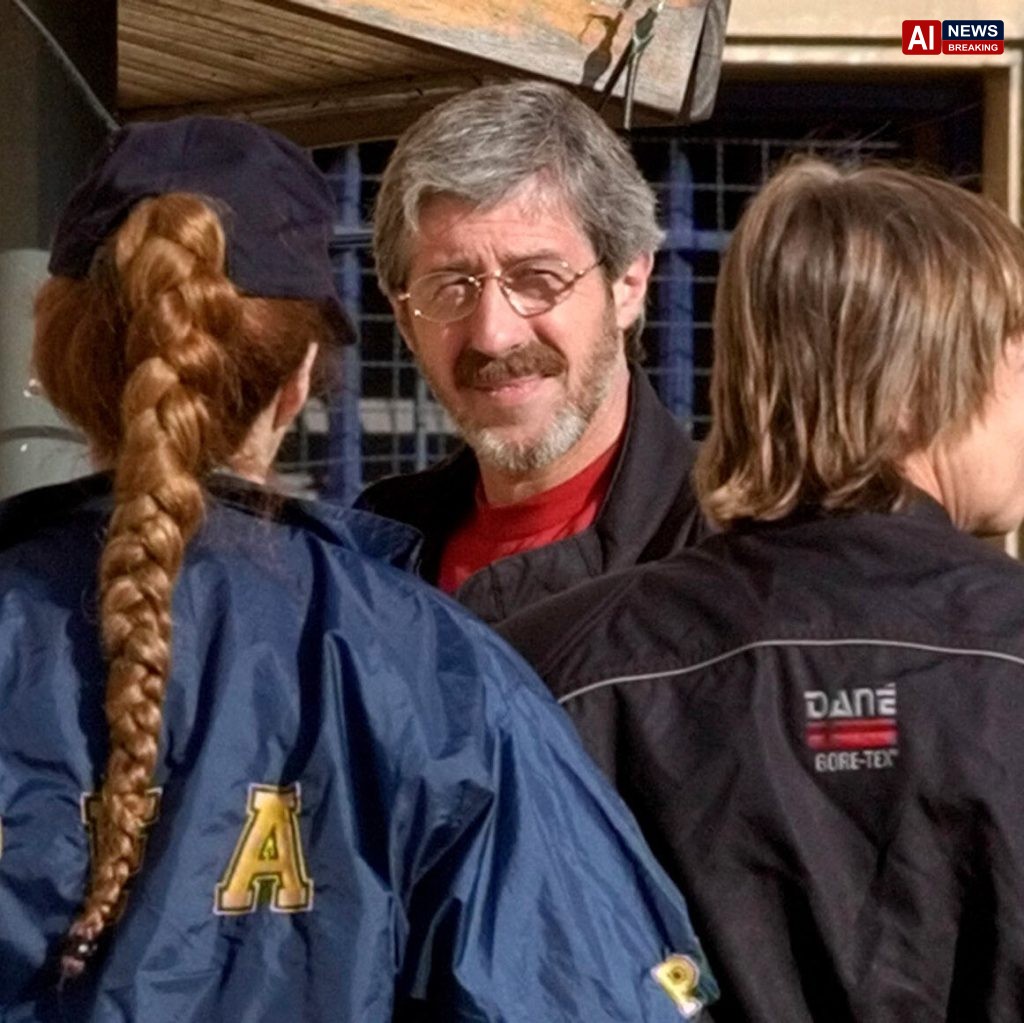
How Does a 74-Year-Old in Argentina Escape House Arrest on the Fifth Floor? - AI News Breaking
does 74yearold argentina escape:
How Does a 74‑Year‑Old in Argentina Escape House Arrest on the Fifth Floor? The bizarre escape of a 74‑year‑old Argentine citizen from a government‑approved house‑arrest unit on the fifth floor of a downtown high‑rise has riveted a nation still haunted by its past. On Tuesday morning, neighbours reported a sudden, acrid smell wafting from the apartment, followed by a faint popping noise..
By the time police arrived, the front door stood ajar and the elderly man was nowhere to be found. Initial investigations point to an improvised device made from a heating pad, rendered slick with animal fat, and a makeshift fuse – a concoction that appears to have been designed to melt the lock and give the occupant a brief window to flee. The apartment in question belongs to Jorge “Pepe” Rinaldi, a former political activist who has lived under house arrest since 2019 for alleged involvement in a series of bombings during Argentina’s “Dirty War.” Rinaldi’s case, like many from the era, has been a flashpoint in the country’s ongoing struggle to reconcile with its authoritarian legacy..
While he has consistently denied any wrongdoing, the government has insisted that his confinement is justified pending a new round of investigations into unresolved crimes. The dramatic escape, however, has thrown a spotlight on the adequacy of the security protocols that were meant to prevent precisely such an occurrence. According to a statement released by the Federal Police, the escape was only possible because the building’s fire‑safety system was deliberately disabled..
CCTV footage shows an individual, later identified as a man in his thirties, entering the premises through the service elevator at approximately 02:17 a.m. and exiting with a large, insulated bag. The footage also captures the suspect tamping down a small, rectangular object against the metal door of Rinaldi’s unit – an object that forensic analysts later identified as a heating pad whose internal heating element had been removed and replaced with a thin strip of copper wire..
Forensic experts say the copper wire was coated in a mixture of rendered animal fat and a volatile solvent, likely to ensure it remained pliable at low temperatures and to reduce the risk of premature ignition. When the heating pad was activated by a simple battery pack hidden in the bag, the mixture warmed enough to soften the lock’s metal pins, allowing the door to be forced open without the characteristic “click” of a conventional lock‑pick. The “bomb scare” reported by residents was, investigators now believe, a controlled detonation of a small amount of black powder, intended to create a diversion and mask the sound of the lock being compromised..
The suspect’s identity remains a mystery, but authorities have linked him to an Italian national, Marco Bianchi, who is currently being pursued by Interpol. Bianchi, aged 58, is wanted in Italy on charges stemming from 1970s-era terrorism, including alleged participation in bombings that targeted public infrastructure during the so‑called “Years of Lead.” Italian prosecutors claim that Bianchi fled to South America in the early 1980s, adopting a low‑profile existence while maintaining covert contacts with former comrades. The Argentine police have opened a joint task‑force with Interpol to locate and apprehend him, citing the possibility that he provided the technical expertise required for the escape..
Legal scholars note that the involvement of a foreign terrorist suspect adds a complex layer to an already convoluted case. Argentina and Italy share a bilateral treaty on the extradition of individuals accused of terrorism, but the process can be hampered by diplomatic negotiations, statutes of limitations, and the political sensitivities surrounding past human‑rights violations. Professor Elena Martínez of the University of Buenos Aires cautions that “if Bianchi is indeed the mastermind, his capture could reignite debates about the reach of justice across borders and the extent to which countries are willing to cooperate on historical crimes.” In the immediate aftermath, the federal government ordered an emergency review of all house‑arrest facilities, especially those situated in multi‑storey buildings..
Interior Minister Carlos Fernández announced a task‑force will audit the security infrastructure of over 150 similar units nationwide, focusing on fire‑safety systems, surveillance coverage, and the integrity of lock mechanisms. The minister emphasized that “the safety of our citizens, even those under judicial restriction, cannot be compromised,” and pledged that any lapses discovered will be corrected within 30 days. Human‑rights organisations, meanwhile, have seized upon the episode to renew calls for the abolition of house arrest as a punitive measure..
The Argentine Human Rights League issued a statement arguing that “the very conditions that made Rinaldi’s escape possible – inadequate supervision, outdated equipment, and an over‑reliance on confinement – are evidence that such regimes are both inhumane and ineffective.” They argue that a modern justice system should prioritize rehabilitation and transparent legal processes over indefinite detention in private residences, a stance that has found resonance among younger voters disillusioned with the country’s lingering authoritarian practices. Rinaldi’s family, who have long maintained that their father is a political prisoner rather than a criminal, expressed both relief and frustration. In a brief interview, his daughter, María, said that “the moment we smelled the burning oil, we knew something was wrong..
We are grateful he is safe, but we also fear what will happen to him now that he is a fugitive.” She added that the family intends to file a lawsuit against the state for failing to provide adequate security, a move that could set a precedent for future.
Updated: November 13, 2026
Argentina’s house‑arrest system has been exposed as a relic of authoritarian control, its failure to safeguard even the most vulnerable inmates suggesting that the state is still willing to bend rule‑of‑law norms to preserve a narrative of security.
The incident forces a reckoning: if the state can’t secure its own detainees, how credible is its claim that it respects human rights, and will public pressure finally dismantle a punitive practice that has long stifled democratic accountability?





